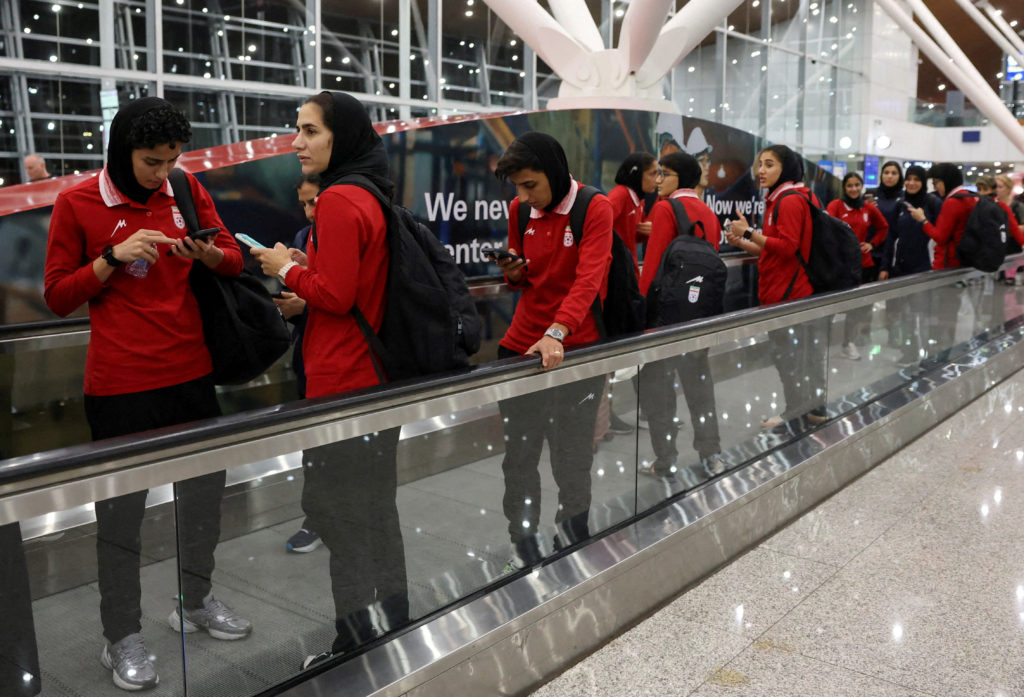
Melbourne, Australia – A fifth member of the Iranian women’s national soccer team has departed Australia, reversing an earlier decision to seek asylum, Australian authorities confirmed Monday. The player left shortly before midnight on Sunday, leaving just two members of the original seven who sought refuge in Australia still remaining, according to a statement from the office of Home Affairs Minister Tony Burke.
This latest development follows a complex series of decisions by members of the Iranian team following their participation in the Women’s Asian Cup, which concluded last month. The team’s arrival in Australia coincided with a period of heightened political and social unrest in Iran, sparking concerns for the players’ safety should they return home. The initial requests for asylum drew international attention, with calls for assistance coming from Iranian groups in Australia and, reportedly, from former U.S. President Donald Trump.
The situation began to unfold after the team’s first match, where players notably refrained from singing the Iranian national anthem – a gesture widely interpreted as a silent protest against the Iranian government. This act of defiance, coupled with reports of potential repercussions upon their return to Iran, prompted six players and a team support staff member to apply for humanitarian visas in Australia. However, the situation has been fluid, with individuals changing their minds and departing the country.
Initial Asylum Requests and Subsequent Departures
Initially, six players and one support staff member sought protection in Australia. On Saturday, two players and another member of the support staff left Sydney for Malaysia, as reported by Minister Burke’s office. This was followed by the departure of the fifth player on Sunday night. According to reports from Iran’s Tasnim News Agency, these departing individuals are “returning to the warm embrace of their family and homeland.” The remaining members of the Iranian contingent, numbering 26 players in total, had previously flown from Sydney to Kuala Lumpur on March 10th.
The shifting decisions of the players highlight the intense pressure they have been under. Kambiz Razmara, vice-president of the Australian-Iranian Society of Victoria, explained to the Australian Broadcasting Corporation that the women have been forced to make difficult choices “at the spur of the moment with very little information” and are reacting to a rapidly evolving situation. He added that he wasn’t entirely surprised by the departures, acknowledging the pressures they are experiencing.
Concerns Over Potential Government Influence
The departures have similarly raised concerns about potential interference from the Iranian government. Some members of the Iranian diaspora in Australia have accused the support staff member who initially sought asylum, then left on Saturday, of disseminating Iranian government propaganda to her teammates via text messages. These allegations, while unconfirmed, underscore the anxieties within the Iranian community regarding the safety and autonomy of the players.
The Iranian government has framed the return of some players as a victory, with the Tasnim News Agency characterizing it as the “disgraceful failure of the American-Australian project and another failure for Trump.” This statement reflects the political sensitivities surrounding the case and the Iranian government’s apparent desire to portray the situation as a rejection of Western influence.
The Women’s Asian Cup and Initial Protests
The Iranian women’s soccer team competed in the Women’s Asian Cup in Australia last month. The tournament took place before the escalation of tensions in the Middle East on February 28th. The team’s decision not to sing the national anthem before their first match quickly drew international attention, becoming a symbol of resistance against the Iranian regime. This act of protest occurred against a backdrop of ongoing social and political unrest within Iran, where women’s rights and freedoms have been increasingly restricted.
Australia’s Response and International Attention
The Australian government faced calls to provide assistance to the Iranian players from various sources, including Iranian groups within Australia and, as reported, from then-U.S. President Donald Trump. The case garnered significant media coverage, highlighting the plight of the players and the complex geopolitical factors at play. Australia’s humanitarian visa program allowed the players to apply for protection, but the ultimate decision to remain or return to Iran rested with each individual.
The granting of asylum to the initial group of players was met with both support and criticism. Supporters lauded Australia’s commitment to protecting those fleeing persecution, while critics questioned the potential implications for diplomatic relations with Iran. The ongoing departures demonstrate the difficult and deeply personal nature of the choices faced by these athletes.
Looking Ahead
With only two players remaining in Australia who initially sought asylum, the immediate future of the Iranian women’s soccer team remains uncertain. The reasons behind the changing decisions of the players are complex and likely involve a combination of personal circumstances, family pressures, and concerns about potential repercussions in Iran. The situation underscores the challenges faced by athletes and individuals caught in the crosscurrents of political and social unrest.
The Australian government has not commented on the specific reasons for the players’ departures, citing privacy concerns. However, officials have reiterated their commitment to providing support to those who remain and to upholding Australia’s international obligations to protect refugees. The case serves as a stark reminder of the human cost of political instability and the difficult choices faced by those seeking safety and freedom.
The next steps for the remaining two players are unclear. They will likely continue to navigate the Australian asylum process, while facing ongoing uncertainty about their future and the safety of their families back home. Further updates on this developing story will be provided as they develop into available.
Do you have thoughts on this story? Share your comments below and consider sharing this article with your network.
- Kiko Rivera Shuts Down Social Media to Recover After Second Stroke
- Palantir Stock Surges After Beating Earnings Expectations and Boosting Revenue
- White-Tailed Eagles Return to Exmoor National Park After 200 Years (news-usa.today)
- Senior Indian Players Express Reservations About Gautam Gambhir’s Coaching (archyworldys.com)