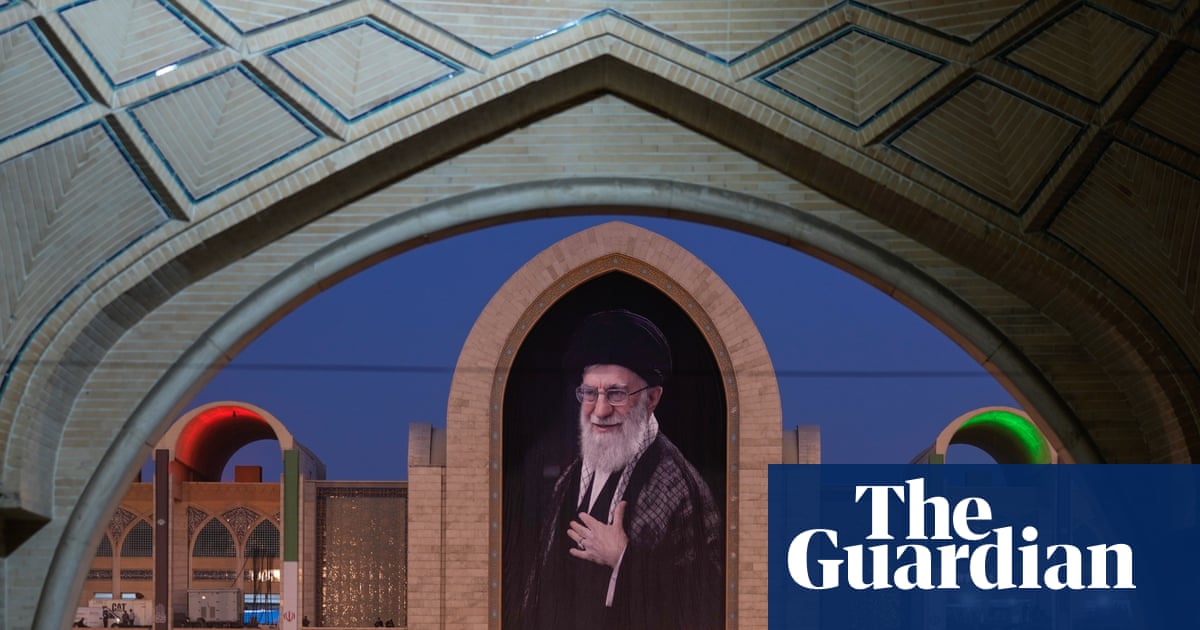
Three sons of the former Iranian leader Ayatollah Ali Khamenei were seen praying beside his coffin as state-organized processions for the late leader unfolded across Tehran and into Iraq, according to verified reports. Three of Khamenei’s sons—Mostafa, Meysam, and Masoud—were seen praying beside his coffin at Tehran’s Imam Khomeini Mosalla, a sprawling religious complex, while Mojtaba Khamenei remained absent, sources confirmed.
Absence of the Supreme Leader
Mojtaba Khamenei’s absence sparked speculation during the week-long mourning ceremonies for the late leader. The person who has succeeded him as Iran’s supreme leader was not visible in state TV footage of the funeral events, which featured the former leader’s three sons and four other family members’ coffins. Thousands of mourners gathered at the Imam Khomeini Mosalla, a site central to Iran’s revolutionary symbolism, underscoring the regime’s emphasis on familial and sectarian unity during the leadership transition.

Family in the Spotlight
The three Khamenei sons—Mostafa, Meysam, and Masoud—stood prominently during the funeral rites, their presence highlighting the enduring influence of the late leader’s lineage. State media depicted them alongside other family members, though no official statement addressed the absence of the supreme leader. The event, attended by huge crowds, reflected the Islamic Republic’s reliance on religious and political rituals to legitimize power shifts, even as questions lingered about the new leadership’s standing.
Rituals and Symbolism
The funeral of Ali Khamenei, a cornerstone of Iran’s theocratic governance, was marked by mass gatherings and state-sponsored rituals. On Sunday, the coffins of Khamenei and four other family members were laid out in the Imam Khomeini Mosalla, where mourners participated in prayers and processions. The event merged religious devotion with political messaging, reinforcing the entanglement of faith and authority in the Islamic Republic’s identity.
Cross-Border Pilgrimage
State media announced plans to transport Khamenei’s remains to Shia religious sites in Iraq, a move echoing historical practices of honoring deceased leaders within the Shia community. The pilgrimage to Iraq’s religious centers is seen as a demonstration of faith and solidarity. The decision underscores the regime’s effort to frame the mourning process as both a spiritual and geopolitical act.