The Succession Puzzle in Iran: Navigating Leadership Amidst Ongoing Tensions
The political landscape in Iran remains complex and resilient despite reported targeted killings and escalating regional tensions. Even as the full extent of recent events and their impact on the country’s leadership structure is still unfolding, several key figures continue to exert influence over the government, military and security apparatus. Recent reports suggest a shift in power dynamics, with increasing attention focused on the role of Mojtaba Khamenei, son of the late Supreme Leader Ali Khamenei, as a potential successor. This comes at a time when the nation faces significant internal and external pressures, demanding a stable and decisive leadership.
The question of succession has been a recurring theme in Iranian politics, particularly given the advanced age and, now, passing of Ayatollah Ali Khamenei. The transition of power is a critical moment for the Islamic Republic, with implications for both domestic stability and its foreign policy. The emergence of Mojtaba Khamenei as a leading candidate, coupled with the continued influence of established figures like Ali Larijani and Ahmad Vahidi, highlights the intricate power structures within the Iranian government. Understanding these dynamics is crucial for assessing Iran’s future trajectory and its role in the region. The potential for internal conflict or external intervention adds another layer of complexity to this already volatile situation.
Following the death of his father, numerous reports have identified Mojtaba Khamenei as the frontrunner to become the next Supreme Leader. A statement attributed to him this week reportedly called for retribution for those Iranians killed during ongoing conflicts. Reports likewise indicate that Mojtaba Khamenei sustained injuries early in the recent clashes, including a fractured foot and facial wounds. The extent of these injuries and their potential impact on his ability to assume leadership remain unclear, but they underscore the risks faced by key figures within the Iranian establishment. The speed with which he has been positioned as a successor suggests a deliberate effort to ensure a smooth transition of power, though the acceptance of this transition by all factions within the regime is not guaranteed.
Key Players in Iran’s Leadership Structure
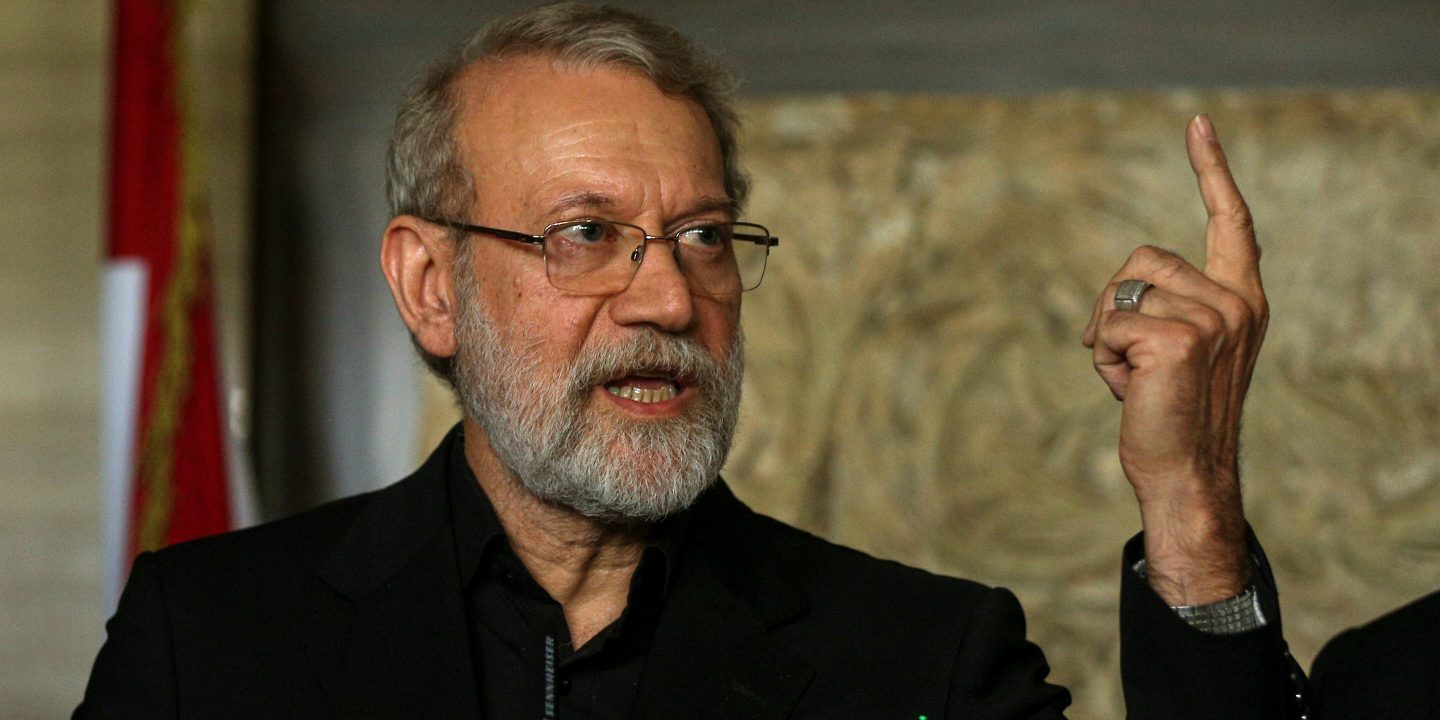
Beyond Mojtaba Khamenei, several other individuals are playing pivotal roles in shaping Iran’s response to current challenges. Ali Larijani, currently serving as the Secretary of the Supreme National Security Council, is reportedly coordinating key governmental tasks, even prior to the escalation of hostilities. According to political sources, Larijani is actively involved in diplomatic efforts, including recent talks mediated by Oman. Pomona News reports that Larijani warned against potential attacks by the United States, stating that the entire region could be plunged into darkness within half an hour should such an attack occur. This demonstrates the high stakes and assertive rhetoric employed by Iranian officials.
On the military front, Ahmad Vahidi has emerged as a significant figure, appointed as the commander of the Islamic Revolutionary Guard Corps (IRGC) following the death of his predecessor. Vahidi previously led the Quds Force, a unit of the IRGC, and has been internationally linked to the 1994 bombing of the Jewish community center in Buenos Aires. The New York Times notes his appointment and the international scrutiny surrounding his past. Public statements from Vahidi have been scarce since his appointment, adding to the opacity surrounding his role and intentions.
A United Front of Resolve
Despite the challenges, a strong sense of national resolve appears to be prevalent within the Iranian political establishment. Mohammad Bagher Ghalibaf, the Speaker of Parliament, has stated that Iran is not currently seeking a ceasefire, emphasizing the necessitate to inflict a decisive blow on any aggressor. This uncompromising stance reflects a determination to defend Iranian sovereignty and deter future attacks. Similarly, Amir Hatami, commander of the Iranian Army, reportedly declared that the country would defend its honor “to the last drop of blood.” While initial reports of his death circulated, these were later refuted by state-affiliated media.
The rhetoric emanating from Tehran underscores a commitment to resistance and a willingness to confront external threats. This posture is likely intended to project strength and deter further escalation, but it also carries the risk of miscalculation and unintended consequences. The interplay between these various leaders – Khamenei, Larijani, Vahidi, Ghalibaf, and Hatami – will be crucial in determining Iran’s response to the evolving security situation and its long-term strategic direction.
The Role of the Islamic Revolutionary Guard Corps
The Islamic Revolutionary Guard Corps (IRGC) remains a powerful force within Iran, wielding significant influence over both domestic and foreign policy. Ahmad Vahidi’s appointment as commander underscores the IRGC’s central role in the country’s security apparatus. The IRGC is responsible for protecting the Islamic Republic’s revolutionary ideals and has been involved in numerous conflicts and operations throughout the Middle East. Its Quds Force, previously led by Vahidi, is specifically tasked with supporting foreign allies and conducting covert operations. The IRGC’s extensive network of influence and its willingness to operate outside traditional military constraints develop it a key player in Iran’s geopolitical strategy.
The IRGC’s involvement in regional conflicts, such as the Syrian civil war and the conflicts in Iraq and Yemen, has drawn international criticism and led to sanctions. Although, the IRGC remains a staunch defender of the Iranian regime and a vital component of its national security strategy. Its continued prominence under Vahidi’s leadership suggests that Iran is likely to maintain its assertive foreign policy and continue to challenge the regional status quo. The IRGC’s actions will be closely watched by international observers as they seek to understand Iran’s intentions and its potential for further escalation.
Looking Ahead: Challenges and Uncertainties
The leadership transition in Iran, coupled with ongoing regional tensions, presents a period of significant uncertainty. The extent to which Mojtaba Khamenei will be able to consolidate his power and effectively lead the country remains to be seen. He faces the challenge of uniting a diverse and often fractious political landscape, while also navigating complex economic and security challenges. The international community will be closely monitoring Iran’s actions and seeking to understand the implications of these leadership changes for regional stability.
The potential for further escalation remains a serious concern. Any miscalculation or misinterpretation could lead to a wider conflict with devastating consequences. Diplomatic efforts to de-escalate tensions and find a peaceful resolution are crucial. The role of Oman as a mediator, as highlighted by reports surrounding Ali Larijani’s involvement, underscores the importance of regional diplomacy in preventing further conflict. The future of Iran, and indeed the stability of the Middle East, hinges on the ability of all parties to exercise restraint and engage in constructive dialogue.
The coming months will be critical in determining the direction of Iran’s leadership and its foreign policy. The world will be watching closely as the country navigates this period of transition and confronts the challenges that lie ahead. Continued monitoring of key developments, including the actions of Mojtaba Khamenei, Ali Larijani, and Ahmad Vahidi, will be essential for understanding the evolving dynamics within Iran and its impact on the region.
Key Takeaways:
- Mojtaba Khamenei is emerging as the leading candidate to succeed his father as Supreme Leader of Iran.
- Ali Larijani is playing a key role in coordinating governmental tasks and engaging in diplomatic efforts.
- Ahmad Vahidi’s appointment as commander of the IRGC underscores the organization’s continued influence.
- Iran remains committed to defending its sovereignty and resisting external pressure.
Further developments regarding the succession process and Iran’s regional policies are expected in the coming weeks. Stay tuned to World Today Journal for ongoing coverage and expert analysis. We encourage readers to share their thoughts and perspectives in the comments section below.
Keep reading