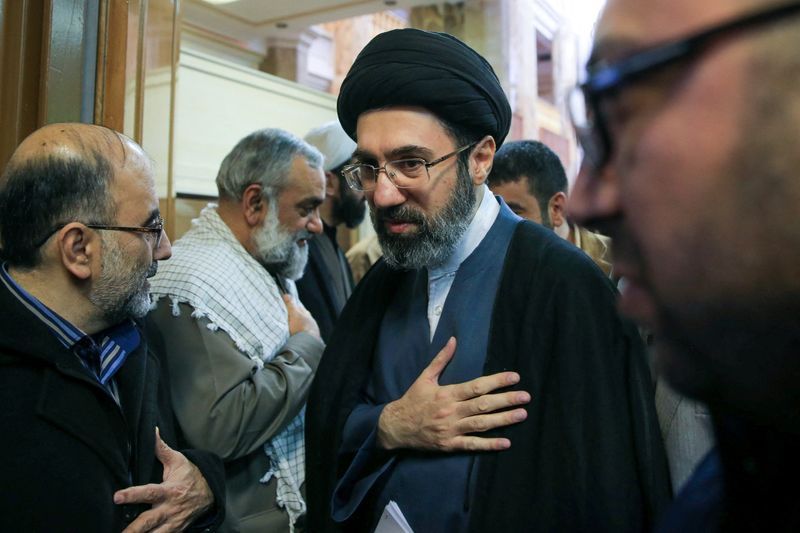
Sofia, Bulgaria – Iran’s new Supreme Leader, Mojtaba Khamenei, has designated the upcoming Persian New Year as the “year of a resistance economy under national unity and national security,” according to a statement released Friday. The announcement comes amid heightened regional tensions and follows accusations of Iranian involvement in recent attacks targeting neighboring countries. Khamenei also explicitly denied any role by Iran or its allied forces in attacks against Turkey and Oman.
The designation of a “resistance economy” signals a continued focus on self-reliance and resilience in the face of international sanctions and economic pressures. This policy has been a recurring theme in Iranian rhetoric for years, particularly since the reimposition of stringent sanctions by the United States. The emphasis on “national unity and national security” suggests a prioritization of internal stability and a firm response to perceived external threats.
The Succession of Mojtaba Khamenei
Mojtaba Khamenei’s ascension to the position of Supreme Leader follows the death of his father, Ayatollah Ali Khamenei, in what has been described as US-Israeli strikes. The 56-year-old inherits a nation grappling with economic hardship, political unrest, and a complex geopolitical landscape. Unlike his father, Mojtaba Khamenei has maintained a remarkably low public profile throughout his life. He has never held government office, nor has he delivered public speeches or granted interviews, leading to speculation about his political views and leadership style.
However, reports suggest that he wielded significant influence behind the scenes during his father’s tenure. US diplomatic cables, published by WikiLeaks in the late 2000s, reportedly described him as “the power behind the robes,” a “capable and forceful” figure within the Iranian regime, according to the Associated Press. The New Yorker notes that he was his father’s closest advisor.
The selection of Mojtaba Khamenei is not without controversy. The Islamic Republic, founded in 1979, was established on the principle of choosing the Supreme Leader based on religious standing and proven leadership, rather than hereditary succession. Ayatollah Ruhollah Khomeini, the founder of the Islamic Republic, explicitly criticized dynastic rule as “sinister” and “evil.” Despite this, the Assembly of Experts, the body responsible for selecting the Supreme Leader, ultimately chose the son of the previous leader.
Interestingly, reports indicate that the late Ayatollah Ali Khamenei himself may have been hesitant about a dynastic succession. According to one member of the Assembly of Experts, speaking two years prior to his death, Ali Khamenei opposed the idea of his son becoming a candidate for future leadership, though he never publicly addressed such speculation. The BBC reports on this internal debate.
Denials of Involvement in Regional Attacks
Alongside the New Year message, Mojtaba Khamenei issued a firm denial regarding Iran’s involvement in recent attacks targeting Turkey and Oman. The statement, released via his Telegram channel, asserts that neither Iran nor its allied forces were responsible for these incidents. This denial comes as regional tensions remain high, with numerous reports of escalating conflicts and proxy battles across the Middle East.
The specific attacks to which Khamenei refers remain somewhat unclear. However, recent weeks have seen a surge in strikes and incidents across the region, including reported attacks on oil depots and infrastructure. U.S. News & World Report highlights this context.
The “Resistance Economy” and Iran’s Economic Challenges
The emphasis on a “resistance economy” reflects Iran’s ongoing struggle with economic sanctions and isolation. These sanctions, primarily imposed by the United States, have severely impacted Iran’s oil exports, financial sector, and overall economic growth. The concept of a “resistance economy” advocates for self-sufficiency, import substitution, and the development of domestic industries to reduce reliance on foreign markets.
This policy has faced significant challenges, however. Iran’s economy continues to grapple with high inflation, unemployment, and a depreciating currency. The International Monetary Fund (IMF) has repeatedly warned about the deteriorating economic situation in Iran, citing the impact of sanctions and internal economic mismanagement. The success of the “resistance economy” will depend on Iran’s ability to overcome these obstacles and diversify its economic base.
Mojtaba Khamenei’s Background and Education
Born on September 8, 1969, in Mashhad, Mojtaba Khamenei received his education in the elite seminaries of Qom, the center of theological learning in Iran. Although he is a trained cleric, he is not considered a prominent scholar or thinker among Iran experts. The New Yorker details his educational background and relative lack of public intellectual output.
His marriage to the daughter of a former speaker of parliament further cemented his connections within the Iranian political establishment. Tragically, his wife and other family members were reportedly killed in the same strike that claimed the life of his father, Ayatollah Ali Khamenei. This personal loss adds another layer of complexity to his new role as Supreme Leader.
What to Expect Under New Leadership
Analysts anticipate that Mojtaba Khamenei will likely continue the hardline policies of his father, though the extent of his influence and decision-making style remains largely unknown. His lack of public experience and limited exposure to international scrutiny raise questions about his ability to navigate the complex challenges facing Iran. The coming months will be crucial in determining the direction of Iranian foreign policy, economic strategy, and domestic affairs.
The appointment also raises concerns about the future of Iran’s nuclear program. Negotiations with world powers over the Joint Comprehensive Plan of Action (JCPOA), aimed at limiting Iran’s nuclear capabilities in exchange for sanctions relief, have been stalled for years. It remains to be seen whether Mojtaba Khamenei will be willing to resume negotiations or pursue a more confrontational approach.
The international community will be closely watching Iran’s actions in the coming weeks and months. The stability of the Middle East region, and the global energy market, could be significantly impacted by the decisions made by Iran’s new Supreme Leader.
Next Steps: The Assembly of Experts is expected to formally ratify Mojtaba Khamenei’s appointment in the coming days. Further details regarding his policy priorities and leadership team are anticipated to be announced shortly. Stay tuned to World Today Journal for ongoing coverage of this developing story.
What are your thoughts on the new leadership in Iran? Share your comments below and share this article with your network.
Keep reading