
Iran is signaling a major strategic shift in how it controls one of the world’s most vital maritime arteries. Supreme Leader Ayatollah Mojtaba Khamenei announced Thursday that Iran will enter a recent phase in the management of the Strait of Hormuz, a move that comes as the region navigates a fragile ceasefire and prepares for high-stakes diplomatic talks.
The announcement, delivered via a statement read on state television, arrives amid intense geopolitical volatility. While the Supreme Leader asserted that “Iran is not seeking war,” he emphasized that the nation “will not forfeit its rights” and views all “resistance fronts” as a unified entity. This rhetoric underscores Tehran’s intent to maintain significant leverage over global energy markets even as it engages in peace negotiations.
The timing of this shift is critical. Iran recently agreed to a fragile two-week ceasefire with the United States following threats of annihilation from U.S. President Donald Trump according to reports from Hindustan Times. This ceasefire is intended to pave the way for peace negotiations, with crucial talks between the two nations set to begin in Islamabad.
The transition of leadership in Tehran adds another layer of complexity to the situation. Ayatollah Mojtaba Khamenei has assumed the role of Supreme Leader after his father, Ali Khamenei, was killed during U.S.-Israeli airstrikes on Feb. 28, 2026 as reported by The New York Times. His first major statements since taking power indicate a willingness to apply the Strait of Hormuz as a primary tool of strategic pressure.
The Strategic Weight of the Strait of Hormuz
To understand why a “new phase” of management is significant, the economic stakes. The Strait of Hormuz is the world’s most critical energy corridor, carrying roughly 20% of the global oil trade per Times Now. Because of this, any restriction on movement through the waterway can cause immediate shocks to global shipping and energy prices.
Since the outbreak of conflict on February 28, Iran has repeatedly restricted or controlled access to the strait. While the waterway is technically open on paper, the reality on the water is far more restrictive. Recent shipping data reveals a stark decline in traffic; only seven vessels passed through the strait in a 24-hour period, a massive drop from the usual daily average of more than 130 ships according to Times Now.
This paralysis is a result of Iran permitting passage only under strict coordination with its armed forces. By effectively controlling who moves and how, Tehran has demonstrated its ability to weaponize the corridor to pressure the U.S. And its allies. Mojtaba Khamenei has described the Iranian nation as the “definitive victor” in what he calls the “epic of the Third Sacred Defense.”
Ceasefire Tensions and the ‘Resistance Front’
The “new phase” of management coincides with a precarious security environment in the broader Middle East. While Iran is negotiating with the U.S., tensions remain high regarding Tehran’s allies, specifically Hezbollah in Lebanon. Israeli strikes on Wednesday resulted in the deadliest day in Lebanon since the war began, with more than 300 people killed as detailed by Hindustan Times.
A central point of contention in the current ceasefire is whether the agreement extends to Hezbollah. Iran has warned of “STRONG responses” if attacks on its ally continue. This link between the Strait of Hormuz and the situation in Lebanon illustrates Khamenei’s view of the “resistance fronts” as a unified entity; a provocation in one area may lead to a strategic response in another, such as further restrictions on the energy corridor.
the Supreme Leader has urged the Iranian public to remain active. He told citizens that they must “not imagine that taking to the streets is no longer necessary” despite the ceasefire, suggesting that public demonstrations are influential in the outcome of the upcoming negotiations.
Key Takeaways: The Current Crisis
- Leadership Change: Mojtaba Khamenei succeeded his father, Ali Khamenei, following airstrikes on Feb. 28, 2026.
- Maritime Control: Iran is shifting to a “new phase” of management for the Strait of Hormuz, which handles 20% of global oil trade.
- Shipping Impact: Daily vessel traffic has plummeted from an average of 130+ ships to as few as seven in some 24-hour windows.
- Diplomatic Context: A fragile two-week ceasefire is currently in place to facilitate peace talks in Islamabad.
- Regional Linkage: Iran views its allies, including Hezbollah, as part of a unified resistance and warns of responses to Israeli strikes in Lebanon.
What Happens Next?
The international community is now looking toward the upcoming talks in Islamabad. The primary objective of these negotiations will be to determine if the fragile ceasefire can be converted into a sustainable peace agreement and whether Iran will ease its strict coordination of maritime traffic in the Strait of Hormuz.
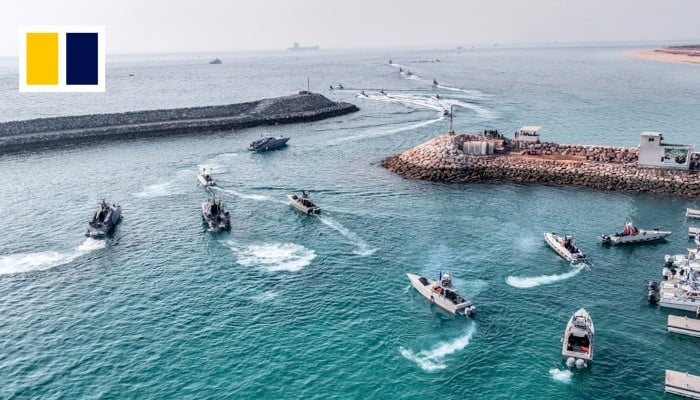
The “new phase” announced by Mojtaba Khamenei suggests that Tehran will not simply return to the status quo. Instead, it appears Iran intends to formalize a level of control over the waterway that serves as a permanent strategic lever during diplomatic engagements.
The next confirmed checkpoint for the region is the commencement of the peace negotiations in Islamabad. The outcome of these talks will likely determine whether the Strait of Hormuz returns to normal shipping volumes or remains a tool of geopolitical pressure.
We invite our readers to share their perspectives on these developments in the comments below. How should the global community respond to the strategic shifts in the Strait of Hormuz?