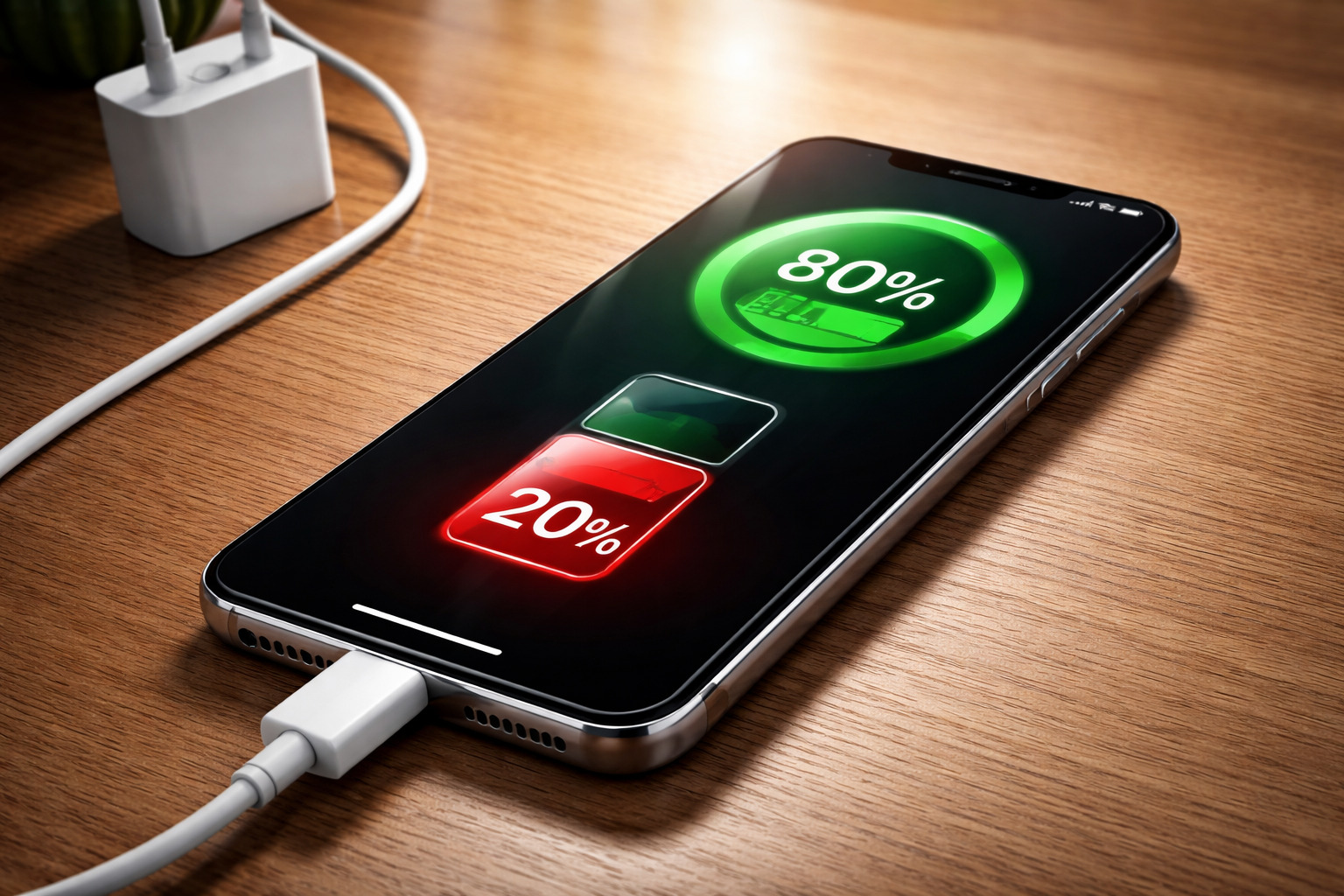
Smartphone users are increasingly abandoning the practice of limiting their device charging to 80% as new research and manufacturer guidance suggest that modern battery management systems are sufficient to handle daily wear. While many consumers previously adhered to strict “80% rules” to extend lithium-ion battery lifespan, experts now emphasize that software-driven optimization and modern hardware design have made such manual interventions largely unnecessary for the average user. According to Apple’s official documentation on lithium-ion technology, modern devices are engineered to manage charging cycles automatically, effectively mitigating the degradation that once plagued older cell chemistries.
The shift away from obsessive battery management follows the introduction of more transparent health reporting tools by major manufacturers. Both Apple’s iOS and various Android skins now provide granular data on “Maximum Capacity” and “Cycle Count,” which has ironically contributed to “battery anxiety.” As users gain unprecedented visibility into how their batteries degrade over time, some have turned to aggressive manual habits—such as unplugging devices at specific thresholds—to slow this natural process. However, industry engineers argue that these methods often trade current convenience for negligible long-term gains in capacity retention.
Understanding Modern Battery Chemistry
Lithium-ion batteries, which power the vast majority of modern smartphones, naturally degrade as they undergo chemical aging. This process is driven by the movement of lithium ions between the cathode and anode, a cycle that inevitably leads to a slight loss in capacity over time. The “80% rule” originated from the fact that lithium-ion cells experience higher stress when kept at either extreme—fully charged (100%) or deeply discharged (0%). Keeping the battery in the “middle” range, typically between 20% and 80%, theoretically reduces the time the battery spends at high voltage states, which can accelerate the breakdown of the electrolyte.
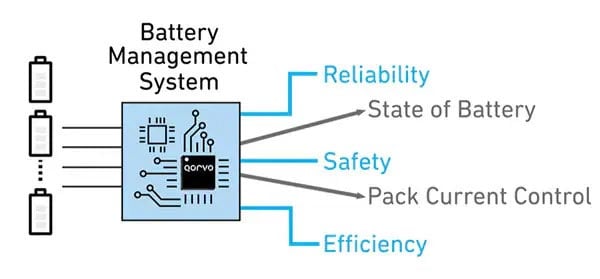
Despite the theoretical benefits, modern smartphone manufacturers have integrated sophisticated Battery Management Systems (BMS) to handle this stress automatically. According to Battery University, a leading resource on battery performance, the BMS inside a smartphone prevents the battery from ever truly reaching its “absolute” chemical 100% or 0% capacity, even when the user interface displays those numbers. By maintaining a buffer, manufacturers ensure that the user-facing 100% mark is actually a safe, calibrated state that preserves the longevity of the cell.
The Impact of Optimized Charging Features
Rather than relying on manual monitoring, consumers are increasingly utilizing built-in software features designed to manage charge levels intelligently. Apple introduced “Optimized Battery Charging” in iOS 13, which learns a user’s daily routine to delay charging past 80% until just before the device is needed. Similarly, many Android manufacturers, including Samsung and Google, offer “Adaptive Charging” or “Protect Battery” modes that limit the charge to 80% or 85% automatically overnight.

These features provide the benefits of manual intervention without the user effort. Data from Android Authority suggests that using these manufacturer-provided settings is more effective than manual unplugging because they utilize real-time temperature monitoring and intelligent scheduling. When a phone charges, heat is generated, which is the primary enemy of long-term battery health. By managing the charging speed—slowing it down as the battery nears capacity—these systems actively reduce the thermal stress that causes premature degradation.
Moving Beyond Battery Anxiety
The obsession with battery health metrics has created a paradox where users spend more time managing their phone’s power than actually enjoying its features. The transparency offered by modern diagnostic tools was intended to help users identify when a battery replacement might be necessary, not to turn daily charging into a chore. Industry analysts note that a typical lithium-ion battery is designed to retain up to 80% of its original capacity after 500 to 800 complete charge cycles, a threshold that usually aligns with the average consumer’s upgrade cycle.
For most users, the degradation experienced over two or three years of normal usage is rarely noticeable in daily life. Constant monitoring of battery health percentages often leads to unnecessary stress over a component that is ultimately a consumable part. As noted in guidance from Google Support regarding Pixel devices, the most significant factor in battery longevity is avoiding extreme temperatures rather than obsessing over specific percentage points. Keeping a device away from high heat—such as leaving it on a car dashboard in the sun—has a far greater impact on health than charging it to 100% overnight.
What Happens Next?
The industry is moving toward even more automated solutions that require zero input from the user. Future iterations of mobile operating systems are expected to rely more heavily on AI-driven power management that adjusts charging profiles based on usage patterns, environmental factors, and even expected hardware lifespan. As consumers move toward longer upgrade cycles, the focus is shifting from “maintaining perfect health” to “ensuring reliable performance” throughout the life of the device.

For those still concerned, the most practical advice remains consistent: use the manufacturer’s built-in optimized charging settings, avoid exposing the device to extreme heat, and treat the battery as a component that will naturally reach the end of its functional life regardless of how carefully it is treated. As the industry continues to refine these metrics, the trend suggests a future where battery management happens entirely in the background, allowing users to move past the era of the 80% rule. We encourage readers to share their own experiences with battery health tools in the comments section below.
- Canada BC Wildfires Force 20,000 Residents to Evacuate
- Suspect Arrested in Murder of 38-Year-Old Missionary in Athens, Greece
- Screen Time, Sleep and Mental Health: Family Rules That Change Daily Life (world-today-news.com)
- Luxembourg and WHO Sign Landmark Strategic Partnership for Global Health (newsdirectory3.com)