
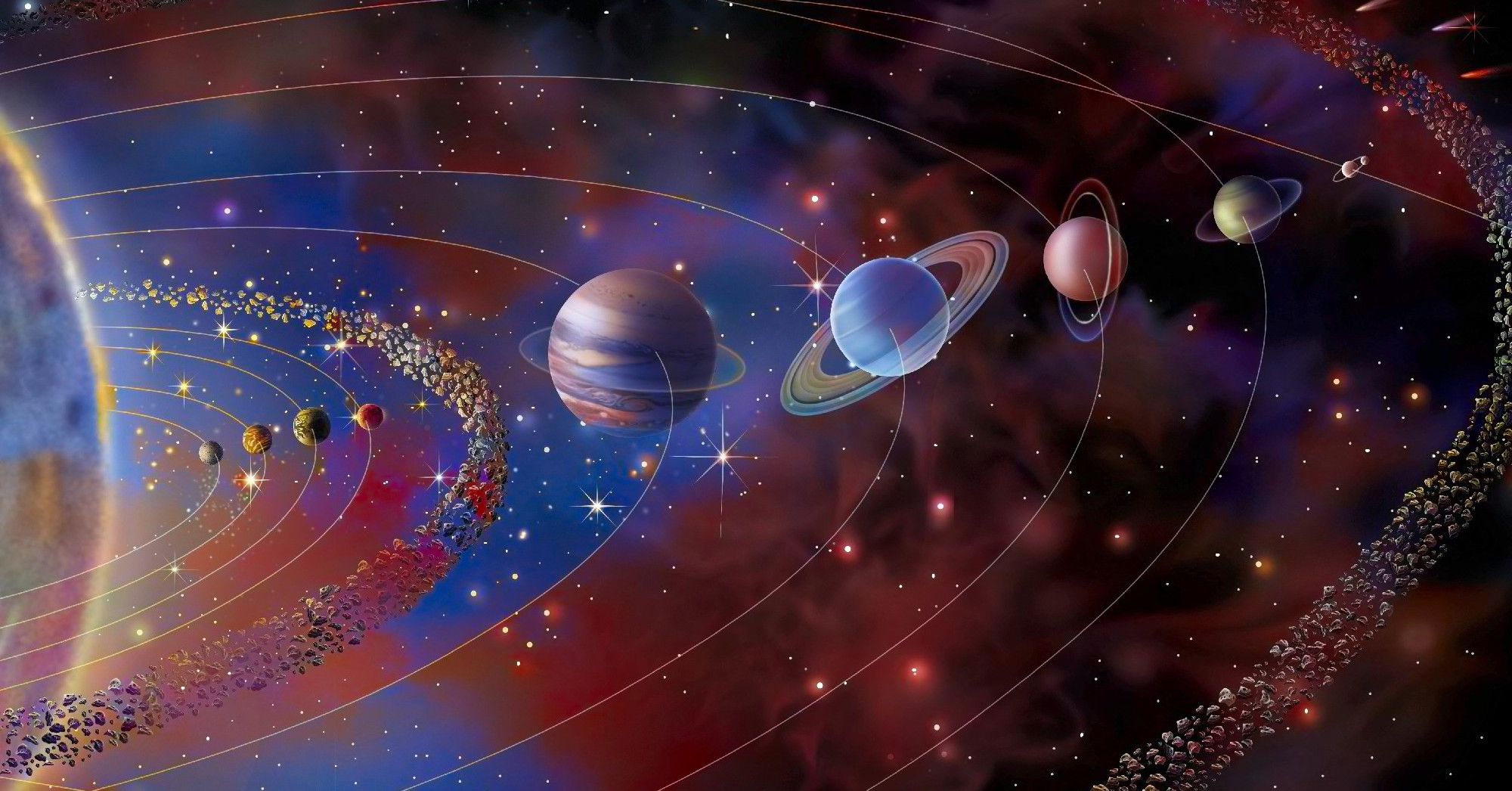
For nearly two decades, one of the most enduring debates in modern science has not taken place in a political arena, but in the cold reaches of the Kuiper Belt. The question of Pluto’s planet status remains a focal point of contention between traditional astronomical classification and a growing movement of planetary scientists who argue that the current definition of a “planet” is fundamentally flawed.
Since the International Astronomical Union (IAU) stripped Pluto of its primary planetary status in 2006, the celestial body has been categorized as a “dwarf planet.” While this classification served a specific mathematical and orbital purpose at the time, new data from deep-space exploration—most notably the New Horizons mission—has reignited the argument that Pluto is far too complex to be relegated to a secondary category.
As we move further into the 2020s, the push to reinstate Pluto as a planet is less about nostalgia and more about how we define the nature of worlds. The tension lies between a “dynamical” definition, which focuses on where a body is and what it has cleared from its orbit, and a “geophysical” definition, which focuses on what the body actually is.
For technology and science observers, this debate is a masterclass in how empirical data can disrupt established institutional frameworks. When we look at the latest imaging and spectroscopic data, Pluto does not behave like a mere asteroid or a simple piece of space debris. it behaves like a planet.
The 2006 Decision: Why Pluto Was Demoted
To understand the current push for reinstatement, one must first look at the events of August 2006. During the IAU General Assembly in Prague, astronomers voted on a formal definition of a planet to address the discovery of Eris, another distant object that appeared to be as large as or larger than Pluto. The resulting IAU definition of a planet established three strict criteria that a celestial body must meet to be considered a planet in our solar system.

First, the body must orbit the Sun. Second, it must have sufficient mass for its own gravity to overcome rigid body forces so that it assumes a hydrostatic equilibrium (essentially, it must be nearly round). Third, and most controversially, it must have “cleared the neighborhood” around its orbit.
Pluto comfortably met the first two criteria. However, because it resides in the Kuiper Belt—a vast region of icy objects and debris—it has not cleared its orbital path of other significant objects. Under this strict dynamical framework, Pluto was reclassified as a dwarf planet, a decision that sparked immediate public backlash and a lingering academic divide.
New Horizons and the Complexity of Pluto
The debate shifted from theoretical to empirical in July 2015, when NASA’s New Horizons spacecraft performed the first-ever flyby of Pluto. The data returned by the mission fundamentally changed our understanding of the dwarf planet, revealing a world of staggering geological complexity that the IAU’s 2006 definition failed to account for.
According to NASA’s New Horizons mission archives, the spacecraft captured images of towering water-ice mountains, vast plains of nitrogen ice—including the famous heart-shaped region known as Sputnik Planitia—and evidence of a potential subsurface liquid water ocean. These features indicate that Pluto is geologically active, possessing an internal heat source and a complex atmospheric system.
Planetary scientists, including Alan Stern, the Principal Investigator of the New Horizons mission, argue that these geophysical characteristics are what truly define a planet. If a body is large enough to be round and possesses complex geology—such as mountains, glaciers, and an atmosphere—it should be classified as a planet regardless of its orbital neighborhood.
Dynamical vs. Geophysical Definitions
The core of the conflict is a clash of scientific philosophies. The IAU utilizes a “dynamical” definition, which prioritizes the object’s relationship with its environment. This approach is useful for astronomers mapping the architecture of the solar system and understanding orbital mechanics.
Conversely, many planetary scientists advocate for a “geophysical” definition. This approach prioritizes the intrinsic properties of the body. Under a geophysical framework, any celestial body that is large enough to be round due to its own gravity is a planet. This would not only reinstate Pluto but would also likely elevate other objects in the Kuiper Belt and even Ceres, located in the asteroid belt, to planetary status.
The implications of this shift are significant. If the geophysical definition were adopted, the number of planets in our solar system would jump from eight to potentially dozens, or even hundreds, as more medium-sized round objects are discovered in the outer reaches of space.
| Feature | IAU Dynamical Definition | Geophysical Definition |
|---|---|---|
| Primary Focus | Orbital path and “clearing” of neighborhood | Internal composition and physical shape |
| Pluto’s Status | Dwarf Planet | Planet |
| Number of Planets | Limited (currently 8) | Potentially many (dozens to hundreds) |
| Key Requirement | Dominance in its orbital zone | Hydrostatic equilibrium (roundness) |
Why the Classification Matters
To a casual observer, whether Pluto is a “planet” or a “dwarf planet” might seem like a semantic quibble. However, in the scientific community, classification drives funding, research priorities, and the way students are taught about the universe. When an object is labeled a “planet,” We see viewed as a primary object of study—a world with its own history, evolution, and systems.
By classifying Pluto as a dwarf planet, some argue that it diminishes the perceived importance of the Kuiper Belt. This region is essentially a “deep freeze” of the early solar system, containing pristine materials from 4.5 billion years ago. Recognizing Pluto as a planet would signal a broader scientific acknowledgement that the outer solar system is just as vital to our understanding of planetary formation as the inner rocky planets.
the discovery of other candidate “planets” in the outer rim, such as Eris, Haumea, and Makemake, suggests that Pluto is not an anomaly but the prototype for a whole new class of planetary bodies. If Pluto is a planet, then we are living in a much more crowded and diverse solar system than previously imagined.
The Path Forward: Will Pluto Ever Be a Planet Again?
The prospect of Pluto returning to full planetary status depends entirely on the IAU’s willingness to revise its 2006 resolution. The IAU is a professional organization of astronomers, and changing a definition requires a broad consensus. While the geophysical argument has gained significant traction among planetary scientists, the dynamical definition remains the official standard for the global astronomical community.

The debate is likely to persist as long as we continue to discover new objects in the far reaches of our system. The hypothetical “Planet Nine”—a massive, unseen planet predicted by orbital anomalies in the Kuiper Belt—could also complicate the conversation. If a ninth, massive planet is ever officially confirmed, it may force the IAU to revisit its definitions to distinguish between “major planets” and “minor planets” without erasing the planetary nature of worlds like Pluto.
For now, Pluto remains in a state of scientific limbo. It is too complex to be a mere asteroid, too minor to clear its orbit, but too “planet-like” for many scientists to accept its demotion. This tension reflects the very essence of science: the constant refinement of definitions in the face of new, undeniable evidence.
The next major checkpoint for this discussion will likely coincide with future IAU General Assemblies or the release of new data from upcoming outer-solar-system probes. Until then, Pluto continues its long, elliptical journey around the Sun, regardless of the label humans assign to it.
What do you think? Should the definition of a planet be based on its orbit or its geology? Share your thoughts in the comments below and let us know if you think Pluto deserves its title back.