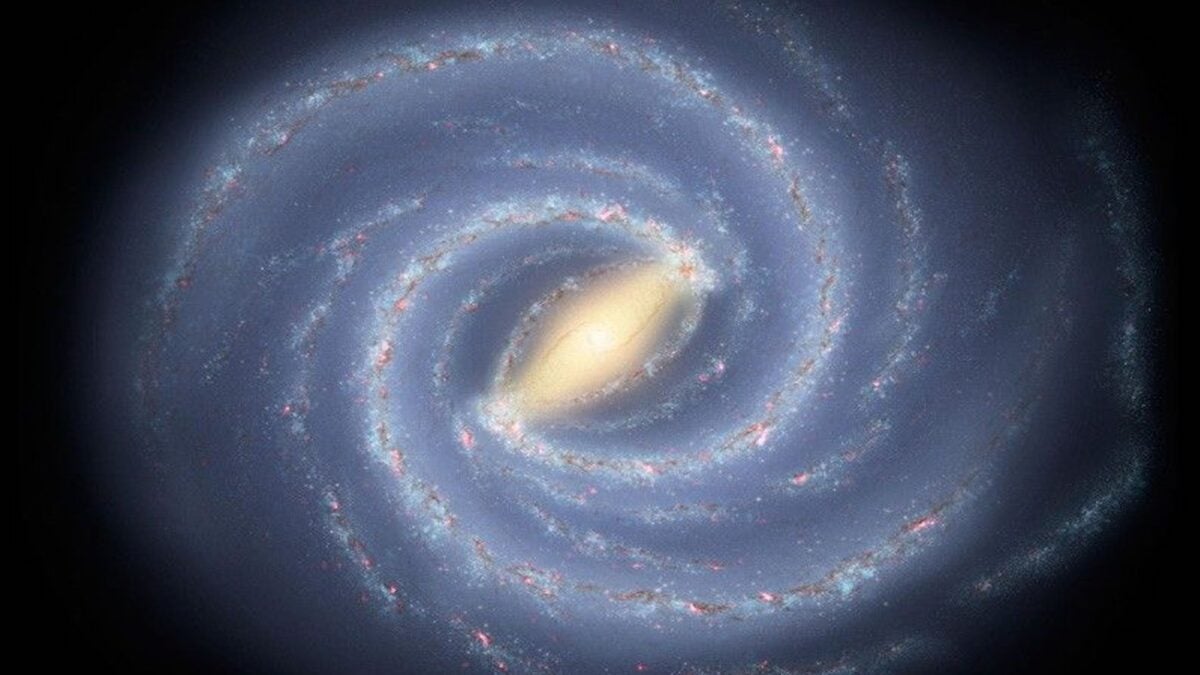
New measurements of the Milky Way’s structural components suggest that the galaxy’s spiral arms may extend significantly further into intergalactic space than previously documented. By analyzing the distribution of young, massive stars and gas clouds, astrophysicists are reconsidering the physical dimensions and total mass of the galaxy, a development that could fundamentally alter current models of galactic evolution.
The research, which centers on the precision mapping of the galaxy’s outer disk, indicates that the gravitational influence and visible matter of the Milky Way may encompass a larger volume of space than earlier surveys, such as those conducted by the Gaia space observatory, had estimated. According to data published by the European Space Agency (ESA), the Gaia mission has been instrumental in creating the most accurate 3D map of our galaxy, yet researchers continue to find anomalies in the peripheral regions that suggest the spiral arms are less confined than traditional models suggest.
Redefining the Galactic Edge
For decades, astronomers relied on models that depicted the Milky Way as a relatively contained disk of stars, gas, and dust, surrounded by a diffuse halo of dark matter. However, recent observations using high-resolution infrared telescopes have provided a clearer view through the dense dust clouds that typically obscure the galactic plane. As reported by NASA, these technological advancements allow scientists to track the motion of stars in the far reaches of the spiral arms with unprecedented accuracy.

The discrepancy between previous mass estimates and the current findings lies in how astronomers account for “runaway” stars and outlying gas filaments. If these structures are indeed part of the galaxy’s primary spiral arms rather than independent debris, the total mass calculation must be adjusted upward. This revision is not merely a matter of geometry; it affects how scientists calculate the rotational velocity of the galaxy, which is a primary indicator of dark matter distribution.
Why Mass Estimates Matter
The mass of the Milky Way is a foundational variable in astrophysics, serving as a benchmark for comparing our galaxy to others in the Local Group. If the galaxy is more massive than previously thought, it implies that it exerts a stronger gravitational pull on its satellite galaxies, such as the Magellanic Clouds. According to a study published in the Astrophysical Journal, even minor revisions to the mass of the galactic disk can shift predictions regarding the future orbital paths of these neighbors.

Furthermore, understanding the true extent of the spiral arms helps resolve long-standing questions about how galaxies grow. The theory of “galactic cannibalism,” where larger galaxies consume smaller ones, relies on precise measurements of the outer disk. If the Milky Way’s arms are stretched further than expected, it may provide evidence of past mergers that are currently being integrated into the galaxy’s outer structure.
Challenges in Mapping the Invisible
Mapping the outer reaches of the Milky Way remains a complex technical challenge. Because Earth is located within the galactic disk, our perspective is inherently limited by the “zone of avoidance”—the area of the sky obscured by the dust and gas in the center of the galaxy. To overcome this, researchers are increasingly utilizing multi-wavelength astronomy, combining radio, infrared, and optical data to “see” through the interference.
The National Radio Astronomy Observatory has noted that radio observations are particularly effective for this task, as they can detect the cold hydrogen gas that typically traces the outer spiral arms. By correlating this gas data with the stellar movements tracked by Gaia, astronomers are building a more cohesive picture of the galaxy’s true physical footprint. This collaborative approach between different observation platforms is essential for reconciling conflicting data sets that have emerged over the last decade.
Future Observations and Data Releases
The scientific community is currently awaiting the next comprehensive data release from the Gaia mission, which is expected to provide even tighter constraints on the motion of stars in the galactic outskirts. These upcoming datasets will be critical for verifying whether the extended spiral arms are a permanent feature or a transient phenomenon caused by past gravitational interactions.

As researchers continue to refine these models, the focus will remain on the interplay between visible baryonic matter and the elusive dark matter halo that anchors the galaxy. For those interested in following the latest developments, the International Astronomical Union periodically publishes updates on galactic structural research and findings from major survey projects. Further peer-reviewed papers are anticipated in the coming months as researchers synthesize the latest observations to update the standard model of the Milky Way.
What are your thoughts on how these new findings might change our understanding of the universe? Share your insights in the comments below and join the conversation on our social media platforms.