
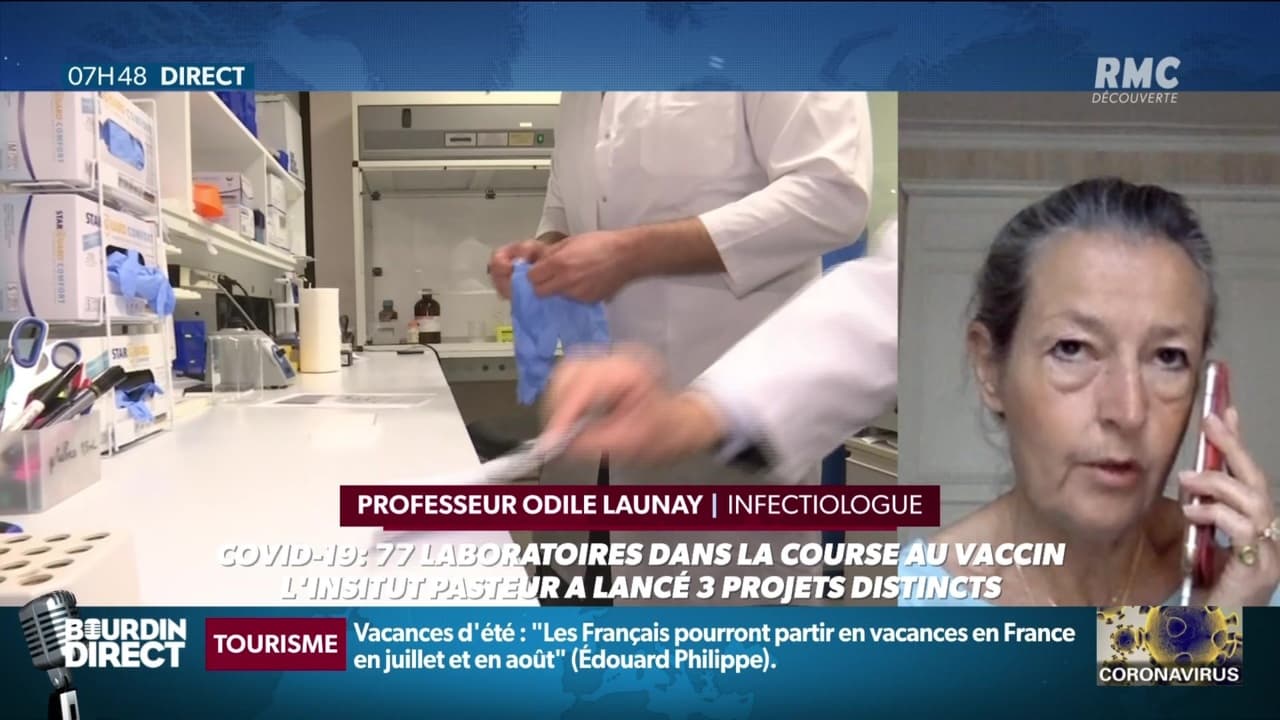
In the shadow of emerging infectious diseases, one name has become synonymous with clarity and urgency in France’s public health discourse: Dr. Odile Launay. As a leading infectiologist and researcher at the Institut Pasteur, Dr. Launay has spent decades studying viral threats—from Ebola to SARS-CoV-2—and her recent insights on vaccine development are reshaping global conversations about preparedness. Her latest remarks, delivered during a high-profile seminar on zoonotic diseases at the Institut National de la Santé et de la Recherche Médicale (Inserm), challenge long-held assumptions about the timelines and obstacles facing vaccine innovation.
“The obstacle to developing a vaccine isn’t scientific—it’s systemic,” Dr. Launay told attendees, emphasizing that while breakthroughs in virology and immunology have accelerated, bureaucratic hurdles, funding gaps, and global inequities in manufacturing remain critical bottlenecks. Her comments come as the world grapples with the lingering effects of the COVID-19 pandemic and the resurgence of old threats like hantaviruses, which have re-emerged in regions with poor surveillance infrastructure. Dr. Launay’s work at the intersection of infectious disease and vaccine policy positions her as a key voice in debates over how to future-proof global health security.
This interview explores Dr. Launay’s perspective on vaccine development, the challenges of hantavirus prevention, and the steps needed to bridge the gap between scientific progress and real-world deployment.
“The Real Barriers Aren’t in the Lab”
When asked about the most pressing challenges in vaccine development, Dr. Launay pointed not to the science itself, but to the infrastructure required to scale production and distribute vaccines equitably. “We’ve seen time and again that even when a vaccine is ready, getting it to the people who need it fastest is the harder part,” she said. Her remarks align with recent critiques of the global vaccine supply chain, which was exposed as fragile during the COVID-19 response.

For hantaviruses—a family of rodent-borne viruses that cause severe respiratory illness—Dr. Launay noted that while a single inactivated-virus vaccine exists (targeting the Hantavirus orthohantavirus genus), its limited availability and the lack of standardized protocols for other hantavirus strains create a patchwork of protection. “The vaccine we have is effective, but it’s not accessible to everyone who needs it,” she explained. “And for emerging strains, we’re still playing catch-up.”
Her call for reform extends to regulatory frameworks. “Fast-tracking approvals isn’t the answer—we need predictable, science-based pathways that don’t punish innovation,” she argued. This stance reflects growing frustration among researchers about the World Health Organization’s (WHO) one-health approach, which aims to integrate human, animal, and environmental health but often struggles with implementation.
Hantaviruses: The Silent Threat
Hantaviruses, though less discussed than SARS-CoV-2 or influenza, pose a significant and often underreported risk. Transmitted through rodent excrement or saliva, these viruses can cause hantavirus pulmonary syndrome (HPS) or hemorrhagic fever with renal syndrome (HFRS), with fatality rates as high as 40% in some regions. According to the U.S. Centers for Disease Control and Prevention (CDC), cases have been reported in every continent except Antarctica, with outbreaks linked to agricultural work, deforestation, and climate change.
Dr. Launay highlighted the lack of cross-protection among hantavirus strains as a major obstacle. “A vaccine for one strain doesn’t guarantee immunity against another,” she said. “What we have is why we need a broader approach—one that includes surveillance, vector control, and adaptive vaccine platforms.” Her lab at Institut Pasteur is currently exploring mRNA-based vaccine candidates that could offer broader protection, a strategy that gained prominence during the COVID-19 pandemic.
Key Takeaways:
- Vaccine development barriers: Systemic issues (funding, regulation, distribution) gradual deployment more than scientific limitations.
- Hantavirus risks: Underreported but deadly, with no universal vaccine; strains vary by region.
- Dr. Launay’s focus: Advocating for adaptive vaccine platforms and one-health integration to address zoonotic threats.
- Next steps: WHO and national health agencies are reviewing hantavirus surveillance protocols (expected updates by Q3 2026).
From Lab to Lifecycle: The Vaccine Pipeline
Dr. Launay’s work underscores the need for a lifecycle approach to vaccine development—one that considers not just the science, but also the economic and logistical realities of production. She cited the example of the WHO’s 2023 recommendation for a hantavirus vaccine, which was met with enthusiasm but limited uptake due to cost and supply chain constraints.
“We can’t just wait for the next pandemic to act,” she warned. “We need to invest in platforms that can be repurposed quickly—like the mRNA technology used for COVID-19—and ensure that manufacturing isn’t concentrated in just a few countries.” Her remarks echo broader calls for WHO’s mRNA vaccine technology transfer hub, which aims to decentralize production and improve global equity.
Dr. Launay also addressed the role of public perception. “Misinformation and vaccine hesitancy can derail even the most promising science,” she said. “We need better communication—not just about the vaccines themselves, but about the diseases they’re designed to prevent.” This aligns with ongoing efforts by organizations like the European Centre for Disease Prevention and Control (ECDC) to improve vaccine literacy.
What’s Next for Hantavirus Research?
The path forward, according to Dr. Launay, involves three critical pillars:
- Surveillance: Strengthening global monitoring of rodent populations and hantavirus circulation, particularly in high-risk regions like South America and Asia.
- Vaccine innovation: Developing pan-hantavirus vaccines that can protect against multiple strains, leveraging technologies like mRNA or virus-like particles (VLPs).
- Policy reform: Streamlining regulatory pathways for zoonotic disease vaccines while maintaining safety standards.

Dr. Launay’s team at Institut Pasteur is collaborating with Inserm and the European Food Safety Authority (EFSA) to pilot a phase I clinical trial for a next-generation hantavirus vaccine, with preliminary results expected in late 2026. Meanwhile, the WHO’s R&D Blueprint continues to prioritize hantaviruses as a high-threat pathogen.
Expert Perspective: Why This Matters
Dr. Launay’s insights are particularly timely given the rising incidence of zoonotic diseases—a trend linked to deforestation, urbanization, and climate change. According to a 2021 study in Nature, over 60% of emerging infectious diseases in humans are zoonotic, yet global health funding for these threats remains disproportionately low.
“We’re playing whack-a-mole with these diseases,” Dr. Launay said. “Instead of reacting after an outbreak, we need to anticipate and prepare.” Her advocacy for proactive measures—such as pre-pandemic vaccine stockpiles and cross-sector collaboration—resonates with calls from the GAVI Alliance and the CEPI (Coalition for Epidemic Preparedness Innovations).
For readers seeking updates on hantavirus research or vaccine developments, the following resources provide authoritative guidance:
- WHO Hantavirus Fact Sheet
- CDC Healthcare Provider Resources
- Eurosurveillance Hantavirus Surveillance Reports
Looking Ahead: The Road to Resilience
The next critical checkpoint for hantavirus vaccine development will be the WHO’s Strategic Advisory Group of Experts (SAGE) meeting in September 2026, where recommendations for global vaccine deployment strategies are expected. Dr. Launay has indicated she will present preliminary data from the Institut Pasteur trials, alongside calls for increased funding for zoonotic disease research.
As Dr. Launay put it in her closing remarks: “The question isn’t whether we can develop vaccines—it’s whether we’re willing to invest in the systems that make them matter. The answer to that will determine how prepared we are for the next threat.”
We welcome your thoughts on this critical issue. Share your experiences with vaccine equity, zoonotic disease risks, or public health policy in the comments below. For more on global health innovation, explore our Vaccine Development and Zoonotic Threats sections.
Related reading