
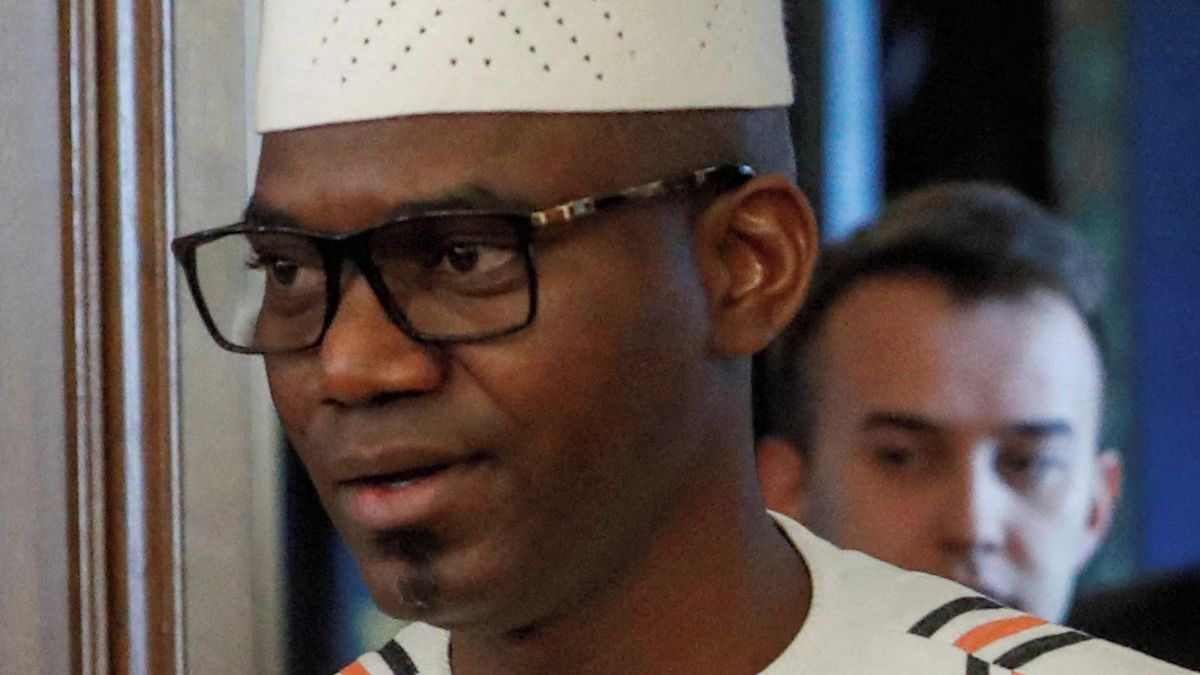
Islamist militants killed Mali’s defence minister, General Sadio Camara, in a coordinated attack on his residence at a military base near the capital Bamako on Saturday, April 25, 2026, according to multiple verified reports. The attack, which also claimed the life of his second wife, was carried out by fighters from the Group for Support of Islam and Muslims (JNIM), an Al-Qaeda-linked insurgent group operating across the Sahel region. Camara, a central figure in Mali’s ruling military junta since it seized power in 2020, died instantly when a vehicle-borne explosive device detonated at his home on the Kati military base.
The killing marks one of the most significant blows to Mali’s military leadership since the junta took control following two coups in 2020. Camara had served as defence minister under junta leader Assimi Goïta and was widely regarded as a key architect of Mali’s security strategy amid escalating violence from Islamist insurgents. His death comes at a time of intensified militant activity across northern and central Mali, where JNIM and affiliated groups have launched increasingly sophisticated attacks on military installations and government targets.
According to family members speaking to Agence France-Presse (AFP), Camara was killed alongside his wife during the assault on his residence in Kati, a garrison town approximately 15 kilometres northeast of Bamako that houses several key military units. The attack was part of a broader offensive by jihadist factions that targeted multiple army positions across Mali on the same day, including bases in the volatile regions of Mopti and Gao. Local security sources confirmed to international media that the assault represented one of the largest coordinated insurgent operations in the country in recent years.
The United Nations condemned the attack and called for an international response to the growing threat of terrorism in West Africa. UN Secretary-General António Guterres issued a statement expressing deep concern over the escalation of violence and urged all parties to protect civilians and uphold international humanitarian law. The European Union’s High Representative for Foreign Affairs, Kaja Kallas, also denounced the killing, extending solidarity to the Malian people and reaffirming the EU’s commitment to supporting peace and stability in the Sahel through diplomatic and humanitarian channels.
Malian state television briefly interrupted programming to announce Camara’s death, though official details from the junta remained limited in the immediate aftermath. Junta spokesperson Colonel Abdoulaye Maïga later confirmed the incident in a terse statement, noting that investigations were underway and urging calm among the population. However, independent verification of casualty figures beyond Camara and his wife remains difficult, as access to the Kati base is restricted and official reports have not disclosed whether other personnel were injured or killed in the blast.
The attack underscores the deepening security crisis facing Mali, where junta-led forces have struggled to contain insurgent expansion despite years of military rule and partnerships with foreign military actors, including the Wagner Group. Since the junta’s takeover, Mali has experienced a sharp rise in violence, with the United Nations reporting over 1,500 civilian deaths linked to conflict in 2025 alone. JNIM, which emerged from a merger of several Islamist factions in 2017, has repeatedly demonstrated its ability to strike high-value targets, including previous attacks on military convoys and administrative centers in central Mali.
Analysts note that Camara’s death could create a power vacuum within the junta’s inner circle, particularly given his close ties to Goïta and his influence over military deployments. Although the junta has not named an interim defence minister, internal succession is expected to follow established military hierarchies, with senior officers from the army general staff likely to assume temporary responsibilities. Any leadership shift may further complicate Mali’s already fragile relations with regional bodies such as the Economic Community of West African States (ECOWAS), which has maintained sanctions on the junta since its refusal to restore civilian rule by the originally promised date of March 2024.
Despite repeated pledges to transition to democratic governance, the junta has consolidated power through constitutional referendums and electoral delays, most recently extending Goïta’s mandate via a controversial referendum in June 2023 that allowed for indefinite presidential terms. Critics argue that the focus on entrenching military authority has come at the expense of effective security governance, contributing to the extremely instability that insurgent groups exploit. The killing of a senior defence official highlights the risks posed by this dynamic, even as junta leaders continue to frame their rule as necessary for national sovereignty.
In the wake of the attack, humanitarian organizations operating in Mali have reported increased challenges in delivering aid due to heightened insecurity and movement restrictions imposed by both state and non-state actors. The World Food Programme warned that disruptions to supply chains could worsen food insecurity in regions already affected by drought and conflict, particularly in the Sahel belt where millions rely on seasonal assistance. Meanwhile, the UN Multidimensional Integrated Stabilization Mission in Mali (MINUSMA), though significantly reduced in size following the junta’s request for withdrawal in 2023, continues to monitor human rights violations and support limited protection efforts in coordination with Malian authorities.
As of Sunday, April 26, 2026, fighting continued in several parts of Mali, with unverified claims circulating on social media about the temporary capture of the northern town of Kidal by rebel forces. However, neither Malian military officials nor international peacekeeping sources have confirmed these reports, and the status of Kidal remains unconfirmed. Reuters noted in its reporting that while insurgent groups have historically sought control of Kidal—a strategic hub in the northeast—recent gains have been difficult to verify due to limited independent access and conflicting accounts from local sources.
The assassination of General Sadio Camara represents a pivotal moment in Mali’s ongoing struggle between military rule and insurgent resilience. It underscores the limitations of relying solely on military solutions to a crisis rooted in political exclusion, economic marginalization, and communal tensions that have persisted for decades. Without a credible path toward inclusive dialogue and institutional reform, analysts warn that cycles of violence are likely to continue, regardless of changes at the top of the security apparatus.
For ongoing updates on the situation in Mali, readers are encouraged to consult verified sources including the United Nations Office for the Coordination of Humanitarian Affairs (OCHA), the International Committee of the Red Cross (ICRC), and reputable international news outlets such as Agence France-Presse, Reuters, and the BBC Africa service. Official statements from the Malian junta, when issued, are typically broadcast through state-owned ORTM television and disseminated via the government’s press agency, AMP.
We invite our global audience to share thoughts, observations, and respectful dialogue in the comments section below. Your engagement helps foster informed discussion on critical world events. Please share this article to help others stay informed about developments in Mali and the broader Sahel region.