
The tension between national identity and religious expression in France has reached a critical juncture, evolving from a political debate into a documented sociological crisis. For many, the experience of living in the French Republic is increasingly defined not by the shared values of liberté, égalité, fraternité, but by a pervasive atmosphere of suspicion and systemic exclusion. While France prides itself on its strict adherence to secularism, the reality for those perceived as Muslim is often one of navigating a landscape of subtle and overt hostilities.
As a journalist who has spent over a decade covering the intersection of fair play and public performance in the sports world, I have always believed that the arena is a mirror of society. When we see athletes facing discrimination based on their faith or origin, it is rarely an isolated incident; it is a symptom of a deeper, systemic ailment. The current state of Islamophobia in France is not merely a series of unfortunate encounters but a structural phenomenon that impacts employment, housing, and the basic psychological safety of millions.
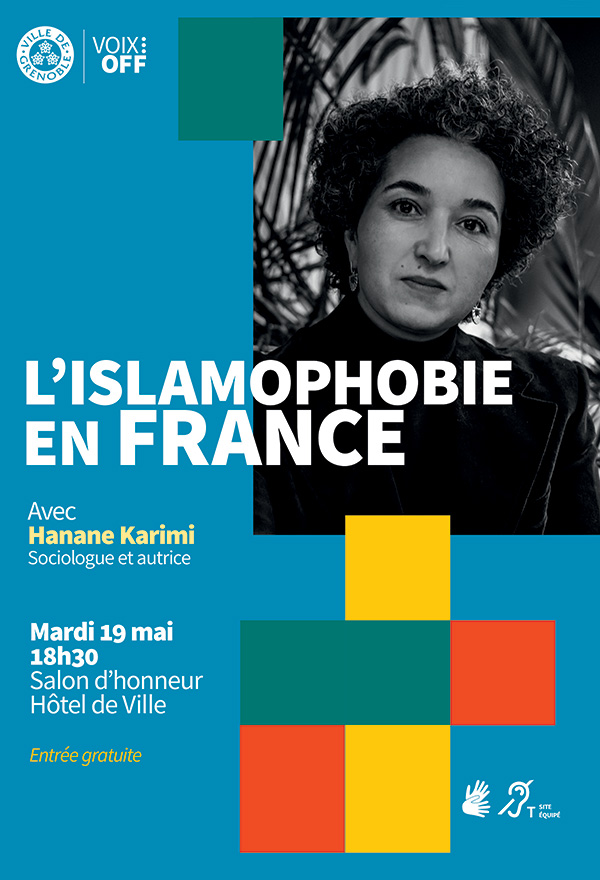
Central to understanding this dynamic is the concept of “perceived identity.” Sociological research, including work by experts such as Hanane Karimi, suggests that the violence and discrimination faced by individuals in France are often triggered not by an actual practice of faith, but by the perception of being Muslim. Which means that markers such as a name, a headscarf, or even skin color can activate a set of prejudices that lead to immediate marginalization, regardless of the individual’s personal beliefs or level of observance.
This distinction is vital. It transforms Islamophobia from a religious conflict into a racialized form of discrimination. When the “perception” of identity becomes the catalyst for violence, the target is no longer just a believer in Islam, but anyone who fits a specific visual or cultural stereotype. This creates a precarious environment where the burden of “proving” one’s compatibility with French values falls disproportionately on a specific segment of the population.
The Framework of Laïcité and the Paradox of Secularism
To understand why Islamophobia has taken such a specific form in France, one must first understand laïcité. Established by the Law of 1905 on the Separation of the Churches and the State, laïcité was originally designed to ensure the neutrality of the state and the freedom of conscience for all citizens. In its purest form, it prevents the government from funding or favoring any specific religion, ensuring that the public sphere remains a neutral ground.
However, in recent decades, the application of laïcité has shifted. What was once a tool to protect the state from religious interference is increasingly perceived as a tool to police the visibility of Islam in public life. The 2004 law banning conspicuous religious symbols in public primary and secondary schools is a primary example of this shift. While the state argues these measures preserve neutrality, critics and human rights observers argue they disproportionately target Muslim women and girls, effectively pushing them toward the margins of the educational system.
This legal framework creates a paradox: while the law guarantees freedom of religion, the social and administrative application of “neutrality” often results in the exclusion of those whose religious identity is visible. This environment fosters a culture where the expression of Islamic faith is viewed not as a personal right, but as a political provocation or a challenge to the Republic’s authority.
The “Separatism” Law and Institutional Pressure
The institutionalization of this suspicion culminated in the 2021 Law Reinforcing the Respect of the Principles of the Republic, often referred to as the “anti-separatism” law. The stated goal of the legislation was to combat radicalization and ensure that religious associations adhere to the values of the Republic. However, the law granted the government expanded powers to shut down mosques and associations without a prior court order in certain circumstances.
Sociologists argue that by framing “separatism” as a phenomenon primarily linked to Islam, the state has inadvertently validated the idea that Muslims are inherently “separate” from the French national identity. This narrative feeds into a cycle of mutual distrust: the state views certain religious practices as signs of disloyalty, and the affected communities view state intervention as a targeted campaign of persecution.
Systemic Discrimination in Employment and Housing
The impact of Islamophobia extends far beyond political rhetoric and legal debates; it manifests in the material conditions of daily life. Discrimination in the labor market remains one of the most persistent challenges for those perceived as Muslim in France. “Testing” studies—where identical CVs are sent to employers, with the only difference being a “foreign-sounding” or Muslim-associated name—consistently show a significant disparity in callback rates.
According to reports by the Défenseur des Droits (Defender of Rights), an independent constitutional authority, discrimination based on perceived religious or ethnic origin is a recurring theme in complaints regarding employment. Candidates with names associated with North African or Muslim backgrounds are frequently bypassed for interviews, even when their qualifications are identical to those of their counterparts. This systemic bias creates a glass ceiling that traps a generation of qualified professionals in precarious employment or underemployment.
The housing market mirrors this trend. The “perceived identity” mentioned earlier becomes a barrier at the front door. Landlords and rental agencies often use subtle cues to filter out applicants they perceive as Muslim, leading to a concentration of these populations in neglected suburban areas, known as banlieues. This geographical segregation further reinforces stereotypes, as those who live in these marginalized zones are then viewed through the lens of the socio-economic struggles of their neighborhood, rather than as individual citizens.
The Psychological Toll of Constant Vigilance
Living under the weight of perceived identity requires a form of constant psychological labor. Many individuals engage in “identity management”—altering their speech, avoiding certain dress codes, or omitting details about their background—to avoid triggering the biases of others. This state of hyper-vigilance is exhausting and leads to a profound sense of alienation.
When a person is treated as a threat or a stranger in their own country based on a perception, the result is a fragmentation of identity. The feeling of being “perpetually foreign” despite being born and raised in France creates a psychological rift that can lead to depression, anxiety, and a diminished sense of belonging. This represents the “multiplicity of violences” that sociologists describe: it is not always a physical blow, but a continuous series of micro-aggressions and systemic rejections that erode the individual’s sense of worth.
The Rise of Hate Crimes and Public Hostility
While systemic discrimination is often quiet and bureaucratic, the more visible side of Islamophobia is the rise in hate crimes. Attacks on mosques, the desecration of the Quran, and street-level harassment have become increasingly frequent. These acts are rarely isolated; they often spike following geopolitical events or inflammatory political campaigns.
The rhetoric used in the public sphere plays a critical role here. When political figures use terms like “Islamist” interchangeably with “Muslim,” or frame the religion as an “ideology” rather than a faith, it provides a tacit justification for hostility. This linguistic blurring creates a climate where an attack on a mosque can be framed as a “defense of secularism” or a “fight against radicalism,” rather than a hate crime targeting innocent civilians.
The European Commission against Racism and Intolerance (ECRI) has previously highlighted concerns regarding the rise of hate speech in France. The danger lies in the normalization of this rhetoric; when prejudice is aired in the National Assembly or on prime-time news, it trickles down to the street, emboldening individuals to act on their biases.
The Intersection of Race and Religion
It is impossible to discuss Islamophobia in France without acknowledging its intersection with racism. Because Islam is frequently associated with North African and Sub-Saharan African origins, anti-Muslim sentiment is often an extension of colonial-era prejudices. The “perception” of being Muslim is therefore inextricably linked to the perception of being non-white.
This intersectionality means that a white convert to Islam may experience a different form of discrimination than a third-generation French citizen of Algerian descent. For the latter, the Islamophobia is compounded by racial profiling. Police checks, for instance, are disproportionately carried out on young men of color, a practice that the UN has repeatedly criticized. In these interactions, the suspicion is not just about potential criminality, but about an identity that is viewed as inherently suspicious.
Moving Toward a Genuine Inclusion
Addressing the crisis of Islamophobia in France requires more than just a few diversity initiatives or the condemnation of extreme acts. It requires a fundamental re-evaluation of how laïcité is applied and a commitment to dismantling the systemic biases embedded in the state’s institutions.
True secularism should be a shield that protects the believer and the non-believer alike, not a sword used to prune the visibility of a specific faith. For France to move forward, the “perception” of identity must stop being a liability. This involves not only legal protections but a cultural shift in how the Republic defines its citizens. Inclusion is not the act of asking a minority to blend in until they are invisible; it is the act of expanding the definition of “French” to include all who live within its borders, regardless of their faith or origin.
From my perspective in the sports world, we see the power of the “team” when diverse individuals work toward a common goal. The French Republic should function similarly—as a team where the strength lies in the diversity of its members, provided there is a foundation of mutual respect and actual equality of opportunity.
| Domain | Primary Driver | Manifestation | Societal Impact |
|---|---|---|---|
| Legal/Political | Misapplication of Laïcité | Bans on religious symbols; “Separatism” laws | Institutional alienation and legal pressure |
| Employment | Perceived Identity Bias | CV discrimination; lower callback rates for Muslim names | Economic marginalization and underemployment |
| Housing | Ethnic/Religious Profiling | Refusal of rentals based on origin/faith | Geographic segregation (Banlieues) |
| Public Safety | Racialized Suspicion | Disproportionate police checks; hate crimes | Psychological trauma and erosion of trust in law |
The path to resolution is long, but the first step is the honest acknowledgment of these realities. When sociologists and human rights defenders bring these issues to light, they are not attacking the Republic; they are calling it to live up to its own promises. The fight against Islamophobia is, a fight for the soul of the French democracy.
The next critical checkpoint for these issues will be the upcoming periodic reviews by the Office of the United Nations High Commissioner for Human Rights (OHCHR) regarding France’s compliance with international treaties on racial discrimination. These reviews often provide the most objective data on the progress—or lack thereof—in combating systemic bias.
Do you believe that strict secularism can coexist with full religious visibility in a modern democracy? Share your thoughts in the comments below or share this article to keep the conversation going.