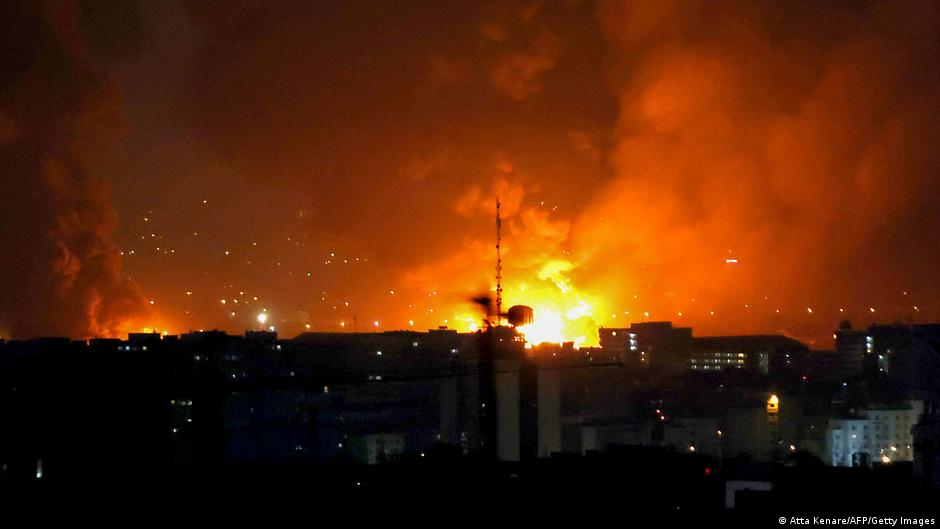
Tehran, Iran – Escalating tensions in the Middle East reached a new peak Saturday as Israel launched what it described as “large-scale attacks” against government infrastructure in Tehran, the capital of Iran. The strikes follow a recent exchange of missile fire between the two nations, raising fears of a wider regional conflict. Iranian state television reported an explosion in the western part of the city, confirming the attacks.
The current conflict builds upon weeks of simmering animosity and retaliatory actions. On February 28, 2026, the United States and Israel initiated attacks on Iranian soil, prompting a swift response from Tehran. Iran launched waves of missiles and drones targeting Israel and military bases housing U.S. Forces in the region, as reported by Al Jazeera here. Iran’s Islamic Revolutionary Guard Corps (IRGC) warned that all U.S. Assets in the region are considered legitimate targets, signaling a potentially prolonged and expanded confrontation.
Recent Escalation and Israeli Strikes
According to a statement released by the Israeli military, Saturday’s offensive targeted governmental buildings within Tehran. The announcement came shortly after the Israeli military detected another barrage of Iranian missiles aimed at Israel. Explosions were reported in Tel Aviv, seemingly resulting from the interception of these missiles by Israeli defense systems. The situation remains highly volatile, with both sides demonstrating a willingness to escalate the conflict.
Details regarding the specific targets within Tehran are emerging. Iranian media reports indicate strikes on the Ministry of Intelligence, the Ministry of Defence, the Atomic Energy Organization of Iran, and the Parchin military complex. Strikes likewise reportedly hit University Street and the Jomhouri area of the capital. Mehr News Agency reported at least two students were killed in an attack on a school east of the capital, though this information has not been independently verified by international news organizations. The Iranian National Security Council has advised residents to evacuate Tehran amid fears of further escalation.
Regional Impact and International Concerns
The conflict is not limited to direct exchanges between Israel and Iran. As CNN reported on March 3, 2026 here, Iran and its proxies have been conducting strikes against countries across the Middle East. The United States has warned its citizens to leave the region, and has closed two embassies – one in Riyadh, Saudi Arabia, which was reportedly hit by suspected Iranian drones, and another in Kuwait. Non-emergency U.S. Government personnel and their families have been ordered to depart from Jordan, Bahrain, Iraq, Qatar, Kuwait, and the United Arab Emirates due to security concerns.
The conflict also threatens a global energy crisis. The Middle East is a critical region for oil and gas production, and disruptions to supply chains could have significant economic consequences worldwide. The Guardian reported on March 4, 2026 here that the regional dimension of the conflict continues to expand, with Iran striking Gulf states and Hezbollah firing on Israel and Cyprus. Turkey reported that NATO air defenses intercepted a ballistic missile heading towards its airspace, and Saudi Arabia intercepted three cruise missiles.
Casualties and Response
As of this reporting, the full extent of casualties and damage remains unclear. The Israeli emergency service, Magen David Adom, stated it had no information regarding victims following the latest exchange of fire. But, reports from Iran indicate a rising death toll. Tasnim news agency reported more than 787 people have been killed in Iran since the war began, citing the Iranian Red Crescent. These figures are subject to change and independent verification is ongoing.
The Israeli military has stated that residents can return to their shelters “in all regions of the country” following the latest barrage of Iranian missiles. This suggests a temporary easing of immediate threat, but the overall situation remains precarious. The United States has reportedly been exploring the possibility of using Kurdish separatist groups to invade parts of Iran and establish a safe zone in the predominantly Kurdish regions of the northwest, according to The Guardian. This potential intervention could further complicate the conflict and increase regional instability.
The Role of the United States
The United States’ involvement in the conflict is multifaceted. Beyond the direct attacks on Iranian targets alongside Israel, Washington is providing significant military support to its ally. The closure of U.S. Embassies and the evacuation of personnel underscore the perceived threat to American interests in the region. The U.S. Navy reportedly sunk an Iranian warship in the Indian Ocean, further escalating tensions. The Biden administration has consistently affirmed its commitment to Israel’s security, while also urging de-escalation and a return to diplomatic solutions.
Iran’s Retaliatory Measures
Iran has repeatedly stated its intention to retaliate against any attacks on its territory. The IRGC’s declaration that all U.S. Assets are legitimate targets demonstrates the scope of Iran’s potential response. The targeting of Gulf states and the attacks on oil refineries and tourist infrastructure suggest a strategy aimed at disrupting regional stability and exerting economic pressure. Iran’s threat of “complete destruction of the region’s military and economic infrastructure” highlights the gravity of the situation and the potential for widespread devastation.
Key Takeaways
- Israel has launched “large-scale attacks” on Iranian government infrastructure in Tehran.
- Iran has retaliated with missile and drone attacks targeting Israel and countries hosting U.S. Forces.
- The conflict is escalating rapidly and threatens to destabilize the entire Middle East region.
- The United States is playing a significant role, providing military support to Israel and evacuating personnel from the region.
- Casualty figures are rising, and the full extent of the damage remains unclear.
The situation remains fluid and unpredictable. Further developments are expected in the coming days, and the international community is closely monitoring the conflict. The potential for miscalculation and unintended consequences is high, making diplomatic efforts to de-escalate the situation all the more critical. The next key development to watch for is the response from Iran to the latest Israeli strikes, and whether further escalation can be avoided.
Sofia, Bulgaria – As the world watches the unfolding crisis in the Middle East, the need for a diplomatic solution becomes increasingly urgent. World Today Journal will continue to provide updates as the situation evolves. We encourage readers to share their thoughts and perspectives in the comments section below.
Keep reading