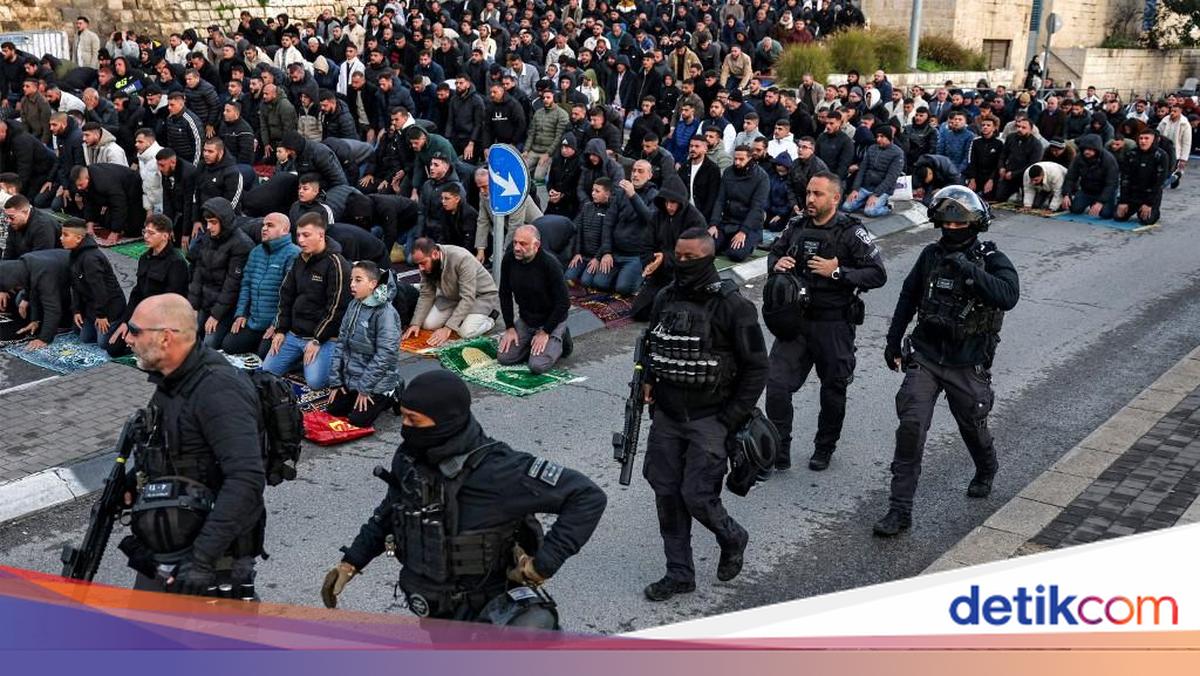
Sofia, Bulgaria – As the holy month of Ramadan draws to a close, celebrations marking Eid al-Fitr are unfolding under a shadow of restriction in Jerusalem. Israeli authorities have imposed significant limitations on access to the Al-Aqsa Mosque compound, a site of immense religious importance to Muslims, preventing many Palestinian worshippers from observing the holiday prayers. The measures, enacted amidst heightened regional tensions, have drawn condemnation from international bodies and sparked protests, raising concerns about religious freedom and the potential for further escalation.
The restrictions on access to Al-Aqsa Mosque, located in the Aged City of Jerusalem, began several days prior to Eid al-Fitr, with Israel citing security concerns as the primary justification. These concerns are linked to the ongoing conflict in the region, particularly in the context of escalating tensions with Iran. However, critics argue that the measures constitute a collective punishment of the Palestinian population and a violation of their religious rights. The decision to limit access during Ramadan, a period of heightened spiritual significance for Muslims, has been particularly sensitive, fueling anger and frustration among Palestinians.
Restrictions and Protests at Al-Aqsa Mosque
Reports indicate that Israeli authorities have severely limited the number of Palestinian worshippers permitted to enter the Al-Aqsa Mosque compound. Initially, access was restricted to a mere 10,000 worshippers with daily permits – a fraction of the hundreds of thousands who typically attend Friday prayers during Ramadan in normal circumstances. The rules stipulated that only men over 55, women 50 years or older, and children under 12 accompanied by a relative were allowed entry. Al Jazeera reported that approximately 100,000 worshippers were able to attend prayers on the second Friday of Ramadan despite the restrictions, highlighting the strong desire among Palestinians to access the holy site.
These limitations have led to confrontations between Palestinian worshippers and Israeli police. According to reports, police have used force, including batons, stun grenades, and tear gas, against Palestinians attempting to pray outside the walls of the Old City in protest against the restrictions. The use of force has resulted in injuries and arrests, further exacerbating tensions. Worshippers attempting to reach the Al-Aqsa Mosque compound via checkpoints, such as the Qalandiya checkpoint in the occupied West Bank, have been subjected to thorough security screenings and faced significant delays.
International Condemnation and Calls for De-escalation
The restrictions imposed by Israel have drawn widespread condemnation from international organizations and governments. The Liga Arab has strongly denounced the closure of the Al-Aqsa Mosque gates, which has now extended for 16 days, describing it as a blatant violation of the established historical status quo regarding the holy site. Middle East Eye reports that the Liga Arab emphasized that such actions also violate international law and international humanitarian law. The organization further asserted that Israel, as an occupying power, does not possess sovereignty over the occupied Palestinian territories, including Jerusalem and its holy sites.
The Liga Arab affirmed that the Jerusalem Islamic Waqf, under Jordanian authority, remains the sole legitimate administrator of the holy site. They reiterated that Israel, as an occupying force, has no right to restrict Muslim worship at the complex. Similar concerns have been voiced by other international actors, calling for Israel to respect religious freedom and ensure access to the Al-Aqsa Mosque for all worshippers. The situation is being closely monitored by the United Nations, which has expressed concern over the potential for further escalation.
Economic Impact on Palestinian Businesses
Beyond the religious implications, the restrictions have had a significant economic impact on Palestinian businesses in and around the Old City of Jerusalem. The area, typically bustling with activity in the days leading up to Eid al-Fitr, has been described as eerily quiet, resembling a “ghost town.” Israeli authorities have limited access to the Old City, citing security concerns, and have prohibited Palestinian shop owners from opening their businesses, with the exception of pharmacies and essential food stores.
Palestinian merchants, fearing retribution from Israeli authorities, have spoken anonymously about the severe economic hardship caused by the restrictions. The inability to conduct business during a traditionally lucrative period is causing significant financial strain on families and businesses already struggling under the weight of the ongoing occupation. This economic impact adds another layer of complexity to the already fraught situation, exacerbating the sense of frustration and despair among Palestinians.
The Status of Al-Aqsa Mosque and the Ongoing Conflict
The Al-Aqsa Mosque compound is one of the most sensitive sites in the Israeli-Palestinian conflict. It’s revered by Muslims as the third holiest site in Islam, while also holding significance for Jews, who refer to the area as the Temple Mount. The compound is currently administered by the Jerusalem Islamic Waqf, under Jordanian custodianship, but Israel maintains control over security in the area. The competing claims to the site and the ongoing Israeli occupation of East Jerusalem have fueled decades of tension and conflict.
The current restrictions on access to Al-Aqsa Mosque are occurring against the backdrop of heightened regional tensions, particularly in the wake of escalating conflict with Iran. Israel has cited security concerns related to this conflict as justification for the measures, arguing that they are necessary to prevent attacks. However, critics contend that the restrictions are disproportionate and constitute a form of collective punishment against the Palestinian population. The situation remains volatile, and the potential for further escalation is high.
Key Takeaways
- Israeli authorities have imposed significant restrictions on access to the Al-Aqsa Mosque compound during Ramadan and Eid al-Fitr, citing security concerns.
- These restrictions have led to protests and confrontations between Palestinian worshippers and Israeli police, resulting in injuries and arrests.
- The measures have drawn widespread condemnation from international organizations and governments, who have called for Israel to respect religious freedom and ensure access to the holy site.
- The restrictions are having a significant economic impact on Palestinian businesses in and around the Old City of Jerusalem.
- The situation remains volatile, with the potential for further escalation in the ongoing Israeli-Palestinian conflict.
As Eid al-Fitr celebrations continue, the situation at Al-Aqsa Mosque remains tense. The coming days will be crucial in determining whether the restrictions will be eased and whether a path towards de-escalation can be found. The international community continues to urge restraint and dialogue, emphasizing the importance of protecting religious freedom and ensuring the safety and security of all worshippers. Further updates on the situation will be provided as they develop into available.
We encourage readers to share their thoughts and perspectives on this important issue in the comments section below.
Keep reading