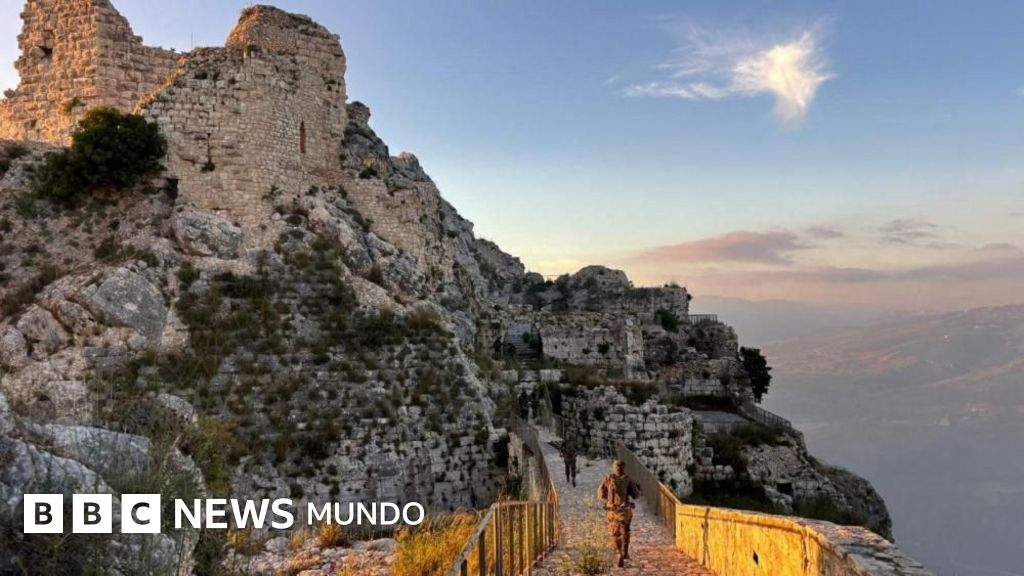
Israel’s Capture of Crusader-Era Fortress in Lebanon Signals Deepening Offensive Against Hezbollah
October 12, 2023
Israel’s military has seized control of a strategically significant fortress in southern Lebanon, marking a dramatic escalation in its offensive against Hezbollah and raising alarms about the potential for wider regional conflict. The capture of the medieval structure—believed to be from the Crusader era—comes as Israeli forces push deeper into Lebanese territory, testing both Hezbollah’s defenses and the fragile ceasefire that has held since the group’s cross-border attacks earlier this year.
The operation has sent shockwaves through the international community, with the United Nations Security Council preparing to convene an emergency session to address the deteriorating situation. German Foreign Minister Annalena Baerbock has expressed “great concern” over Israel’s advance, while regional analysts warn the move could derail delicate diplomatic efforts to contain the conflict before it spirals further. What began as a localized exchange of fire between Israel and Hezbollah now risks becoming a full-blown confrontation with implications for Lebanon’s fragile political stability and Iran’s regional influence.
World Today Journal examines the military, political, and humanitarian dimensions of this latest development, including how the fortress’s capture alters the strategic landscape, the international responses shaping up, and what stakeholders—from Beirut to Tehran to Washington—stand to gain or lose from this high-stakes gambit.
Why This Fortress Matters: A Strategic Prize in Southern Lebanon
The captured structure, known locally as Qala’at al-Hosn, is not merely a historic landmark but a critical military asset. Built during the Crusades, the fortress sits atop a ridge overlooking key routes between Israel and Beirut, providing Hezbollah with both observational advantages and a strong defensive position. Israeli military analysts describe it as a “command-and-control hub” for Hezbollah’s operations in the region, housing communications equipment and storage facilities for weapons and ammunition.

According to a Reuters report verified by Israeli Defense Forces (IDF) sources, the fortress’s seizure follows days of intense aerial and ground operations targeting Hezbollah’s infrastructure in southern Lebanon. The IDF has stated that the operation was conducted with “precision strikes” to minimize civilian casualties, though Lebanese officials have reported injuries among local residents displaced by the fighting.
What makes this capture particularly significant is its symbolic weight. The fortress lies just 10 kilometers north of the Blue Line—the internationally recognized border between Israel and Lebanon—placing it within the “security zone” Israel has long sought to control. Its fall represents a major tactical victory for Israel, but also raises questions about Hezbollah’s ability to sustain its resistance against sustained Israeli pressure.
Hezbollah’s Response: Between Defiance and Diplomatic Pressure
Hezbollah has not yet issued a formal statement confirming the loss of the fortress, but Lebanese media outlets close to the group report that its fighters are engaged in “intense clashes” with Israeli forces in the surrounding area. A report from Al Jazeera cites anonymous security sources suggesting that Hezbollah is focusing its response on “reclaiming the territory” rather than acknowledging the strategic setback.
The group’s leader, Hassan Nasrallah, has historically avoided direct commentary on military losses, instead emphasizing political narratives. However, the fortress’s capture could force Nasrallah to address the growing domestic pressure in Lebanon, where public opinion remains divided over Hezbollah’s involvement in the conflict. Pro-Hezbollah factions have accused the Lebanese government of failing to protect its sovereignty, while opponents argue the group’s military engagements are destabilizing the country further.
Internationally, Hezbollah’s allies—particularly Iran—face a delicate balancing act. Tehran has long supported Hezbollah militarily and politically, but the fortress’s capture could complicate Iran’s efforts to negotiate indirectly with Western powers over its nuclear program. A Financial Times analysis suggests that Israel’s offensive may have been timed to disrupt potential backchannel talks between Iran and the U.S., adding another layer of complexity to the regional chessboard.
International Reactions: From Condemnation to Concerns Over Escalation
The global response to Israel’s offensive has been swift, with calls for de-escalation coming from multiple quarters. The United Nations Security Council is expected to hold an emergency meeting on October 13, with diplomats from France, the U.S., and Russia already exchanging blunt assessments. French President Emmanuel Macron’s office has reportedly urged Israel to “exercise maximum restraint,” while Russian officials have accused Western powers of “double standards” in their response to the conflict.

Germany’s Foreign Minister Annalena Baerbock has been particularly vocal, stating in a public statement that her country is “greatly concerned” by the situation. “Any further escalation risks drawing Lebanon into a wider conflict that no one wants,” she warned, adding that Berlin is coordinating with allies to “prevent a spiral of violence.”
The European Union’s foreign policy chief, Josep Borrell, echoed these concerns in a tweet, calling for “immediate ceasefire negotiations.” Meanwhile, the U.S. State Department has issued a statement urging “all parties to avoid actions that could lead to further escalation,” without explicitly condemning Israel’s military operations.
Lebanon’s fragile government, already grappling with an economic crisis and political paralysis, faces immense pressure. Prime Minister Najib Mikati has called for an emergency cabinet meeting to discuss the situation, though analysts doubt the government will take decisive action given Hezbollah’s dominant influence in Lebanese politics. The risk of further destabilization—including potential clashes between Hezbollah and Lebanese Armed Forces—remains high.
The Human Cost: Civilians Caught in the Crossfire
As military operations intensify, the humanitarian toll is mounting. The United Nations Relief and Works Agency (UNRWA) reports that over 30,000 civilians have been displaced from southern Lebanon since the beginning of October, with many seeking refuge in already overcrowded shelters. Hospitals in Tyre and Sidon are treating wounded civilians, though exact casualty figures remain unclear due to the chaotic conditions.
International aid organizations warn that the situation could deteriorate rapidly if fighting spreads to populated areas. Médecins Sans Frontières (MSF) has issued a statement calling for “immediate protection” for civilians, noting that medical facilities are struggling to cope with the influx of patients. The World Food Programme (WFP) has also expressed alarm over the disruption of food supplies to vulnerable communities in the region.
In Israel, the government has maintained that its operations are “necessary to safeguard the security of northern communities.” However, critics argue that the offensive risks provoking a broader regional war. Israeli Defense Minister Yoav Gallant told reporters that “Hezbollah must understand that every attack on our soil will be met with a disproportionate response,” a statement that has fueled fears of further escalation.
What Happens Next: Three Possible Scenarios
With tensions at a boiling point, three potential outcomes appear most likely in the coming days:
- Limited Ceasefire: Both sides agree to a temporary halt to hostilities, allowing for negotiations mediated by international actors. This scenario would likely involve Hezbollah’s withdrawal from certain areas in exchange for Israel’s retreat from southern Lebanon.
- Escalated Conflict: Hezbollah launches a larger-scale offensive in response to the fortress’s capture, drawing in other regional actors such as Iran or Syria. This could trigger a broader war involving multiple fronts.
- Diplomatic Push: The UN Security Council imposes a resolution calling for an immediate ceasefire, with pressure on both Israel and Hezbollah to de-escalate. This would require significant coordination among permanent members, particularly the U.S. And Russia.
Israeli Prime Minister Benjamin Netanyahu has indicated that his government is not seeking a full-scale war but is determined to “deter Hezbollah’s aggression.” However, the capture of the fortress suggests a more aggressive posture than previously signaled. Analysts suggest that Netanyahu may be testing Hezbollah’s resolve ahead of potential domestic political challenges, including upcoming elections.
Key Takeaways: The Broader Implications
- Strategic Shift: The fortress’s capture represents a major tactical victory for Israel, altering the balance of power in southern Lebanon and potentially weakening Hezbollah’s operational capabilities.
- Diplomatic Pressure: International condemnation is mounting, with the UN Security Council poised to take action, though divisions among permanent members could limit the resolution’s effectiveness.
- Humanitarian Crisis: The displacement of tens of thousands of civilians and the strain on medical and food supplies risk deepening Lebanon’s already severe humanitarian challenges.
- Regional Escalation Risks: Iran’s involvement—whether through direct military support or political maneuvering—could drag other actors into the conflict, raising the stakes significantly.
- Domestic Politics: Both Israel and Lebanon face internal pressures, with Netanyahu navigating political risks at home and Hezbollah balancing its military engagements with domestic stability concerns.
Where to Find Official Updates
For real-time developments, readers can monitor the following authoritative sources:

- United Nations Official Website – For Security Council statements and humanitarian updates.
- U.S. Department of State – For official U.S. Government positions on the conflict.
- UK Foreign Office – For European Union and UK responses.
- Israeli Defense Forces (IDF) Spokesperson’s Unit – For official Israeli military statements.
- UNRWA Lebanon – For humanitarian situation reports.
What to Watch For: The Next 72 Hours
The most critical developments to monitor in the coming days include:
- The outcome of the UN Security Council emergency meeting scheduled for October 13.
- Any official response from Hezbollah, particularly from leader Hassan Nasrallah.
- Statements from Iranian officials regarding their support for Hezbollah.
- Updates on civilian displacement and humanitarian aid delivery in southern Lebanon.
- Signs of de-escalation or further military engagements between Israeli and Hezbollah forces.
The next confirmed checkpoint is the UN Security Council meeting on October 13, 2023, where diplomats are expected to address the crisis and potentially call for an immediate ceasefire. The international community will be watching closely to see whether this latest escalation can be contained—or if it marks the beginning of a wider regional confrontation.
This is a story that demands attention not only for its immediate implications but for what it reveals about the shifting dynamics in the Middle East. As the region stands on the brink, the choices made in the next 48 hours could determine whether peace is preserved—or whether the conflict spirals into an even more dangerous phase.
We welcome your insights and analysis in the comments below. Share this report to ensure others stay informed about this rapidly evolving situation.
Worth a look