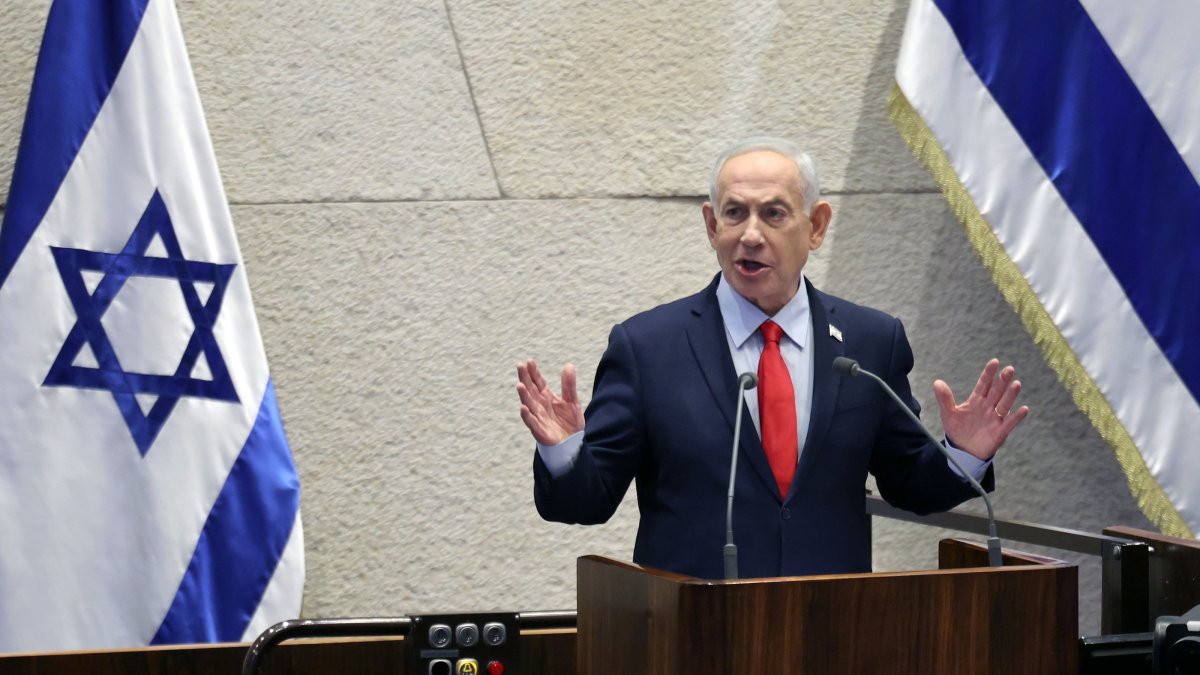
As geopolitical tensions in the Middle East remain high, with the potential for escalation involving Iran looming, Israeli political figures are increasingly focusing attention on another regional power: Türkiye. This shift in focus signals a possible recalibration of strategic priorities, even as concerns regarding Tehran persist. The rhetoric emanating from Jerusalem suggests a search for new rivals and a broadening of the perceived threat landscape.
The most vocal proponent of this evolving perspective has been former Israeli Prime Minister Naftali Bennett. Widely expected to contend in upcoming elections, Bennett has publicly characterized Türkiye as a significant threat to Israeli security, accusing Ankara of aligning itself with actors hostile to Israel’s interests. His statements reflect a growing unease within certain Israeli political circles regarding Türkiye’s assertive foreign policy and its increasingly independent stance on regional issues.
Bennett’s Accusations and the “New Iran” Analogy
Speaking at a recent conference, Bennett warned against complacency regarding Türkiye, urging Israel not to “turn a blind eye” to its actions. He described Türkiye as forming a regional axis comparable to that of Iran, advocating for a simultaneous strategy to counter perceived threats from both countries. According to reports from PA Turkey, Bennett stated on X (formerly Twitter), “Turkey is the new Iran; Erdoğan is a cunning and dangerous rival.” He argued that Israel must recognize and address Türkiye’s long-term ambitions, viewing Ankara’s policies in Syria, Gaza, the Eastern Mediterranean, and Africa as evidence of a coordinated effort to expand influence and encircle Israel both diplomatically and militarily.
Bennett’s assessment isn’t isolated. It reflects a broader shift in tone among Israeli politicians in recent months, as noted in reports from Al Jazeera. While Iran has historically been considered Israel’s primary adversary, Türkiye has increasingly become a target of criticism, particularly due to Ankara’s strong condemnation of Israel’s actions towards Palestinians and its ongoing military operation in Gaza. Türkiye has been actively strengthening ties with regional powers such as Saudi Arabia and Egypt, a development viewed with concern by some in Israel.
Netanyahu’s “Hexagon” of Alliances
Israeli Prime Minister Benjamin Netanyahu has reinforced this narrative, announcing plans to construct a new “hexagon” of alliances designed to counter what he terms an “emerging… Sunni axis.” Speaking ahead of an anticipated visit from Indian Prime Minister Narendra Modi, Netanyahu indicated that this proposed bloc would include countries such as Greece and the Greek Cypriot administration – both of which maintain strained relations with Türkiye. This move is widely interpreted as an attempt to build a coalition of states aligned against Türkiye’s growing regional influence.
The timing of this rhetoric, coinciding with heightened tensions with Iran, is not accidental, according to analysts. Former Israeli Ambassador Alon Pinkas suggests that Israeli leaders often rely on a constant perception of external threat to mobilize public support, arguing that the specific adversary is less significant than the overall sense of danger. This strategy, Pinkas contends, allows for the consolidation of domestic political support and the justification of assertive foreign policy measures.
Historical Context and Current Relations
Israel-Türkiye relations have experienced significant fluctuations over the decades. Despite periods of pragmatic cooperation, particularly in the areas of security and trade, tensions have flared repeatedly. A major turning point occurred in 2010 with the Israeli raid on the Mavi Marmara, a Turkish-owned ship attempting to break the Israeli blockade of Gaza. The raid resulted in the deaths of 10 Turkish activists and led to a severe deterioration in bilateral relations. As reported by MSN, relations have further soured under the leadership of President Recep Tayyip Erdoğan, who has consistently been a vocal critic of Israeli policies towards Palestinians.
Despite these tensions, it’s crucial to note that the relationship between Israel and Türkiye differs significantly from Israel’s outright hostility towards Iran. The two countries maintain decades of pragmatic ties, and Türkiye is a member of NATO, a military alliance that includes the United States and several European nations. This complex dynamic complicates the narrative of Türkiye as a direct analogue to Iran.
Is the Comparison Valid? Analysts Weigh In
Many analysts argue that equating Ankara with Tehran is an oversimplification. Pinkas, for example, points out that Türkiye has never denied Israel’s right to exist or threatened its destruction, characterizing such comparisons as “ridiculous.” This fundamental difference underscores the distinct nature of the challenges posed by each country.
However, the escalating rhetoric carries inherent risks. Chatham House analyst Yossi Mekelberg cautions that while much of the talk may be a deflection from the focus on Iran, escalating language towards Türkiye could ultimately lead to genuine confrontation. The potential for miscalculation and unintended consequences is heightened in a region already fraught with instability.
Israel’s Regional Ambitions and the Pursuit of Dominance
The current situation is unfolding against a backdrop of near-constant conflict for Israel. Since the Hamas incursion of October 7, 2023, Israel has engaged in a large-scale military operation in Gaza, as well as ongoing military activities in Lebanon, Yemen, and Syria. Simultaneously, there have been renewed efforts towards annexation in the occupied West Bank. Analysts suggest that the heightened rhetoric regarding new threats and alliances is part of a broader push for Israeli regional dominance.
This pursuit of dominance is further evidenced by recent condemnations from 14 Muslim nations regarding claims made by U.S. Envoys concerning Israeli land rights, highlighting the growing regional opposition to Israeli policies. The complex interplay of these factors underscores the multifaceted nature of the challenges facing Israel and the wider Middle East.
Key Takeaways
- Former Israeli Prime Minister Naftali Bennett has labeled Türkiye a threat, comparing it to Iran and calling for a coordinated strategy against Ankara.
- Prime Minister Benjamin Netanyahu is seeking to build a new alliance structure, dubbed the “hexagon,” to counter perceived threats from Türkiye and other regional actors.
- While tensions exist, the relationship between Israel and Türkiye remains complex, with decades of pragmatic ties alongside periods of significant strain.
- Analysts caution that equating Türkiye with Iran is an oversimplification, but warn that escalating rhetoric could lead to unintended consequences.
- The current situation reflects a broader Israeli push for regional dominance amidst ongoing conflicts and political instability.
The situation remains fluid, and the coming months will be crucial in determining whether the escalating rhetoric translates into concrete policy changes or a further deterioration of relations between Israel and Türkiye. The upcoming visit of Indian Prime Minister Modi and the development of Netanyahu’s proposed alliance structure will be key indicators of Israel’s evolving strategic priorities. Further developments are expected as the region continues to grapple with the ongoing conflict in Gaza and the broader geopolitical implications of a potential confrontation with Iran.
Stay informed: For the latest updates on this developing story, follow World Today Journal’s coverage of the Middle East and international affairs. We encourage readers to share their perspectives and engage in constructive dialogue in the comments section below.
Keep reading