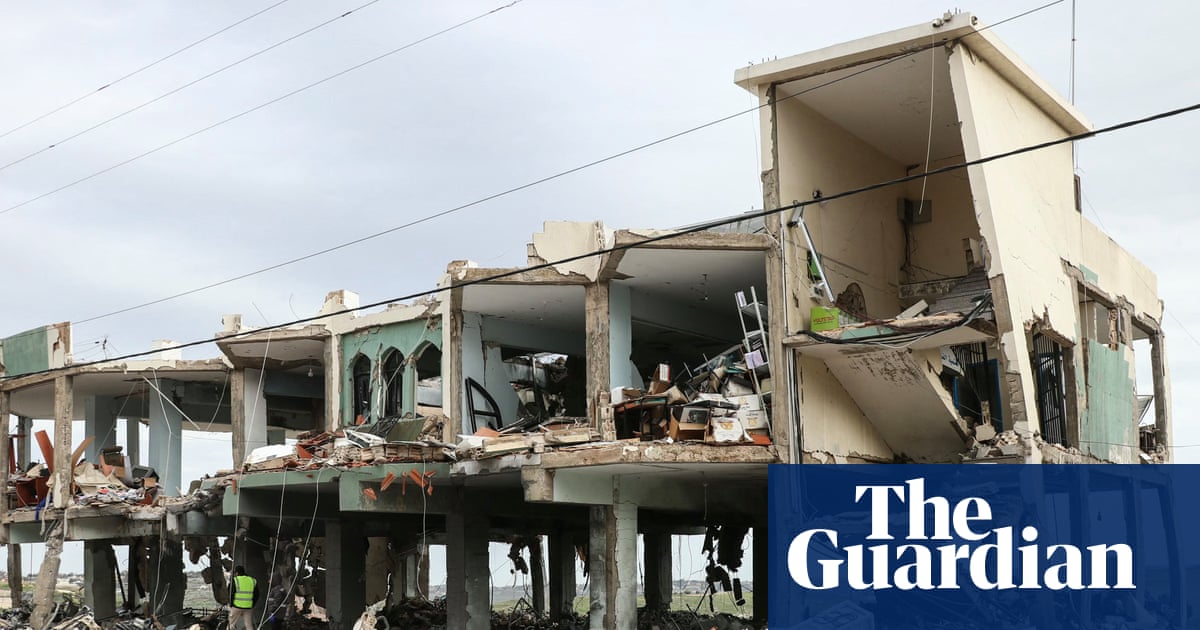
The escalating conflict in Lebanon has taken a devastating turn, with a recent Israeli strike resulting in the deaths of 12 healthcare workers. The attack, which occurred late Friday at a primary healthcare facility in the town of Burj Qalaouiyah in southern Lebanon, has sparked international condemnation and raised serious concerns about the protection of medical personnel in conflict zones. This tragedy brings the total number of healthcare workers killed in Lebanon by Israeli strikes over the past 12 days to 31, according to Lebanese authorities.
The strike, described by the Lebanese Ministry of Health as a violation of all international humanitarian laws, set the healthcare center ablaze and caused it to collapse, trapping and killing the doctors, paramedics, and nurses on duty. The incident underscores the increasingly perilous conditions faced by medical staff attempting to provide care in the midst of ongoing hostilities. The World Health Organization (WHO) has strongly condemned the killings, with Director-General Tedros Adhanom Ghebreyesus stating that the deaths of 14 health workers in southern Lebanon within the last 24 hours represent a “tragic development” in the broader Middle East crisis. The situation highlights the critical need for adherence to international laws protecting healthcare facilities and personnel during armed conflict.
This latest attack is not an isolated incident. Lebanese authorities report that Israel has carried out at least 37 attacks targeting healthcare workers and facilities in Lebanon since the current hostilities began on March 2nd, impacting not only hospitals and clinics but also civil defense teams and the Lebanese Red Cross. The conflict was triggered by a volley of rockets launched by Hezbollah into Israel, prompting a swift and extensive Israeli bombing campaign across Lebanon. The ongoing fighting has resulted in a dire humanitarian situation, with at least 826 people killed and approximately one million displaced within Lebanon, according to the Lebanese Ministry of Health.
Devastating Impact on Lebanon’s Healthcare System
The repeated targeting of healthcare infrastructure is severely straining Lebanon’s already fragile healthcare system. The loss of medical personnel and the destruction of facilities are hindering the ability to provide essential medical services to a population in desperate need. The situation is particularly acute in southern Lebanon, where the intensity of the fighting has been concentrated. The Lebanese Ministry of Health has vehemently denied accusations by the Israeli military that ambulances and medical facilities are being used for military purposes, labeling such claims as “nothing more than a justification for the crimes it is committing against humanity.”
This pattern of accusations and attacks echoes previous conflicts. During the 2024 Israel-Hezbollah war, which lasted 13 months, Israel similarly accused Hezbollah of utilizing ambulances for military purposes, claims that were made without providing credible evidence. During that conflict, 408 healthcare workers were reportedly killed. The targeting of healthcare facilities also drew international scrutiny during Israel’s two-year conflict in Gaza, where a UN commission of inquiry accused Israel of war crimes related to attacks on hospitals. A top prosecutor at the International Criminal Court (ICC) stated in December 2024 that claims regarding the presence of Hamas fighters in Gaza hospitals under siege had been “grossly exaggerated” according to The Guardian. The sustained attacks have largely destroyed Gaza’s healthcare system as detailed in The Guardian.
International Law and the Protection of Healthcare Workers
Under international humanitarian law, medical workers and facilities are considered protected entities and are not legitimate military targets. Regardless of political affiliation, healthcare personnel are classified as civilians and are entitled to protection during armed conflict. Deliberate attacks on medical facilities and personnel constitute a grave breach of international law and may be considered war crimes. Humanitarian organizations have warned that accusations of healthcare centers being used for military purposes can serve as a pretext for further attacks, jeopardizing the safety of patients and medical staff.
The deliberate targeting of healthcare infrastructure has a cascading effect, disrupting essential medical services, exacerbating health crises, and undermining the long-term health and well-being of affected populations. The destruction of hospitals and clinics not only deprives communities of access to care but also creates a climate of fear and insecurity, discouraging medical professionals from providing assistance. This is particularly concerning in a region already grappling with complex humanitarian challenges.
The Broader Context of the Lebanon-Israel Conflict
The current escalation of violence between Israel and Hezbollah represents a significant deterioration in regional stability. The conflict, which began on March 2nd, has involved a sustained exchange of rocket fire and airstrikes, resulting in widespread destruction and civilian casualties. The situation is further complicated by the broader geopolitical tensions in the Middle East, including the ongoing conflict in Gaza and the involvement of regional actors. The potential for the conflict to escalate further remains a serious concern.
The Lebanese government has appealed for international assistance to address the growing humanitarian crisis. However, the provision of aid has been hampered by the ongoing fighting and the destruction of infrastructure. International organizations are working to provide emergency medical supplies, food, and shelter to those affected by the conflict, but the scale of the needs is immense. The long-term consequences of the conflict on Lebanon’s economy and social fabric are likely to be severe.
What Happens Next?
The immediate future remains uncertain. Efforts to mediate a ceasefire between Israel and Hezbollah have so far been unsuccessful. The Israeli military has indicated that it will continue its operations until Hezbollah ceases its attacks and withdraws its forces from the border region. Hezbollah, for its part, has vowed to continue its resistance until Israel ends its occupation of Lebanese territory. The United Nations is actively engaged in diplomatic efforts to de-escalate the conflict and prevent a wider regional war.
The situation demands an immediate cessation of hostilities and a renewed commitment to upholding international humanitarian law. Protecting healthcare workers and facilities must be a top priority. The international community must also provide sustained humanitarian assistance to Lebanon to address the urgent needs of the affected population and support the rebuilding of the country’s healthcare system. The ongoing attacks on medical personnel represent a grave violation of fundamental principles of humanity and must be condemned in the strongest possible terms.
As of today, March 15, 2026, the conflict continues, and the situation remains highly volatile. Further updates will be provided as they become available. We encourage readers to share their thoughts and perspectives on this critical issue in the comments section below.
Related reading