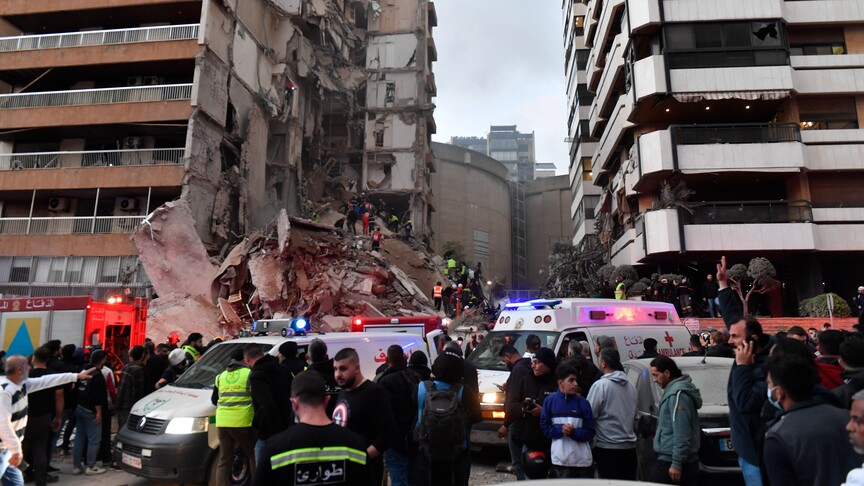
Israeli Airstrikes in Southern Lebanon Kill 16, Including Civilians—As Evacuation Orders Escalate Tensions
Israeli military strikes in southern Lebanon on Tuesday killed at least 16 people, including women and children, according to the Lebanese Ministry of Health, as the Israeli Defense Forces (IDF) issued evacuation orders for 12 villages in the region. The escalating violence comes amid a fragile ceasefire and raises fears of a broader regional confrontation, with Lebanese officials condemning the strikes as a violation of international law and humanitarian norms.
The latest airstrikes occurred in an area already devastated by weeks of conflict, where over 2,700 people have been killed since hostilities intensified in early May, according to recent reports. The IDF has justified the strikes as targeting “Hezbollah military infrastructure,” but Lebanese authorities and international observers warn that civilian casualties are rising sharply, with many families forced to flee their homes amid daily airstrikes and artillery fire.
This article provides verified details on the latest casualties, the scope of evacuation orders, and the broader context of the humanitarian crisis unfolding in southern Lebanon. It also examines the legal and diplomatic implications of the strikes, as well as the next steps for affected communities.
The Lebanese Ministry of Health reported that 10 people were killed in a single Israeli airstrike on Tuesday, with six additional fatalities confirmed in separate incidents later in the day, bringing the total to 16. Among the dead were women and children, though exact numbers have not been independently verified due to the chaotic conditions on the ground. The ministry stated that dozens more were injured, with hospitals overwhelmed and struggling to provide adequate care.
In parallel, the IDF announced evacuation orders for 12 villages and towns in southern Lebanon, including areas near the border with Israel. The orders, delivered via leaflets and phone calls, give residents 24 hours to leave, with the military warning that strikes would target “military targets” in the area. Lebanese officials have dismissed the evacuation orders as collective punishment, a violation of international humanitarian law, and have accused Israel of using displacement as a tactic to weaken resistance.
Escalating Violence: A Pattern of Ceasefire Violations
The latest strikes follow a week of heightened tensions in southern Lebanon, where Israeli airstrikes have killed at least 6 people in previous days, according to BBC reporting. The IDF has attributed the violence to Hezbollah rocket attacks into northern Israel, though Lebanese officials deny targeting civilian areas and accuse Israel of disproportionate force.
Hezbollah, the Iran-backed militant group, has been engaged in cross-border clashes with Israel since early May, following a deadly Israeli raid in Beirut that killed a senior Hezbollah commander. The group has vowed retaliation, and its rocket fire has killed dozens of Israelis, prompting the IDF to launch preemptive airstrikes in Lebanon. Analysts warn that the conflict risks spiraling into a full-scale war, with regional powers—including Iran, the U.S., and Saudi Arabia—monitoring developments closely.
United Nations officials have expressed grave concern over the rising civilian toll, with the UN Relief and Works Agency (UNRWA) reporting that over 50,000 people have been displaced in southern Lebanon since May 1. The agency has warned of a humanitarian catastrophe as food, water, and medical supplies run short.
Legal and Diplomatic Fallout: Collective Punishment and International Law
The evacuation orders and airstrikes have drawn sharp criticism from human rights groups and the international community. The International Committee of the Red Cross (ICRC) has condemned the displacement as illegal under international law, stating that Forced evacuations must never be used as a weapon of war.
The ICRC has also called for immediate humanitarian access to affected areas.
Lebanon’s Foreign Ministry has summoned the Israeli ambassador to protest the strikes, while the Arab League has convened an emergency meeting to discuss the escalation. The U.S., Israel’s closest ally, has so far refrained from condemning the strikes, though White House officials have urged de-escalation in private communications with both sides.
Legal experts argue that Israel’s actions may constitute war crimes if proven to be deliberate attacks on civilians or disproportionate use of force. The Rome Statute of the International Criminal Court (ICC) prohibits collective punishment, and human rights organizations are gathering evidence for potential future prosecutions.
Humanitarian Crisis: Families on the Run
The evacuation orders have sent shockwaves through southern Lebanese communities, where residents describe living in constant fear. One displaced family from the village of Kfar Kila told reporters that they had three hours to pack belongings before Israeli jets struck nearby. We don’t know where to go. The border is closed, and the cities are overcrowded.

Hospitals in Tyre and Sidon are operating at capacity, with doctors reporting shortages of blood and surgical supplies. The Lebanese Red Cross has set up emergency field hospitals, but volunteers say they are outmatched by the scale of injuries. Children, in particular, are among the most vulnerable, with UNICEF warning of psychological trauma from repeated airstrikes.
Local farmers and fishermen—already struggling due to sanctions and economic collapse—have lost livelihoods as the IDF has restricted movement in coastal areas. The UN World Food Programme (WFP) has warned of famine-like conditions if aid cannot reach southern Lebanon.
What Happens Next?
The next critical checkpoint will be the Arab League emergency session, scheduled for Wednesday, May 20, 2026, where member states are expected to demand an immediate ceasefire. The UN Security Council is also likely to convene an emergency meeting, though a resolution is unlikely due to the U.S. Veto power.
In the meantime, Lebanese authorities are urging residents to follow evacuation orders cautiously, warning that Israeli forces may target those who remain. The IDF has not confirmed whether it will pause strikes during the evacuation period, leaving families in limbo.
For those seeking updates:
- UNRWA Lebanon for displacement and aid information.
- ICRC Lebanon for humanitarian access reports.
- UN Lebanon for official statements.
Key Takeaways
- 16 killed in Israeli airstrikes in southern Lebanon on Tuesday, including civilians, per Lebanese Ministry of Health.
- 12 villages evacuated by IDF orders, with residents given 24 hours to leave.
- Over 2,700 dead in southern Lebanon since May, with 50,000+ displaced.
- UN and human rights groups condemn strikes as collective punishment, potentially violating international law.
- Arab League and UN Security Council to address escalation. no immediate ceasefire in sight.
This situation is evolving rapidly. For the latest updates, follow World Today Journal and share this report to raise awareness. Have you or someone you know been affected by the violence in southern Lebanon? Your stories matter—comment below or contact us securely.
Worth a look