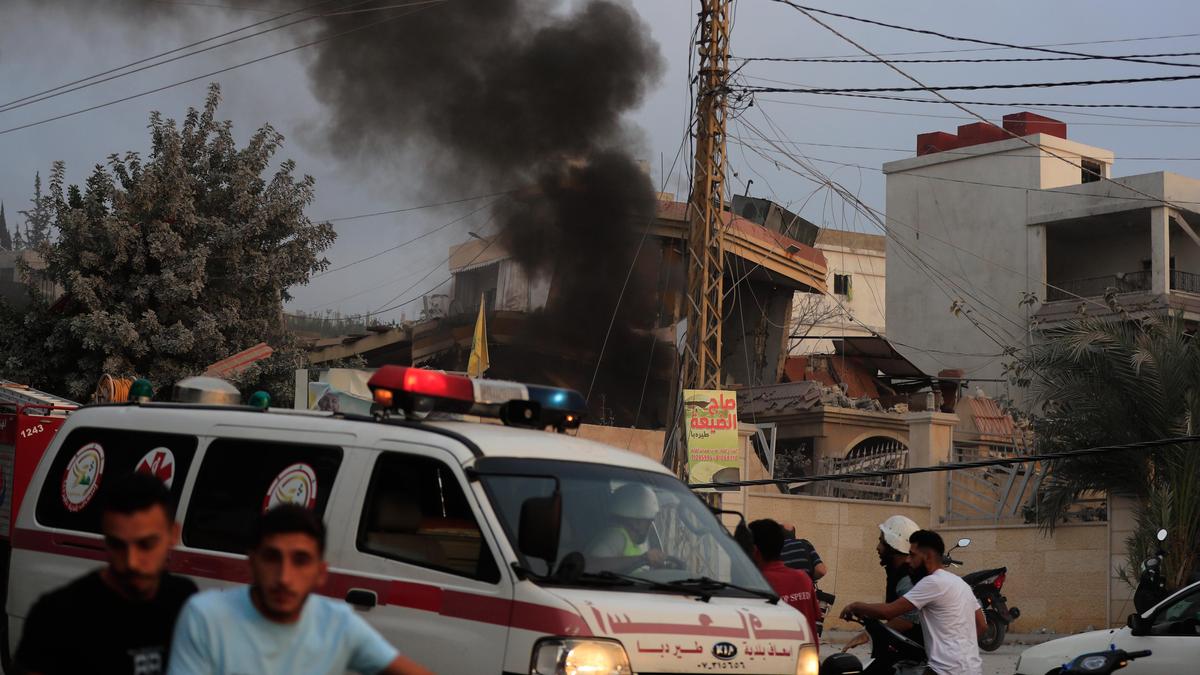
Escalating Tensions: Israel Issues Evacuation Warnings in southern Lebanon Amidst Hezbollah Concerns
Recent Israeli military actions and warnings signal a significant escalation in tensions along the Lebanon-Israel border. israeli Arabic spokesperson Avichay Adraee has directed residents of Tayba, Tayr Debba, Aita al-Jabal, and Zawtar al-Sharqiyah to evacuate areas within 500 meters of residential buildings, citing these locations as being utilized by Hezbollah.
These warnings accompany targeted strikes against what the Israeli military describes as Hezbollah’s military infrastructure. Israel alleges the group is actively rebuilding its capabilities nearly a year after a U.S.-brokered ceasefire aimed to halt months of conflict. While immediate casualties haven’t been reported, the actions underscore Israel’s determination to prevent hezbollah’s rearmament.
“We will not allow Hezbollah to rearm themselves, to recover, build back up its strength to threaten the state of Israel,” stated Israeli government spokesperson Shosh Bedrosian, highlighting the core concern driving these operations.
Lebanon Grapples with Disarmament Plans
The timing of these strikes coincides with ongoing discussions within Lebanon itself regarding the disarmament of Hezbollah and other non-state armed groups. Lebanese Prime Minister Nawaf Salam and the government are currently reviewing a plan drafted by the lebanese military to address this sensitive issue.
However, the situation is complicated by differing perspectives. Lebanese President Joseph Aoun has voiced criticism of Israel’s strikes and the continued occupation of five hill-top points within Lebanese territory, while remaining open to negotiations to de-escalate tensions.
The Lebanese government maintains that Israeli strikes have disproportionately impacted civilians and infrastructure unrelated to Hezbollah’s activities, a claim Israel disputes.Israel insists its targets are specifically linked to Hezbollah officials and military infrastructure.
A History of Conflict and Ceasefire Violations
Hezbollah’s military strength suffered significant damage during Israel’s extensive air campaign in 2024. Despite this, the group’s leader, Sheikh Naim Kassim, has affirmed their readiness to fight, irrespective of resource limitations. This unwavering stance contributes to the ongoing cycle of conflict.
The current situation stems from the October 7, 2023, Hamas-led attack on Israel, which triggered the war in Gaza. In response, Hezbollah initiated rocket fire into northern Israel in support of Hamas, prompting retaliatory Israeli airstrikes and artillery shelling. What began as low-level exchanges escalated into a full-scale war in September 2024.
As the ceasefire nominally took effect last November, Lebanon’s health ministry reports over 270 fatalities and approximately 850 injuries resulting from Israeli military actions. The UN human rights office has verified 107 civilian or noncombatant deaths as of October 9th. Notably, no Israelis have been killed by fire originating from Lebanon as the ceasefire, with Hezbollah claiming only one attack during the period.
The repeated accusations of ceasefire violations from both sides underscore the fragility of the current situation and the urgent need for a sustainable resolution to prevent further escalation. The coming weeks will be critical in determining whether diplomatic efforts can succeed in de-escalating tensions and achieving a lasting peace.
Published – November 06, 2025 10:02 pm IST
Keep reading