The geopolitical landscape of the Middle East has shifted abruptly following the announcement of a fragile and vague ceasefire between the United States and Iran. For Israel, the cessation of hostilities arrives not with a sense of victory, but with a profound questioning of the country’s strategic direction and the political survival of its leadership. As the dust settles on a conflict that many observers now describe as a “bust,” the conversation has shifted decisively toward Israel’s future and whether the current administration can maintain its grip on power.
Prime Minister Benjamin Netanyahu, who for years framed the Iranian regime as an existential threat, now finds himself at the center of what his opponents are calling an unprecedented “political disaster.” The ceasefire, brokered largely between Washington and Tehran, has left Israel in a precarious position—sidelined from the core negotiations that will determine its national security for years to come. This disconnect between the Prime Minister’s stated objectives and the diplomatic reality on the ground has created a volatile domestic environment as Israel prepares for upcoming elections.
The current tension is not merely a result of the ceasefire itself, but of a fundamental misalignment between the strategic goals of Israel and its primary ally, the United States. While the U.S. Administration sought a decisive, limited victory to satisfy domestic political timelines, Netanyahu’s objectives were broader and more absolute, creating a friction that has left Israel vulnerable in the aftermath of the conflict.
A Strategic Failure: The Gap Between Prediction and Reality
The fallout from the conflict is compounded by a significant intelligence gap. According to reports, the U.S. Intelligence community viewed Israeli predictions of regime change and revolution within Iran as “farcical” via The Guardian. This assessment appears to have been vindicated, as the Iranian regime remains intact despite the air campaign that began on February 28 via The Conversation.
the timeline of the war was woefully miscalculated. Israeli assessments suggested the conflict would last a handful of days or, at most, a few weeks. Instead, the war dragged on, culminating in a ceasefire that Israel’s main opposition leader, Yair Lapid, described as a “strategic failure.” Lapid noted on X that Israel was not even close to the negotiating table when decisions concerning the core of its national security were being finalized via The Guardian.
This perceived abandonment by its closest ally has left Netanyahu in a precarious position. Even as recently as early April, reports indicated that Netanyahu was urging President Donald Trump not to agree to a ceasefire. However, after issuing warnings to Tehran, the U.S. President eventually shifted course, sidelining Israeli interests to secure a deal.
Clashing Objectives: Trump vs. Netanyahu
To understand why the conflict ended in a way that leaves Netanyahu looking like “the biggest loser,” one must analyze the divergent motivations of the two leaders. For President Donald Trump, the conflict was a foreign policy gambit with a clear internal deadline: the November midterm elections. The U.S. Objectives were specific and military-centric: obliterate Iranian missiles and production, annihilate the Iranian navy, sever support for terrorist proxies, and prevent the acquisition of a nuclear weapon via The Conversation.
Trump’s priority was to declare victory quickly to avoid the negative impacts of the global energy price shock and to bolster his standing before the midterms. In contrast, Benjamin Netanyahu viewed the conflict through a lens of existential survival. He framed the Iranian regime as a threat that had existed for 47 years and, while stating that regime change was not the primary objective, suggested it could certainly be a result of the campaign via The Conversation.
The result is a “fragile and vague” ceasefire that satisfies the U.S. Need for a diplomatic exit but fails to address the long-term existential concerns Netanyahu spent years highlighting to the international community. This disparity has left the Israeli government struggling to justify the costs of the war without a definitive victory to show for it.
Domestic Turmoil and the Path to Elections
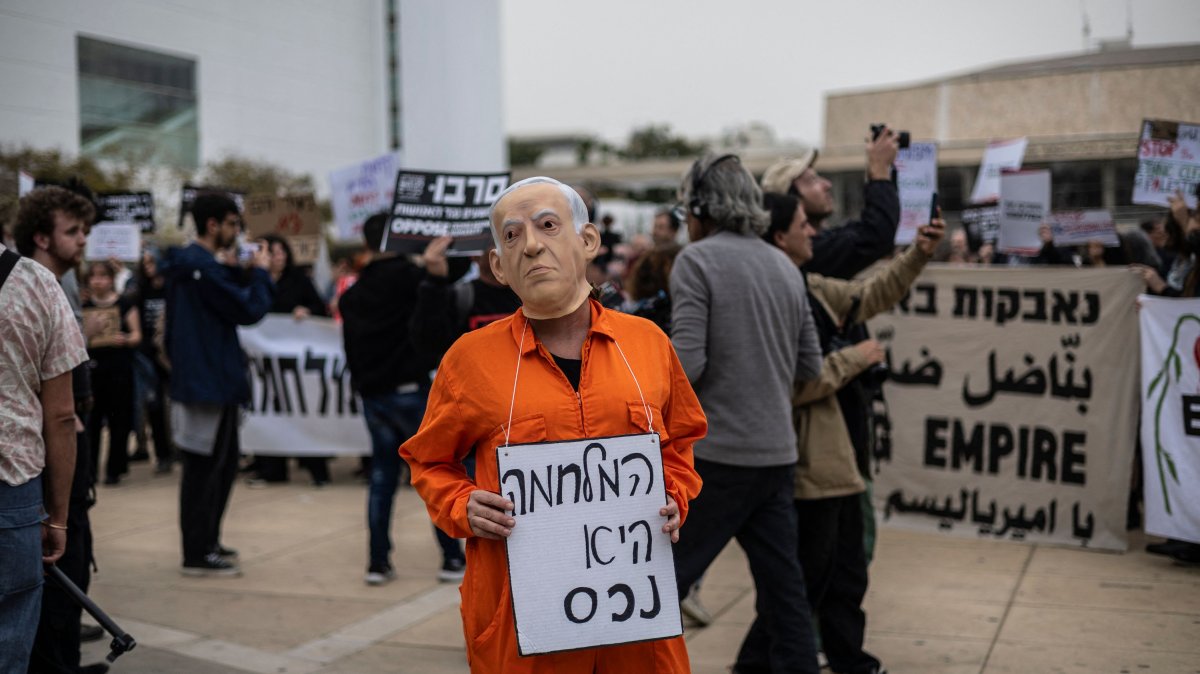
The political repercussions within Israel have been immediate and visible. As Netanyahu prepares for elections, the domestic atmosphere is one of unrest and skepticism. On March 19, 2026, protesters gathered in Tel Aviv wearing masks of Prime Minister Netanyahu and National Security Minister Itamar Ben Gvir, with some signs claiming that “Iran is an asset,” reflecting a deep divide in how the conflict is perceived via AP News.
The impact of the war has also permeated the cultural and religious heart of the country. On that same day, March 19, the Western Wall in Jerusalem’s Old City remained closed to visitors under nationwide Home Front Command restrictions, which banned large gatherings due to the ongoing conflict with Iran via AP News.
Netanyahu’s election prospects are now inextricably linked to his performance in this conflict and his ability to manage relations with foes in both Iran and Lebanon. His recent diplomatic efforts—including a meeting with Indian Prime Minister Narendra Modi on February 26, 2026, and a December 29, 2025, meeting with Donald Trump at Mar-a-Lago—were intended to solidify international support. However, the current ceasefire suggests that these high-level meetings did not prevent Israel from being marginalized during the final negotiations via AP News.
Key Takeaways on the Israel-Iran Conflict Fallout
- Diplomatic Isolation: Israel was reportedly sidelined during the final negotiations of the ceasefire between the U.S. And Iran.
- Intelligence Failures: Predictions of regime change in Iran were dismissed as “farcical” by U.S. Intelligence and did not materialize.
- Conflicting Goals: The U.S. Sought a rapid exit before the November midterm elections, while Netanyahu sought a permanent end to the Iranian threat.
- Domestic Instability: Widespread protests and strict security restrictions (such as the closure of the Western Wall) underscore the internal strain.
- Political Risk: Netanyahu faces a potential “political disaster” as he enters an election cycle following a conflict described by opponents as a strategic failure.
What Happens Next?
The immediate future of Israel’s future depends on the stability of the current ceasefire. If the agreement holds, Netanyahu will have to pivot from a war footing to a political survival strategy, facing an electorate that is increasingly critical of his strategic judgment. If the ceasefire collapses, it may provide the Prime Minister with a justification to resume hostilities, though such a move would likely clash with the current priorities of the U.S. Administration.
The most critical upcoming checkpoint will be the lead-up to the U.S. Midterm elections in November, which will likely dictate the level of American support and pressure applied to the region. Simultaneously, the internal Israeli election cycle will determine whether the public views the recent air campaign as a necessary defense or a costly miscalculation.
We will continue to monitor the official updates from the Israeli government and the U.S. State Department regarding the terms of the ceasefire. We invite our readers to share their perspectives on the strategic implications of this ceasefire in the comments below.
Worth a look