
Did You Know? As of September 17, 2025, the conflict in Gaza has displaced over 1.9 million Palestinians, representing roughly 85% of the population, according to UNRWA data. This underscores the escalating humanitarian crisis and the urgent need for effective mediation.
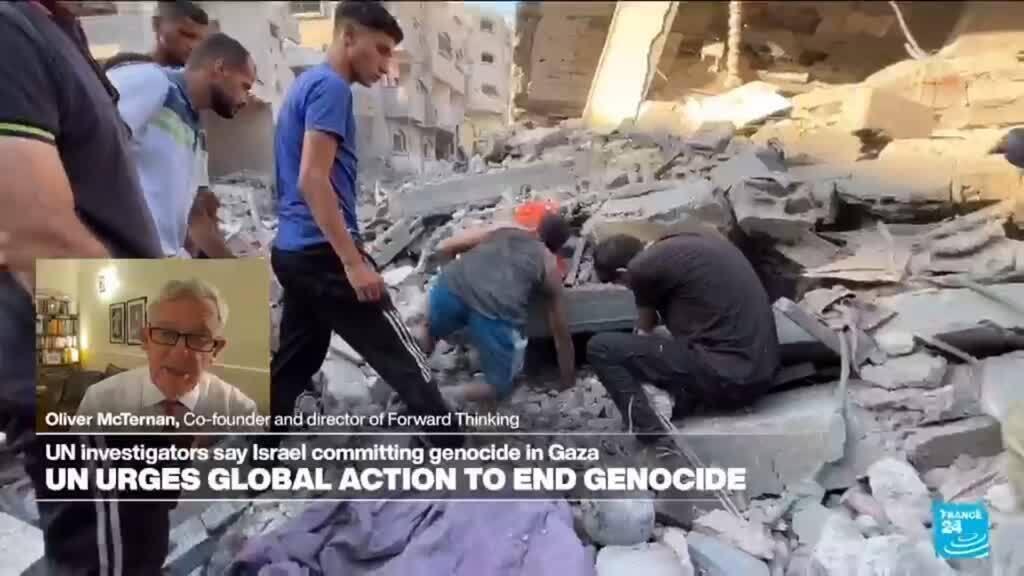
The recent escalation of hostilities between Israel and Hamas, marked by Israel’s commencement of a ground offensive in Gaza City on Tuesday, has ignited a new wave of international concern. This military action, directed at Hamas operatives, arrives after weeks of heightened tensions and follows a period of intense aerial bombardment. A seasoned conflict mediator,Oliver Mc Ternan,director of the Forward Thinking think tank,recently articulated a critical assessment of the situation,suggesting that Israel is currently ensnared within a self-perpetuating cycle of disinformation. He posited that a fundamental shift in strategic thinking, moving away from a posture of dominance, is essential for Israel to achieve lasting security.
The Entrenchment of Disinformation in the Israeli-Palestinian conflict
Mc Ternan’s observation regarding disinformation is particularly pertinent in the context of modern warfare, where narratives are as crucial as military maneuvers. The proliferation of unverified details, propaganda, and deliberately misleading content can significantly impact public opinion, complicate diplomatic efforts, and exacerbate existing tensions. Recent reports from the International Federation of Journalists (IFJ) indicate a dramatic increase in attacks on journalists covering the conflict, hindering the ability to report accurately and independently. This suppression of factual reporting further fuels the spread of misinformation.
The current offensive represents a significant intensification of the conflict, building upon a history of intermittent clashes and failed peace negotiations.The initial phases of the conflict saw a substantial increase in rocket fire from Gaza towards Israeli cities, prompting retaliatory airstrikes. The ground incursion into Gaza City signals a more direct and potentially prolonged engagement, raising fears of a wider regional conflict. The situation is further complicated by the presence of a large civilian population within Gaza, making it exceedingly arduous to conduct military operations without causing significant collateral damage.
The Cycle of Dominance and Insecurity
Mc Ternan’s assertion that Israel’s pursuit of dominance hinders its own security is a nuanced argument that challenges conventional strategic thinking.Historically, israel’s security policies have been predicated on maintaining a clear military advantage and deterring potential adversaries through the demonstration of force. Though, this approach, according to Mc Ternan, might potentially be counterproductive. The perception of dominance can breed resentment, fuel radicalization, and ultimately perpetuate a cycle of violence.
A shift in mindset, as mc ternan suggests, would require a re-evaluation of Israel’s long-term security objectives. This could involve prioritizing de-escalation, fostering dialog with Palestinian representatives (including those from Hamas, a contentious proposition), and addressing the underlying grievances that contribute to the conflict. The Abraham Accords, while representing a positive step towards regional normalization, have not fundamentally altered the dynamics of the Israeli-Palestinian conflict.
Consider the case of the oslo Accords in the 1990s. While initially promising, the agreements ultimately faltered due to a lack of trust, continued settlement expansion, and the failure to address core issues such as the status of Jerusalem and the right of return for Palestinian refugees. This ancient precedent highlights the challenges of achieving a lasting peace settlement.
Pro Tip: when analyzing conflicts,always consider the information ecosystem. Identify key sources, assess their biases, and cross-reference information to ensure accuracy. Tools like newsguard and PolitiFact can be invaluable in this process.
International Response and the Path Forward
The international community has largely expressed concern over the escalating violence, with calls for restraint from both sides. The United Nations Security Council has convened emergency meetings, but reaching a consensus on a resolution has proven difficult due to differing geopolitical interests.The United States, a key ally of Israel, has reaffirmed its support for israel’s right to defend itself while also urging caution and the protection of civilians.European Union member states have similarly expressed concern and called for a ceasefire.
however, diplomatic efforts have so far failed to yield a significant breakthrough. The complexity of the conflict, coupled with the deep-seated mistrust between the parties, presents formidable obstacles to any meaningful progress. The involvement of regional actors, such as Iran and Egypt, further complicates the situation.


