Escalating Conflict: Israeli Strikes Target Hezbollah Positions in Beirut and Southern Lebanon
The conflict between Israel and Hezbollah is intensifying, with recent Israeli airstrikes targeting areas in Beirut and southern Lebanon. These strikes come amid heightened tensions and ongoing hostilities, raising concerns about a potential wider escalation. Reports indicate significant damage and casualties, particularly following a large-scale Israeli operation in the eastern Bekaa Valley. The focus of some operations has been the recovery of remains from decades-old conflicts, adding a poignant layer to the current violence.
Overnight operations conducted by the Israeli military in the eastern Bekaa Valley resulted in at least 41 fatalities and 40 injuries, according to the Lebanese health ministry. The BBC reports that three Lebanese soldiers were among the dead, with local sources identifying numerous civilian casualties, including children. The operation centered on the recovery of the remains of an Israeli airman missing in Lebanon for 40 years. A search in the village cemetery proved fruitless, with locals reporting finding an empty grave where the remains were believed to be located.
Israeli Operation in Nabi Chit
The Israeli military carried out an airborne operation in the town of Nabi Chit, specifically focused on recovering the remains of the missing airman. Evidence of the operation’s intensity was visible in the aftermath, with buildings reduced to rubble, a large crater blown into the ground, and bullet holes scarring vehicles. Personal belongings, including children’s coloring books and cooking utensils, were scattered amongst the debris, highlighting the civilian impact of the strikes. Hezbollah allowed journalists access to the village to document the extent of the destruction.
The area surrounding Nabi Chit has become a focal point of rising hostilities. The operation underscores Israel’s determination to locate the remains of its service member, even as the broader conflict with Hezbollah continues to escalate. The recovery of remains is a sensitive issue in Israel, often prompting significant efforts even decades after a soldier goes missing. Hezbollah, designated as a terrorist organization by the UK, US, and others, maintains a strong presence in the region.
Strikes in Beirut’s Dahieh District
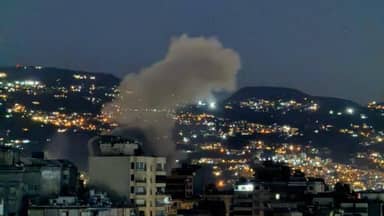
In a separate development, the Israeli Air Force launched airstrikes against Hezbollah targets in Beirut’s southern suburbs, specifically the Dahieh district. The Media Line reports that these strikes targeted weapons production sites and storage facilities located under residential buildings. Ten multi-story buildings connected to Hezbollah were struck, including the headquarters of Hezbollah’s executive council and a warehouse used to store drones.
The IDF stated that the command centers were intended for use in planning and executing terror attacks against Israeli forces. Evacuation notices were issued for four major neighborhoods in Dahieh prior to the strikes, indicating a degree of warning given to civilians. Since the beginning of the current conflict on Monday, the IDF claims to have conducted strikes on over 500 targets across Lebanon. The strikes in Dahieh represent a significant escalation in the targeting of Hezbollah infrastructure within the densely populated Beirut suburbs.
Resident Displacement and Regional Concerns
The escalating violence is prompting displacement among residents. The BBC reports that some residents in the Beirut suburb of Dahieh have left their homes amid the ongoing air strikes. This displacement adds to the humanitarian concerns surrounding the conflict, as civilians seek safety from the escalating violence. The situation is further complicated by the ongoing regional instability and the potential for wider conflict.
The conflict between Israel and Hezbollah has a long and complex history, rooted in regional geopolitical tensions. Hezbollah, backed by Iran, is a powerful political and military force in Lebanon. Israel views Hezbollah as a significant threat and has repeatedly clashed with the group over the years. The current escalation raises fears of a full-scale war, which could have devastating consequences for both Lebanon and Israel, as well as the wider region.
Recent Developments and Ongoing Hostilities
Recent reports indicate continued Israeli military activity in Lebanon. A YouTube video, as reported by various sources, suggests strikes targeting an IRGC (Islamic Revolutionary Guard Corps) air force command center. However, independent verification of this claim is ongoing. The situation remains fluid, with both sides exchanging fire and rhetoric. The intensity of the fighting has increased in recent days, raising concerns about a potential ground invasion of Lebanon by Israeli forces.
The international community is calling for de-escalation and a ceasefire. However, efforts to mediate a resolution have so far been unsuccessful. The United States, France, and other countries are engaged in diplomatic efforts to prevent a wider conflict. The key challenge lies in addressing the underlying issues that fuel the conflict, including Hezbollah’s presence in Lebanon and Iran’s support for the group.
Key Takeaways
- Israeli airstrikes have intensified in both southern Lebanon and Beirut’s Dahieh district, targeting Hezbollah infrastructure and personnel.
- The operation in Nabi Chit focused on recovering the remains of an Israeli airman missing for 40 years, highlighting the long-term impact of past conflicts.
- The strikes in Dahieh targeted weapons production and storage facilities, indicating a deliberate effort to disrupt Hezbollah’s military capabilities.
- Civilian displacement is occurring as residents flee the violence, raising humanitarian concerns.
- The conflict is escalating, with the potential for wider regional implications.
The situation remains highly volatile, and further escalation is possible. The next significant development is expected to be a response from Hezbollah to the recent Israeli strikes. Continued monitoring of the situation and diplomatic efforts to de-escalate the conflict are crucial. World Today Journal will continue to provide updates as the situation unfolds.
What are your thoughts on the escalating conflict? Share your comments below and share this article with your network.
Keep reading