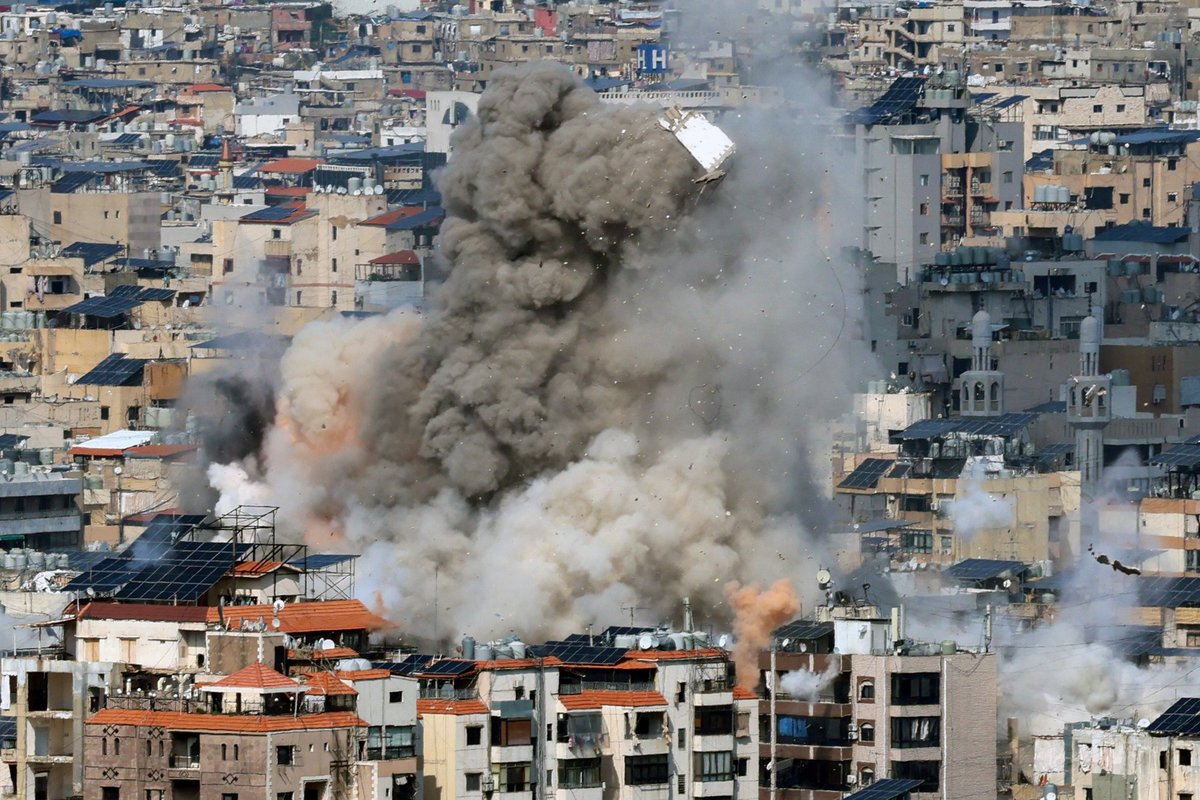
Escalating Tensions: Israel Strikes Hezbollah Targets in Beirut Following Reported Khamenei Death
Beirut – Israel has conducted strikes targeting infrastructure linked to Hezbollah in Beirut, escalating a regional conflict already strained by reports of the death of Iran’s Supreme Leader, Ayatollah Ali Khamenei. The strikes, confirmed by the Israel Defense Forces (IDF) via social media platform X, represent a significant intensification of hostilities between Israel and the Iran-backed militant group. The situation remains highly volatile, with concerns mounting over a potential wider regional war.
The IDF stated that the targeted infrastructure was being used by Hezbollah, but did not provide specific details regarding the nature of the facilities. Prior to the strikes, the IDF announced the identification of a Hezbollah base within a building in the southern suburbs of Beirut, warning residents to evacuate. This pre-emptive notification suggests a deliberate attempt to minimize civilian casualties, though the broader impact of the strikes on the civilian population remains a concern. The recent escalation follows a barrage of rockets fired by Hezbollah into Israel on Monday morning, reportedly in response to news surrounding Khamenei’s alleged death.
The reported death of Ayatollah Ali Khamenei, while not officially confirmed by Iran, has been a key factor in the recent surge in tensions. Multiple sources, including Israeli media, initially reported that Khamenei may have been killed in the joint Israeli-US airstrikes on February 28th. However, Iranian officials have consistently maintained that the Supreme Leader is alive, with Foreign Minister Abbas Araghchi stating in an interview with NBC News that Khamenei was, “as far as I know,” still alive. Despite this assertion, reports indicate that Khamenei has been moved to a “safe location” within Iran. The conflicting reports surrounding Khamenei’s status contribute to the uncertainty and heightened alert levels across the region.
Hezbollah’s Rocket Attacks and Israeli Response
Hezbollah’s rocket attacks on Israel on Monday triggered a swift response from the IDF, which launched intensive strikes against targets across several parts of Lebanon. On Wednesday evening, the IDF reported striking Hezbollah rocket launch sites and a drone manufacturing facility in southern Lebanon, near the Israeli border. Independent verification of these claims is currently unavailable. The exchange of fire represents a significant escalation in the ongoing, low-level conflict between Israel and Hezbollah, which has been simmering for years.
The recent strikes in Lebanon are occurring against a backdrop of broader regional instability. According to reports from Delfi, Iranian security forces have blocked roads around Tehran, near the residences of Khamenei and President Masoud Pezeshkian, as well as the parliament building. This suggests a heightened state of alert within Iran itself, and a potential fear of further attacks or internal unrest. The reported deaths of Iranian Defense Minister Amir Nasirzadeh and Revolutionary Guard commander Mohammed Pakpour during the February 28th airstrikes, though denied by Iran, further contribute to the volatile situation.
International Concerns and Potential for Wider Conflict
The escalating conflict has raised concerns among international actors about the potential for a wider regional war. The United States has been closely monitoring the situation and has reportedly been involved in coordinating the strikes with Israel. The involvement of multiple actors, coupled with the uncertainty surrounding Khamenei’s fate, creates a complex and dangerous dynamic. Diplomatic efforts to de-escalate the situation are likely to be crucial in preventing further escalation.
The strikes in Beirut have also drawn condemnation from some international observers, who have expressed concerns about the potential for civilian casualties. While the IDF claims to be taking steps to minimize harm to civilians, the inherent risks of military operations in densely populated areas remain significant. The international community is urging all parties to exercise restraint and to prioritize the protection of civilians.
The Role of Hezbollah and Iran’s Response
Hezbollah, a powerful political and military force in Lebanon, has long been a close ally of Iran. The group receives significant financial and military support from Tehran, and its actions are often seen as being aligned with Iranian strategic interests. Hezbollah’s rocket attacks on Israel are widely viewed as a show of support for Iran and a signal of its willingness to escalate tensions in response to perceived threats.
Iran’s response to the reported death of Khamenei, and to the subsequent Israeli strikes, will be critical in determining the future course of the conflict. While Iranian officials have denied reports of Khamenei’s death, the heightened security measures in Tehran and the ongoing diplomatic efforts suggest that the situation is being taken very seriously. Any further escalation by Iran, either directly or through its proxies like Hezbollah, could lead to a significant widening of the conflict.
Recent Developments and Ongoing Monitoring
As of March 5, 2026, the situation remains fluid and unpredictable. Israeli forces continue to monitor the border with Lebanon and are prepared to respond to any further attacks by Hezbollah. Iranian officials are expected to release a video statement from Ayatollah Khamenei in an attempt to dispel rumors of his death, though the timing and content of this statement remain uncertain. The international community is closely monitoring the situation and is urging all parties to exercise restraint and to prioritize de-escalation.
The IDF has stated that it will continue to target Hezbollah infrastructure and personnel in Lebanon, while also taking steps to minimize civilian casualties. However, the inherent risks of military operations in a densely populated area like Beirut remain significant. The potential for miscalculation or unintended consequences is high, and the situation could quickly spiral out of control.
Key Takeaways
- Israel has launched strikes against Hezbollah targets in Beirut in response to rocket attacks and amid reports of Ayatollah Ali Khamenei’s death.
- The reported death of Khamenei remains unconfirmed, but has contributed to heightened tensions in the region.
- Hezbollah, a close ally of Iran, has fired rockets into Israel, escalating the conflict.
- The international community is urging all parties to exercise restraint and to prioritize de-escalation.
The situation in Lebanon and Iran remains highly volatile. World Today Journal will continue to monitor developments closely and provide updates as they become available. Readers are encouraged to share their thoughts and perspectives in the comments section below.
Keep reading