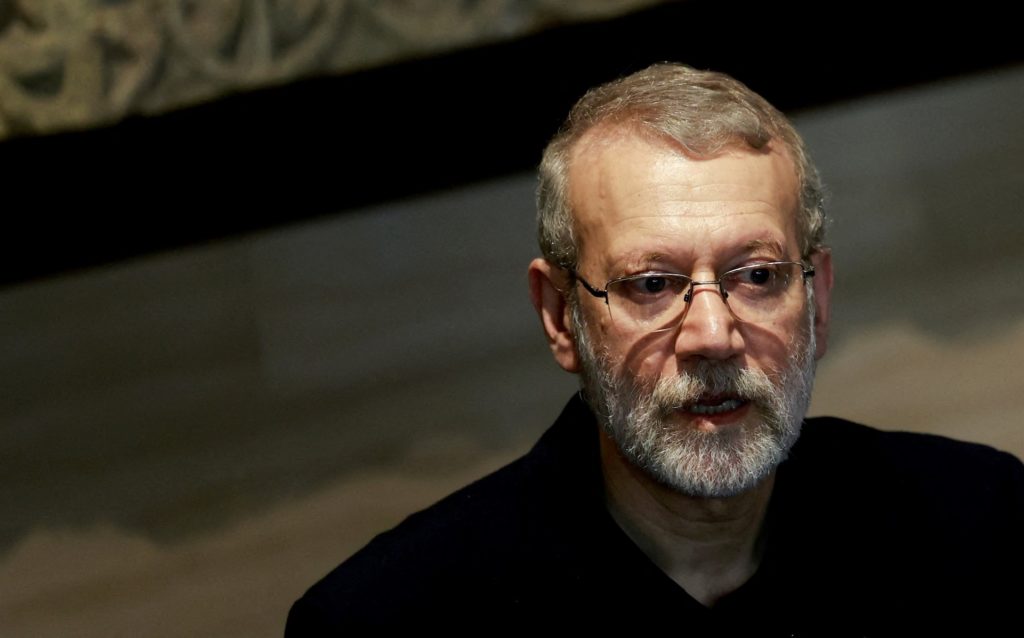
The escalating conflict in the Middle East took a dramatic turn Wednesday with the confirmed deaths of two high-ranking Iranian security officials in Israeli airstrikes. Ali Larijani, a veteran of the Iranian regime and Secretary of the Supreme National Security Council, was killed alongside Gholamreza Soleimani, head of the Islamic Revolutionary Guard Corps’ Basij militia. These strikes represent a significant escalation in the ongoing conflict, raising concerns about further regional instability and prompting a resignation within the U.S. Government over policy disagreements. The situation is further complicated by the impact on global energy markets, with disruptions to oil production and shipping routes already being felt.
Larijani’s death is particularly noteworthy, as he had emerged as a central figure in Iran’s leadership following the reported killing of Supreme Leader Ayatollah Ali Khamenei earlier this year. He was widely considered to be effectively running the country and was a key architect of Iran’s foreign policy, including its nuclear program and support for regional proxies. Soleimani, as head of the Basij, oversaw domestic security and was responsible for suppressing protests, including those that reportedly resulted in tens of thousands of deaths during the January unrest. The coordinated elimination of these two figures signals a clear intent by Israel to destabilize the Iranian government.
Adding to the complexity, Joe Kent, the recently resigned Director of the National Counterterrorism Center, publicly criticized the Trump administration’s approach to Iran, alleging a deliberate misinformation campaign orchestrated by Israeli officials and influential media figures. Kent claimed this campaign misled President Trump into believing Iran posed an imminent threat, justifying a path to war that was, in his view, primarily in Israel’s interest, not the United States’. This resignation and the accompanying accusations have ignited a political firestorm within Washington, further highlighting the deep divisions over U.S. Foreign policy in the region.
Israeli Strikes and Iranian Response
Israeli Defense Minister Israel Katz confirmed the airstrikes, stating that Larijani and Soleimani had been “eliminated” and would “join Khamenei… in the depths of hell.” The BBC reported that Iranian authorities have also confirmed the deaths, including Larijani’s son, and bodyguards. This aggressive rhetoric underscores the intensity of the conflict and the lack of any immediate prospect for de-escalation. Israel has framed the strikes as a necessary measure to counter Iran’s destabilizing activities and prevent the development of nuclear weapons.
The strikes come amidst a wider regional conflict that has seen Iran launch missiles and drones at Israel and Arab states hosting U.S. Military facilities. This retaliatory action has prompted concerns about a broader escalation, potentially drawing in other regional actors. The disruption of oil production in Gulf states and the threat to the vital Strait of Hormuz waterway have already sent shockwaves through global energy markets, with oil prices surging. The Strait of Hormuz, a critical chokepoint for global oil supplies, remains particularly vulnerable to disruption, potentially leading to significant economic consequences worldwide.
The Resignation of Joe Kent and U.S. Policy
The resignation of Joe Kent, Director of the National Counterterrorism Center, has added another layer of complexity to the situation. Kent’s public statement, as reported by multiple news outlets, accused high-ranking Israeli officials and members of the American media of deliberately misleading President Trump about the threat posed by Iran. He argued that the narrative pushed by these actors was designed to provoke a war that served Israel’s interests but was not aligned with U.S. National security objectives. The Associated Press noted Kent is an Army veteran with extensive experience, adding weight to his claims.
President Trump, however, dismissed Kent’s concerns, asserting that Iran was indeed a threat and defending his administration’s close relationship with Israel. This exchange highlights the deep divisions within the U.S. Government regarding Iran policy and the influence of external actors, particularly Israel, on U.S. Decision-making. Kent’s background as a veteran and his previous political campaigns further complicate the narrative, raising questions about potential motivations behind his public statement.
Impact on Regional Stability
The deaths of Larijani and Soleimani, coupled with the escalating tensions between Iran and Israel, pose a significant threat to regional stability. Iran has vowed to retaliate for the strikes, raising the prospect of further attacks and counterattacks. The involvement of proxies, such as Hezbollah in Lebanon, adds another dimension to the conflict, potentially expanding the scope of the fighting. The situation in Lebanon is particularly precarious, with reports indicating that approximately 900 people have been killed since the recent escalation of strikes.
The conflict also has broader implications for the global economy. Disruptions to oil supplies and shipping routes could lead to higher energy prices and economic instability. The potential for a wider regional war could further exacerbate these challenges, impacting global trade and investment. The international community is urging restraint and calling for a diplomatic solution, but the prospects for a peaceful resolution appear increasingly dim.
Larijani’s Role and Legacy
Ali Larijani was a prominent figure in the Iranian regime for decades, holding various key positions, including Speaker of Parliament and head of Iran’s Supreme National Security Council. CBS News reported that he was considered a hardliner who understood both negotiation and the limits of the system. He played a crucial role in Iran’s nuclear negotiations with the U.S. And was a key conduit for relations with China and Russia. His death represents a significant loss of experience and institutional knowledge for the Iranian government.
Larijani was also known for his defiant stance against the U.S. And his unwavering support for the Islamic Revolution. He warned against underestimating the Iranian people and accused the U.S. Of pursuing policies that would ultimately fail. His last public appearance, at a pro-government demonstration, underscored his commitment to the regime and his willingness to confront its adversaries. His removal from the political landscape is likely to embolden more hardline elements within the Iranian government.
Key Takeaways
- Two high-ranking Iranian security officials, Ali Larijani and Gholamreza Soleimani, were killed in Israeli airstrikes.
- The strikes represent a significant escalation in the ongoing conflict between Iran and Israel.
- A senior U.S. Official, Joe Kent, resigned and publicly criticized the Trump administration’s Iran policy.
- The conflict is disrupting global energy markets and raising concerns about regional stability.
- Larijani’s death removes a key figure from the Iranian government and could lead to further hardline policies.
The situation remains highly volatile, and further escalation is possible. The international community is closely monitoring developments and urging restraint. The next key event to watch will be Iran’s response to the strikes and any potential diplomatic efforts to de-escalate the conflict. We will continue to provide updates as the situation unfolds. Share your thoughts and analysis in the comments below.
Keep reading