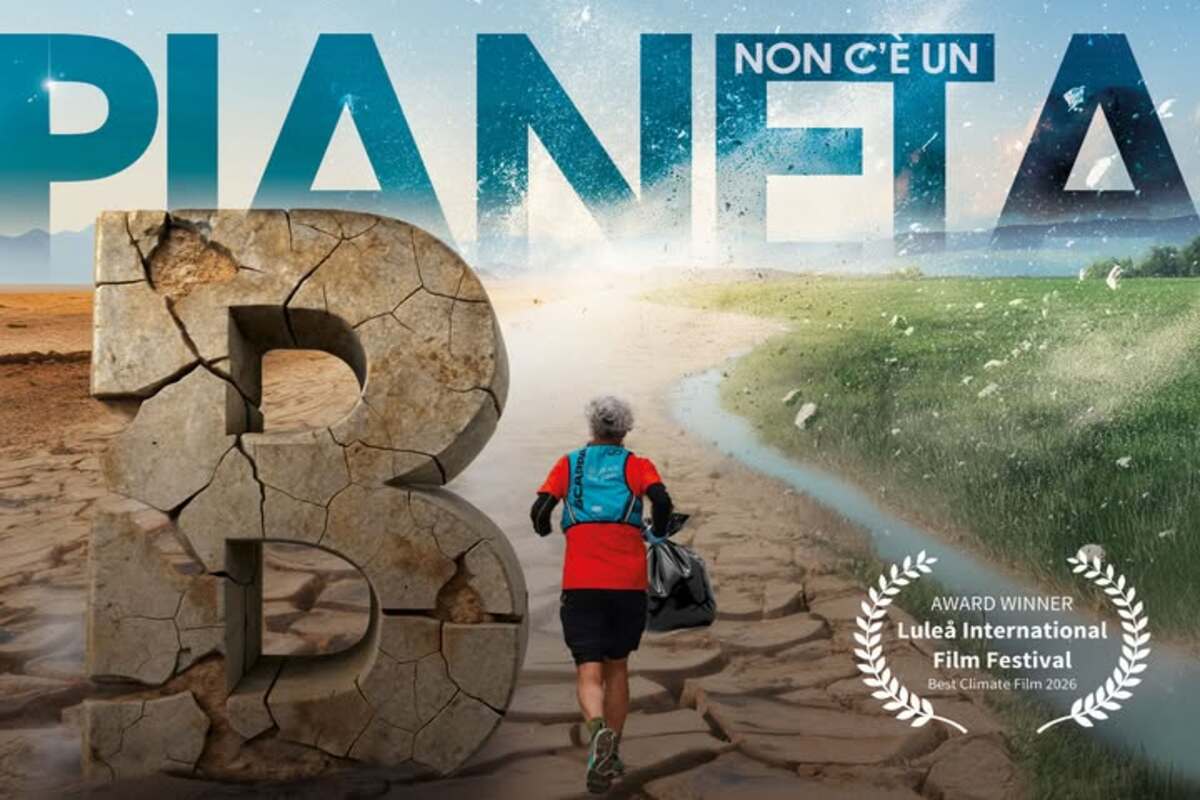
The global conversation around climate change continues to gain momentum and a recent win for Italian cinema is amplifying that message. The documentary “Non c’è un Pianeta B – salvare il mondo correndo” (There is No Planet B – saving the world whereas running) has been awarded the prestigious Best Climate Film at the Luleå International Film Festival in Sweden. This recognition underscores the power of compelling storytelling in raising awareness about the urgent need for environmental action and highlights the growing demand for films that tackle this critical issue.
Directed by Francesco Cavalli and Diego Zicchetti, “Non c’è un Pianeta B” isn’t simply a recitation of scientific data; it’s a visceral experience. The film, produced by Gruppo Icaro and AICA (Associazione Internazionale Comunicazione Ambientale) with support from Ricrea (Consorzio Nazionale per il Riciclo e il Recupero degli Imballaggi in Acciaio), evolved from the theatrical performance of the same name by Roberto Cavallo. It uniquely frames the climate crisis through the lens of “plogging” – the act of jogging while picking up litter – a practice popularized by Swedish activist Erik Ahlström in 2016. Plogging, as depicted in the film, becomes a powerful metaphor for collective responsibility and proactive engagement in environmental stewardship.
The film’s success at Luleå isn’t just a win for Italian filmmakers; it’s a testament to the universality of the climate narrative when presented with both scientific rigor and emotional resonance. As the directors stated, “This award confirms that environmental storytelling, when it combines scientific accuracy and emotional force, is a universal language.” The Luleå International Film Festival, established in 1994, has become a significant platform for films addressing social and environmental issues, attracting submissions from around the globe. The festival specifically champions films that promote dialogue and inspire action on critical global challenges.
The Power of Plogging and a Call for Circularity
“Non c’è un Pianeta B” doesn’t shy away from the urgency of the climate crisis, but it also offers a message of hope and empowerment. By showcasing the “Keep Clean and Run” initiative – the world’s longest plogging event – the film demonstrates that individual actions, when multiplied across communities, can have a significant impact. The film’s narrative skillfully connects the physical act of cleaning up the environment with the broader need for systemic change. This approach resonates with a growing audience seeking tangible ways to contribute to a more sustainable future.
A key partner in the film’s production, Ricrea, emphasizes the crucial role of the circular economy in mitigating climate change. Ricrea, the National Consortium for the Recycling and Recovery of Steel Packaging, highlights the importance of recycling materials, particularly steel, as a concrete solution. Ricrea reports that steel is a permanently recyclable material, capable of being recycled infinitely without losing its properties. This message is powerfully integrated into the film, demonstrating how responsible waste management can contribute to a more sustainable planet.
Industry Response and Future Implications
Domenico Rinaldini, President of Ricrea, expressed pride in the project’s support from its inception. “Steel is a permanent material that can be recycled infinitely, and telling this excellence of the circular economy through cinema is fundamental, after having supported Keep Clean And Run and the show. The award in Luleå demonstrates that sustainability, if communicated with passion and competence, can inspire real and global change.” This sentiment reflects a growing trend within the corporate world, where companies are increasingly recognizing the importance of aligning their values with environmental sustainability.
Emanuela Rosio, President of AICA, echoed this sentiment, stating, “Seeing ‘Non c’è un Pianeta B’ awarded as Best Climate Film at such a prestigious festival is the culmination of a journey born from the desire to unite sport, entertainment, and scientific information. For AICA, this recognition confirms that environmental communication is an essential political and social tool for tackling the climate challenge of our time.” AICA, the International Association of Communication for the Environment, plays a vital role in promoting effective environmental communication strategies globally.
The film’s success also highlights the increasing demand for environmental documentaries. According to a 2023 report by Doc Society, the climate documentary market is experiencing significant growth, with audiences increasingly seeking out films that explore the complexities of the climate crisis and offer potential solutions. This trend suggests that “Non c’è un Pianeta B” is well-positioned to reach a broad audience and contribute to the ongoing conversation about climate action.
The film’s innovative approach – blending the urgency of the climate crisis with the dynamism of sport and the power of visual storytelling – sets it apart. It’s a film that doesn’t just preach to the choir; it invites viewers to become part of the solution. The plogging metaphor is particularly effective in demonstrating that even small, individual actions can contribute to a larger collective effort. This message is particularly relevant in a time when many people feel overwhelmed by the scale of the climate challenge.
The win at the Luleå International Film Festival is likely to generate increased interest in “Non c’è un Pianeta B” and could lead to wider distribution opportunities. The film’s message of hope and empowerment, combined with its compelling visual style, makes it a powerful tool for raising awareness and inspiring action. As the climate crisis continues to escalate, films like “Non c’è un Pianeta B” will play an increasingly important role in shaping public opinion and driving meaningful change.
Looking ahead, the film’s producers are planning a series of screenings and outreach events to engage audiences and promote the message of sustainability. They are also exploring opportunities to partner with environmental organizations and schools to use the film as an educational resource. The continued success of “Non c’è un Pianeta B” will depend on its ability to reach a wider audience and inspire individuals to take action in their own communities. The next confirmed step for the film is a series of screenings across Italy in March 2026, followed by submissions to additional international film festivals.
The film serves as a potent reminder that addressing the climate crisis requires a multifaceted approach – one that combines scientific innovation, policy changes, and individual responsibility. “Non c’è un Pianeta B” offers a compelling vision of a more sustainable future, one where collective action and environmental stewardship are the norm. What are your thoughts on the role of film in addressing the climate crisis? Share your comments below and let us realize how you are taking action to protect our planet.