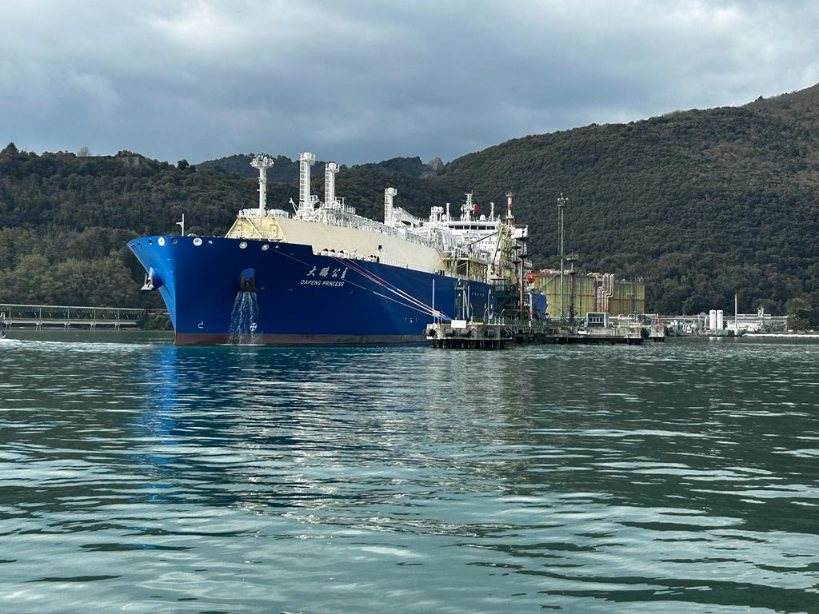
Italy is taking a significant step toward strengthening its energy security with a major upgrade to the Panigaglia regasification plant. The Ministry of Environment and Energy Security (Mase) has granted approval for a project that will allow the onshore terminal in the Port of Spezia to accommodate larger liquefied natural gas (LNG) tankers, specifically those with a capacity of up to 145,000 cubic meters.
This strategic expansion, led by Snam Energy Terminals (formerly Gnl Italia), is designed to increase the facility’s capacity and efficiency. In a move that accelerates the project’s timeline, the ministry has excluded the upgrade from the standard Environmental Impact Assessment (VIA) process, stating that the project does not cause significant direct or indirect impacts on Natura 2000 sites, provided specific environmental conditions are met according to the General Directorate for Environmental Assessments.
The investment for this modernization plan totals 300 million euros as reported by La Nazione. By upgrading the infrastructure, the plant aims to boost its regasification potential by approximately 30%, moving from the current 11 million standard cubic meters of gas per day to roughly 14 million standard cubic meters per day.
Modernizing the Panigaglia Infrastructure
The scope of the 300-million-euro plan extends beyond simply accepting larger ships. The project involves a comprehensive overhaul of the site’s technical systems to ensure the increased volume of gas can be processed safely and efficiently. Snam’s proposal includes the replacement and modernization of various plant systems and equipment, as well as the installation of a new satellite control room and electrical cabin.
Safety and operational stability are central to the upgrade. The plan includes the modernization of the fire-fighting system and the modification of the plant’s power transformers. To accommodate the larger LNG tankers, the pier will be adapted through the installation of four additional mooring dolphins (briccole di ormeggio), ensuring that vessels up to 145,000 cubic meters can safely dock and unload as detailed by Shipping Italy.
Key Technical Upgrades at a Glance
- Regasification Capacity: Increase from 11 million to approximately 14 million standard cubic meters of gas per day.
- Vessel Capacity: Ability to receive LNG tankers up to 145,000 cubic meters.
- Infrastructure: Addition of four mooring dolphins at the pier.
- Systems: New satellite control room, updated electrical cabin, and modernized fire-fighting equipment.
Energy Security and Regional Impact
The Panigaglia terminal serves as a critical node in Italy’s energy infrastructure. By increasing the capacity of the onshore terminal, Italy reduces its reliance on a limited number of supply routes and increases its ability to store and process LNG. What we have is particularly vital for maintaining a steady gas supply for industrial and residential use across the country.
The Port of Spezia, where the terminal is located, remains a cornerstone of Mediterranean logistics. The integration of this regasification plant with the broader port system—including inland terminals that connect the ports of Spezia and Marina di Carrara to markets in Central and Northern Italy—enhances the overall intermodal efficiency of the region via the Autorità di Sistema Portuale del Mar Ligure Orientale.
Why the VIA Exclusion Matters
The decision by the Ministry of Environment and Energy Security (Mase) to exclude the project from the Valutazione di Impatto Ambientale (VIA) is a significant regulatory shortcut. Typically, projects of this scale undergo rigorous environmental reviews that can take months or years. By ruling that the project does not significantly impact protected Natura 2000 sites, the government has effectively cleared the path for Snam to initiate operate more quickly, provided they adhere to the environmental conditions established during the technical inquiry.

Summary of Project Specifications
| Feature | Current Status | Projected Status |
|---|---|---|
| Daily Regasification Capacity | 11 million standard m³ | ~14 million standard m³ |
| Max Vessel Capacity | Below 145,000 m³ | Up to 145,000 m³ |
| Total Investment | N/A | 300 million euros |
| Environmental Review | Standard Procedure | Excluded from VIA by Mase |
As the project moves forward, the focus will shift to the actual implementation of the works and the adherence to the environmental conditions mandated by the ministry. The ability to welcome larger tankers will provide Italy with greater flexibility in sourcing LNG from global markets, potentially lowering costs and increasing the stability of the national energy grid.
The next phase involves the execution of the construction and installation works as outlined in the Snam proposal. Further updates regarding the start date of the physical works are expected to be released by Snam Energy Terminals or the Ministry of Environment and Energy Security.
We invite our readers to share their thoughts on Italy’s energy infrastructure developments in the comments section below.
Worth a look