
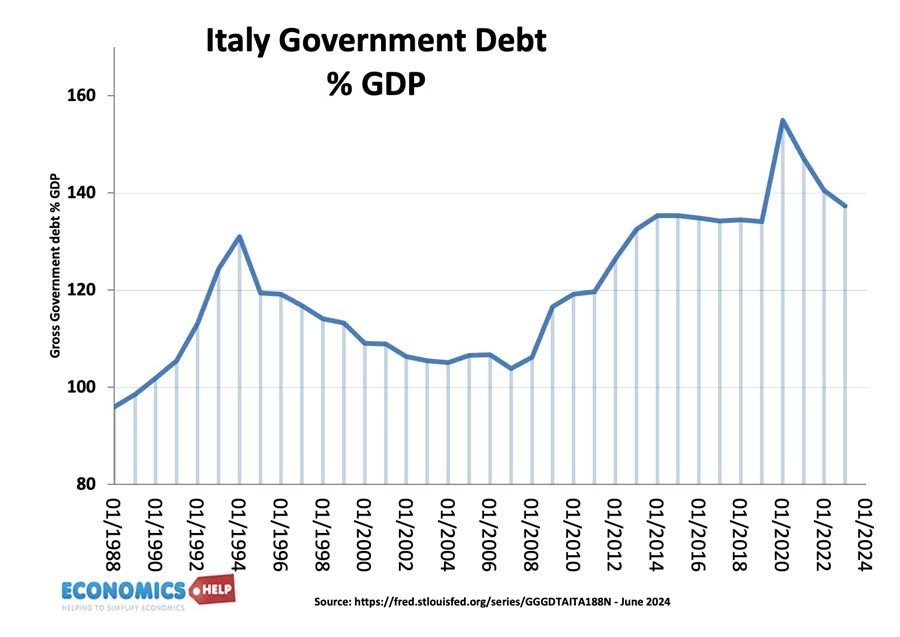
Italy is navigating a complex period in its economic history, as recent projections indicate the nation is set to hold the highest debt-to-GDP ratio in the Eurozone this year. This shift marks a significant moment for the Italian economy, with official estimations from the government’s Documento di Finanza Pubblica (DFP) projecting a rise in public debt to 138.6% of GDP, an increase from 137.1% in 2025. This development highlights the ongoing challenges of fiscal management in the post-pandemic landscape, as reported by Sky TG24.
For many years, Greece has been synonymous with high public debt in the European context, often reaching levels exceeding 200% in the years following the onset of the global health crisis. However, the current trajectory suggests a narrowing gap and an eventual reversal in standings. While Italy’s debt is projected to climb, Greek authorities—specifically the Public Debt Management Agency (PDMA)—anticipate a downward trend, forecasting a reduction in their own debt-to-GDP ratio from 146.1% in 2025 to 136.8% this year. These figures illustrate a broader trend of economic recovery and fiscal consolidation across Southern Europe.
Understanding the Fiscal Shift
The transition in debt rankings is not merely a statistical exercise but a reflection of differing economic recovery speeds. Greece has experienced a notable period of growth, with the country recording an average growth rate of 7.7% between 2021 and 2025. This sustained expansion has provided the fiscal space necessary to manage and reduce the state’s debt burden, according to economic analyses referenced by Sky TG24.
In Italy, the DFP serves as the primary instrument for economic programming, having replaced the previous Documento di Economia e Finanza (DEF) in 2025. The document outlines the government’s medium-term fiscal objectives and provides a roadmap for budgetary policy. Italian officials, including Economy Minister Giancarlo Giorgetti, have noted that these estimates are formulated under exceptional circumstances and remain subject to necessary updates as global and domestic economic conditions evolve.
Comparative Economic Outlooks
The shifting landscape of Eurozone debt is corroborated by international observers. The International Monetary Fund (IMF) has provided outlooks that align closely with national government figures, estimating Italy’s debt at 138.4% of GDP for the current year, while placing Greece at 136.9%. These figures underscore a historic crossover point for two nations that were once grouped together under the acronym “PIGS,” a term historically used in financial discourse to describe countries facing significant sovereign debt challenges.
The management of public debt remains a central pillar of the Italian government’s agenda. As Italy navigates this financial environment, the focus remains on balancing the need for public investment with the requirements of EU fiscal frameworks. The DFP continues to be the essential document for tracking these efforts, acting as the primary reference point for both domestic policymakers and international markets monitoring the stability of the Eurozone’s third-largest economy.
Key Economic Indicators
- Italy’s Projected Debt-to-GDP (2026): 138.6% (per DFP)
- Italy’s Previous Debt-to-GDP (2025): 137.1%
- Greece’s Projected Debt-to-GDP (2026): 136.8% (per PDMA)
- Greece’s Previous Debt-to-GDP (2025): 146.1%
The Path Ahead
The economic narrative for 2026 is defined by these adjustments in debt management strategies. While Italy faces the challenge of managing a rising debt-to-GDP ratio, the government’s commitment to its established fiscal planning instruments, such as the DFP, remains the primary mechanism for maintaining market confidence. The coming months will be critical as the government evaluates the impact of its current policies and prepares for the necessary updates to its financial forecasts.
As we continue to monitor the fiscal health of European nations, the focus will likely remain on how these countries balance growth-oriented policies with the pressure of structural debt reduction. The next official update to these fiscal projections is expected in the coming months as part of the standard budgetary review cycle. We invite our readers to share their perspectives on these economic developments in the comments section below.
Keep reading