
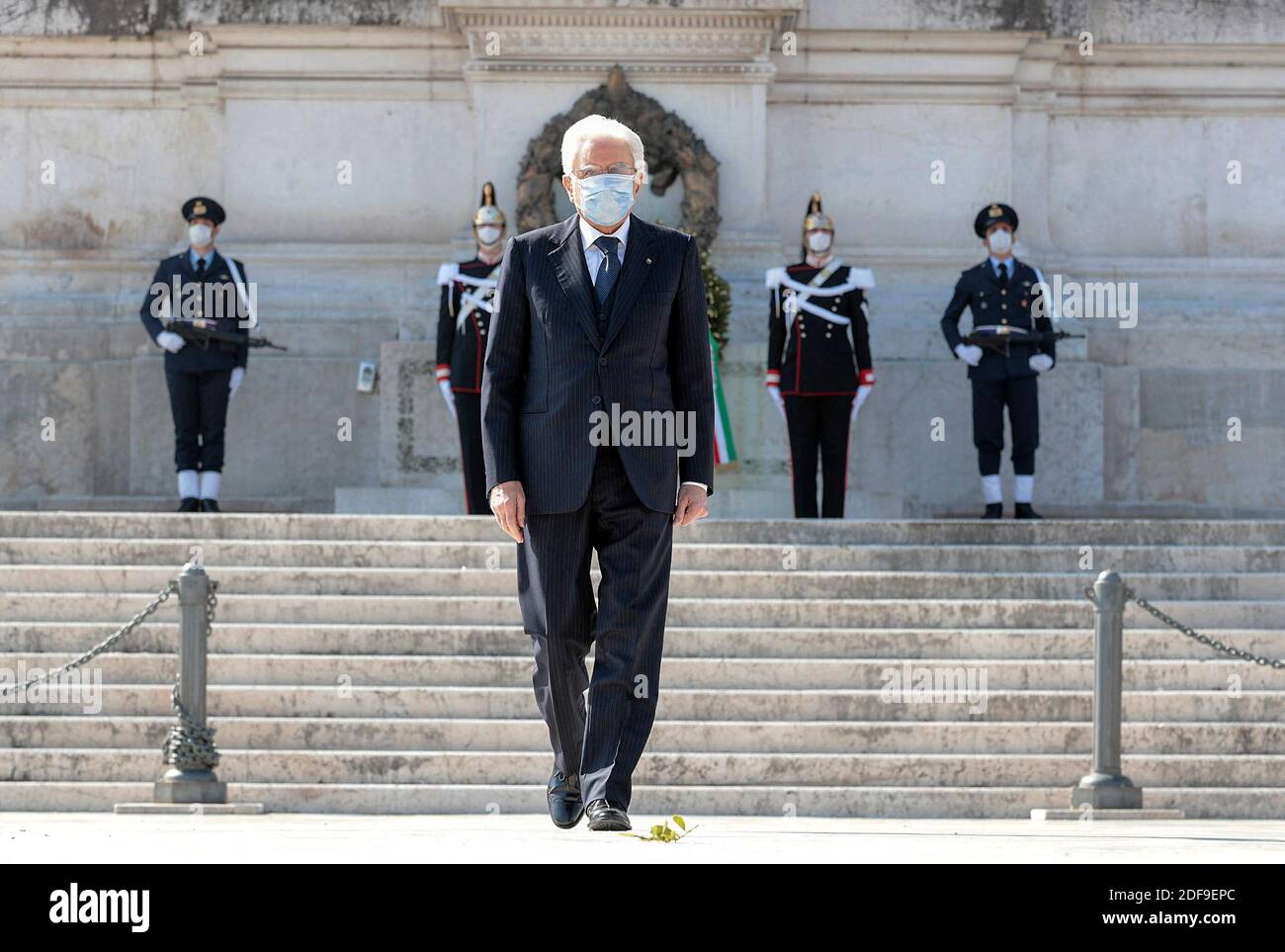
ROME — As the summer sun rose over the historic skyline of the Eternal City on Tuesday, June 2, 2026, the atmosphere in Rome was one of profound solemnity and national pride. President Sergio Mattarella stood at the Altare della Patria, marking a historic milestone: the 80th anniversary of the birth of the Italian Republic. The ceremony, held at the monumental Vittoriano, serves as the centerpiece of the Festa della Repubblica, the most significant national holiday in Italy.
The presence of Sergio Mattarella at the Altare della Patria today is not merely a ceremonial requirement but a symbolic reaffirmation of the constitutional values that have guided the nation for eight decades. For a global audience, the event represents more than a local holiday; We see a moment of reflection on Italy’s transition from a monarchy to a democratic republic following the tumultuous years of World War II.
The ceremony at the Vittoriano is characterized by high-level institutional participation, including members of the Italian government, diplomatic corps, and military leadership. The proceedings follow a rigorous protocol that honors the fallen and celebrates the enduring strength of the Italian state.
The Weight of History: From the 1946 Referendum to the 80th Anniversary
The significance of June 2nd is rooted in the events of 1946. Following the end of the Second World War and the collapse of the Fascist regime, the Italian people were called to the polls to decide the future of their governance. In a landmark institutional referendum, a majority of Italians voted to abolish the monarchy and establish a republic. This decision paved the way for the drafting of the Constitution of the Italian Republic, which remains the bedrock of the nation’s legal and political framework.
Reaching the 80th anniversary in 2026 provides a unique vantage point for historians and citizens alike. It marks eight decades of democratic practice, navigating through various political shifts, economic transformations, and social evolutions. The transition from the House of Savoy to the Republic represented a fundamental shift in sovereignty, moving it from a crown to the people themselves.
The institutional stability provided by the Presidency of the Republic has been a constant throughout this period. As the President of the Italian Republic acts as the guarantor of the Constitution and the unity of the nation, the annual June 2nd ceremony serves to reinforce this role in the eyes of the citizenry.
The Vittoriano: A Monumental Stage for National Identity
The choice of the Altare della Patria—also widely known as the Vittoriano—as the site for this celebration is deeply intentional. Located in the heart of Rome, the massive white marble monument was built to honor Victor Emmanuel II, the first king of a unified Italy. However, its meaning has evolved significantly over the last century.

Today, the monument serves as a sanctuary for national memory, most notably through the Tomb of the Unknown Soldier. The presence of the President at this specific site links the modern democratic Republic to the broader historical narrative of Italian unification and the sacrifices made during the World Wars. The architectural grandeur of the Vittoriano provides a backdrop that mirrors the weight of the constitutional principles being celebrated.
For observers, the ceremony at the Vittoriano is a visual representation of the Italian state’s continuity. The ritual of the wreath-laying at the Tomb of the Unknown Soldier is one of the most emotive segments of the day, bridging the gap between past military sacrifice and present political stability.
The Ritual of the Republic Day Ceremony
The Festa della Repubblica is marked by a series of highly choreographed events designed to honor the state. While the presidential speech at the Altare della Patria is the intellectual core of the day, the public festivities are characterized by several key elements:
- The Wreath-Laying Ceremony: The President leads the official delegation in honoring the Unknown Soldier, a moment of silence and respect that underscores the cost of national sovereignty.
- The Military Parade: Following the institutional ceremonies, a large-scale military parade typically traverses the Via dei Fori Imperiali. This display includes various branches of the Italian Armed Forces and law enforcement agencies, showcasing the nation’s defense capabilities.
- The Aerial Display: One of the most anticipated moments for the public is the flypast by the Frecce Tricolori, the Italian Air Force’s aerobatic demonstration team, which paints the Roman sky with the colors of the national flag.
- Institutional Presence: The gathering of the heads of the Senate, the Chamber of Deputies, and the Prime Minister signifies the cooperation between the different branches of the Italian government.
The Role of the President in the Italian Political System
To understand why the President’s presence at the Altare della Patria is so critical, one must understand the unique position of the Italian Head of State. Unlike many other nations where the head of state is a purely ceremonial figure, the President of the Italian Republic holds significant “moral suasion” and regulatory powers.
The President is tasked with ensuring that the government and the legislature operate within the bounds of the Constitution. During times of political crisis, the President plays a decisive role in appointing Prime Ministers and navigating the formation of new governments. This role makes the President a symbol of national cohesion, standing above the fray of daily partisan politics.
In his annual addresses, particularly on Republic Day, the President often addresses contemporary challenges—ranging from economic stability and social cohesion to international relations and European integration. The 2026 ceremony is expected to follow this tradition, providing a roadmap for the nation’s upcoming challenges in an increasingly complex global landscape.
Key Milestones of the Italian Republic
| Year | Key Event | Significance |
|---|---|---|
| 1946 | Institutional Referendum | Citizens vote to transition from monarchy to republic. |
| 1948 | Constitution Enters Force | The legal framework of the modern Italian state is established. |
| 1946–Present | Festa della Repubblica | Annual celebration held every June 2nd. |
| 2026 | 80th Anniversary | Major milestone commemorating eight decades of democracy. |
What Happens Next?
Following the high-level institutional ceremonies at the Altare della Patria, the focus of the day shifts toward the public celebrations and the military parade. The official state functions are expected to conclude by mid-afternoon, after which the various regional and local celebrations across Italy will commence.
For those following the political implications of the day, the President’s specific remarks regarding the state of the union and the direction of Italian policy will be analyzed by political observers in the coming days. Official transcripts of the presidential address are typically released through the Presidency of the Republic website shortly after the event.
What are your thoughts on the significance of the 80th anniversary of the Italian Republic? How do these national symbols shape modern identity? Share your comments below and join the conversation.
Worth a look