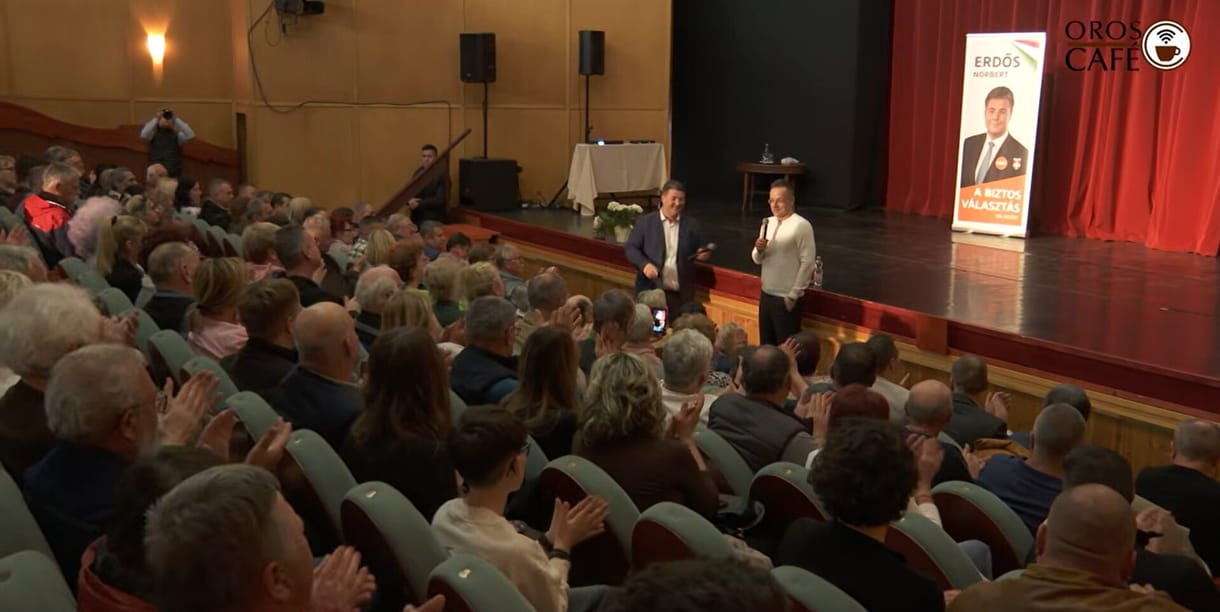
Hungarian Minister of Foreign Affairs and Trade Péter Szijjártó held a political campaign event at a community center in Orosháza that has received funding from the National Cultural Fund (NKA). Public records indicate that the facility, known as the Petőfi Cultural Center, has been a recipient of grants distributed by the NKA, a state-managed fund under the jurisdiction of the Ministry of Culture and Innovation, according to the official National Cultural Fund of Hungary portal.
The convergence of government-funded infrastructure and active political campaigning has drawn renewed attention to the use of public resources in local election cycles. While the use of public community spaces for political events is a common feature of Hungarian local politics, the intersection of state-funded arts grants and the presence of high-ranking cabinet members at specific venues often invites scrutiny regarding the transparency of fund allocation and the neutrality of public institutions.
The Role of the National Cultural Fund
The National Cultural Fund (NKA) is the primary mechanism for state support of cultural activities in Hungary. It operates through various specialized boards that review applications and award grants to organizations, local governments, and independent artists. As detailed in the Ministry of Culture and Innovation’s transparency reports, the NKA is tasked with fostering cultural development, yet its decision-making processes remain a frequent subject of debate within the Hungarian parliament.
For facilities like the Petőfi Cultural Center in Orosháza, NKA funding is typically designated for building renovations, equipment upgrades, or the hosting of specific cultural programs. The connection between these grants and the venue’s availability for political campaigning rests on the status of such buildings as both public assets and community hubs. Critics argue that when state-funded entities host government ministers for campaign purposes, the line between official state business and partisan activity becomes blurred.
Campaigning in Publicly Funded Spaces
During his visit to Orosháza, Péter Szijjártó engaged with local constituents as part of the broader campaign efforts of the governing Fidesz party. The use of municipal or state-supported venues for such events is permitted under current Hungarian election law, provided that the venue is made available to all political actors under equal conditions, as stipulated by the National Election Office’s guidelines on campaign finance and venue access.

However, local political observers and opposition figures frequently question whether these venues are truly neutral grounds. In many smaller municipalities, the local government—often led by the governing party—exercises significant influence over the management of community centers. This influence can lead to situations where the incumbent party enjoys preferential access or scheduling advantages at venues that rely on state funds for their operational survival.
Transparency and Public Scrutiny
The scrutiny surrounding the Petőfi Cultural Center is part of a wider conversation regarding the distribution of state subsidies in Hungary. According to data published by the Institute for Economic and Enterprise Research, the transparency of grant-awarding processes is essential for maintaining public trust in state institutions. When a venue that benefits from tax-funded grants becomes a focal point for political campaigning, the public often demands greater oversight of how these grants are awarded and whether they are contingent upon political alignment.

Legal experts note that while no specific law prohibits a government minister from appearing in a building that has received a cultural grant, the ethical implications are significant. The debate centers on whether the state is effectively subsidizing the infrastructure of a political campaign. As of the latest reporting period, no formal investigations have been launched by the State Audit Office regarding the specific allocation of funds to the Orosháza facility, according to their official audit database.
What Happens Next
The use of public facilities during campaign periods remains a sensitive issue as Hungary approaches future electoral cycles. Local government officials in Orosháza are expected to continue managing the Petőfi Cultural Center under existing municipal regulations. Meanwhile, the Ministry of Culture and Innovation continues to oversee the NKA, with further grant cycles expected to be announced in the coming fiscal quarter.
For residents and taxpayers, the primary point of recourse remains the public disclosure of grant recipients. The NKA maintains an online database where all successful grant applications are documented. Interested parties can monitor these filings to track how public funds are utilized across different municipalities. Questions regarding the impartiality of these grants or the use of specific venues can be directed to local municipal offices or through formal inquiries to the Parliamentary Commissioner for Fundamental Rights.
Readers are encouraged to share their thoughts on the transparency of public funding and to follow our coverage as we continue to monitor the intersection of state resources and political activity in local government.
Worth a look