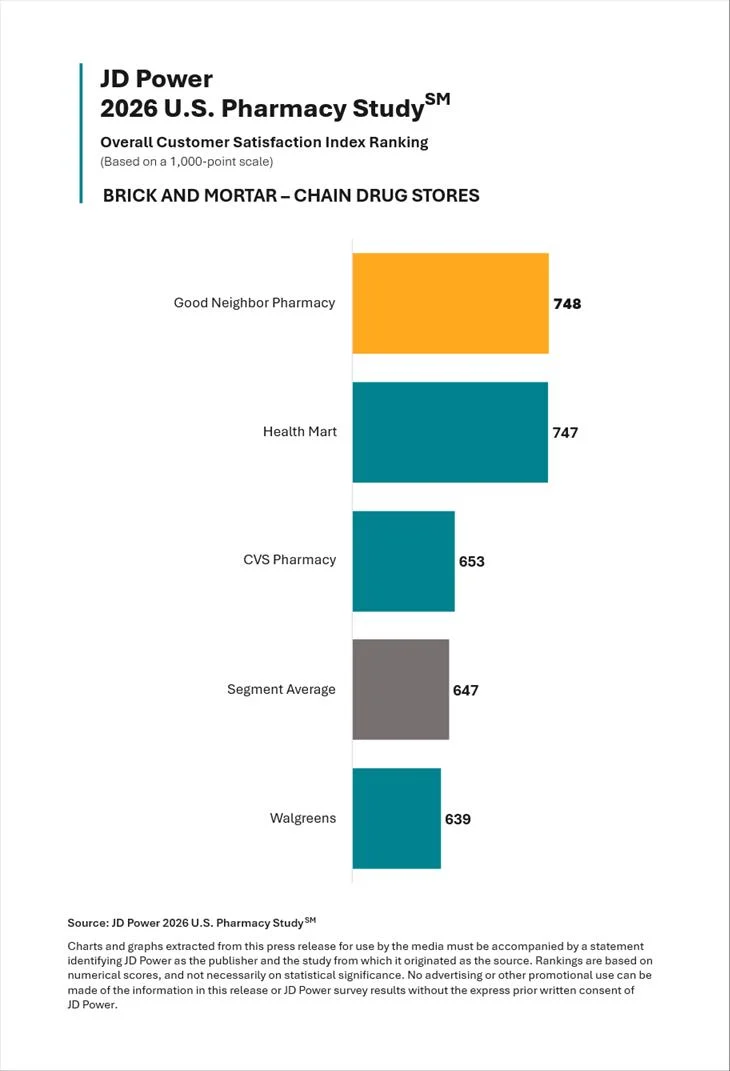
The J.D. Power 2026 U.S. Pharmacy Study reveals a stark divergence in customer satisfaction across the American healthcare retail landscape, highlighting a growing performance gap between mail-order fulfillment models and physical brick-and-mortar drugstores. According to the data released by J.D. Power, overall mail-order pharmacy customer satisfaction rose by 2 points year-over-year to reach 699 out of a possible 1,000-point scale. Conversely, customer satisfaction for traditional brick-and-mortar pharmacies dropped by 7 points over the same period, falling to 669.
Mail-order growth is heavily fueled by strong live-agent phone support and seamless digital tools, whereas physical retail stores face mounting challenges regarding perceived value and consumer trust. The findings underscore how modern pharmacy operations must integrate digital front doors with responsive clinical care to retain customer loyalty.
“In today’s pharmacy environment, the direct human interaction and effortless convenience are non-negotiable when it comes to customer satisfaction,” stated Meaghan Hafner, Senior Director of Healthcare Solutions at J.D. Power, emphasizing that consumers value empathetic staff and easy service access regardless of fulfillment channels.
Segment Leaders Highlighted in the 2026 Study
The J.D. Power study evaluates multiple retail categories, identifying the top performers across mail-order, chain drug stores, mass merchandisers, and supermarket pharmacies. Within the mail-order segment, Amazon Pharmacy secured the highest rank with a score of 745. Kaiser Permanente Pharmacy followed closely in second place with a score of 733, while Walmart Pharmacy Mail Services captured the third spot with a score of 714.
In the brick-and-mortar chain drug store category, Good Neighbor Pharmacy achieved the highest ranking with a score of 748. Health Mart performed comparably well, placing second with a score of 747, while CVS Pharmacy registered a score of 653.
Sam’s Club claimed the top spot in the mass merchandiser segment for the eleventh consecutive year, posting a score of 786. Meanwhile, H-E-B led the supermarket pharmacy category with a strong score of 773.
Digital Integration Versus the Brick-and-Trust Deficit
The widening satisfaction gap points directly to how different retail models handle digital tools and customer service escalation. Mail-order providers have gained ground by deploying automated order tracking alongside immediate access to knowledgeable pharmacists via phone, allowing patients to resolve prescription inquiries without stepping inside a physical retail location.
At the same time, physical drugstores face a distinct trust deficit. The study data indicates that modern omnichannel integration—where digital refill notifications, transparent pricing tools, and accessible clinical consultations work seamlessly together—remains the primary benchmark for consumer loyalty.