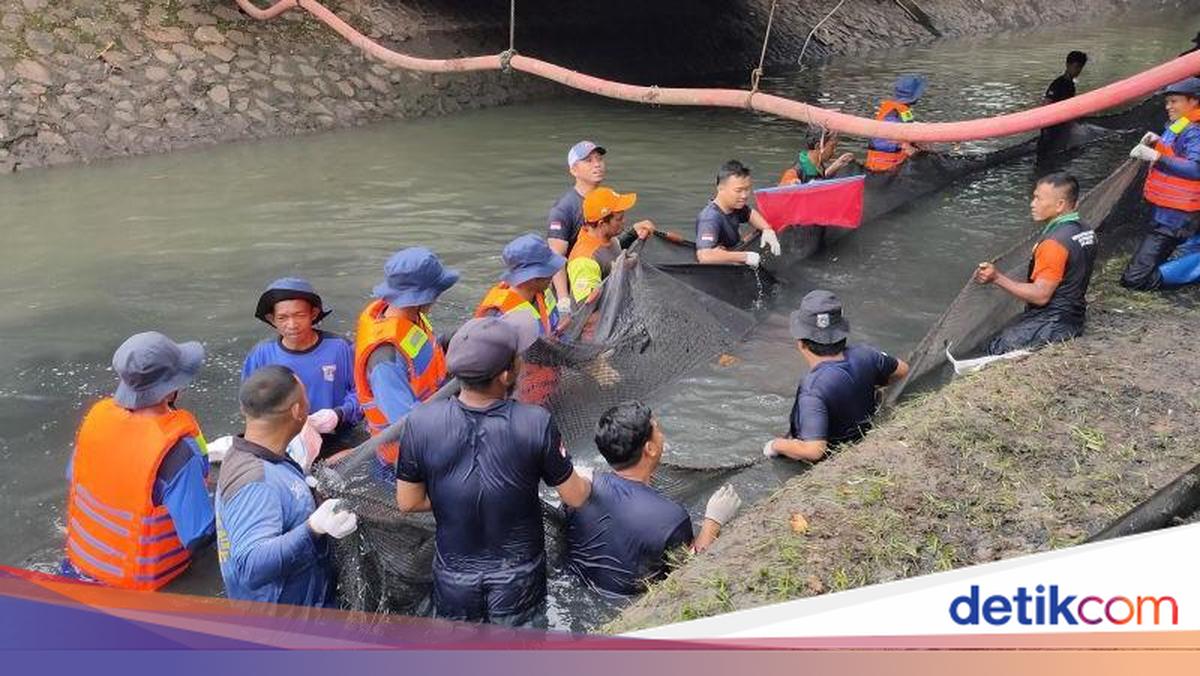
Jakarta Barat has launched a targeted operation to remove invasive janitor fish from local waterways, offering financial incentives and recreational rewards to personnel involved in the cleanup effort. The initiative, announced by city officials on Friday, April 17, 2026, aims to curb the growing population of the species, which officials say threatens embankment stability due to its burrowing habits in riverbed mud.
Under the program, joint task force personnel receive 25,000 Indonesian rupiah per kilogram of janitor fish caught, along with complimentary access to Ancol recreational park. West Jakarta Mayor Iin Mutmainnah confirmed the incentive structure during a briefing at Kali Taman Semanan Indah in Cengkareng, where over 20 kilograms of the fish were captured within the first hour of operations. She emphasized that the reward is intended for group consumption and team-building, stating officials would also organize refreshment trips to Ancol as part of the appreciation effort.
The janitor fish, known locally as ikan sapu-sapu, is not consumed following capture due to health and safety concerns. Instead, specimens are buried immediately at Sentra Flora Semanan to prevent misuse. Jakarta’s Food, Maritime, and Fisheries Resilience Agency (KPKP) secretary Mujiati warned that unchecked populations could damage river infrastructure, explaining that the fish thrive in muddy substrates and may weaken embankment foundations when present in large numbers.
Operations are being conducted in phases, with officials expressing confidence that expanded coverage will yield higher yields ahead of Friday prayers. Authorities have framed the campaign as both an ecological necessity and a community engagement opportunity, combining environmental management with public servant recognition through tangible incentives.
Background on the Janitor Fish Threat in Jakarta Waterways
Janitor fish, a type of armored catfish native to South America, have established populations in several Indonesian rivers and canals, including those in Jakarta. Their ability to survive in low-oxygen, polluted environments has allowed them to outcompete native species, while their nesting behavior involves digging extensive burrows in soft riverbanks and canal beds.
According to Mujiati of the KPKP, these burrowing activities pose a tangible risk to civil infrastructure when populations become dense. The sediment displacement caused by their movement can compromise the integrity of retaining walls and flood barriers over time, particularly in areas where concrete or sheet piling is absent or degraded. This concern has prompted proactive management strategies in multiple districts across the city.
While the fish are sometimes marketed elsewhere for algae control in aquariums, their ecological impact in naturalized water systems has led to classification as an invasive species in parts of Southeast Asia. Jakarta’s approach reflects a growing trend among urban municipalities to address invasive aquatic species through direct removal programs rather than relying solely on biological or chemical controls.
Incentive Structure and Operational Details
The 25,000 rupiah per kilogram payout represents a direct financial incentive tied to measurable output, designed to motivate sustained participation in the cleanup drives. Officials clarified that the amount is calculated per team rather than per individual, encouraging collective effort and shared benefit among participating personnel from various agencies.

In addition to the cash reward, the promise of free entry to Ancol — Jakarta’s largest integrated tourism and recreation area — serves as a non-monetary motivator. Ancol offers beaches, parks, and cultural attractions, making it a popular destination for staff outings. The combination of immediate compensation and deferred leisure access aims to reinforce both short-term productivity and long-term morale.
Burial at Sentra Flora Semanan, a designated green space in West Jakarta, ensures that captured fish are not diverted for illegal sale or consumption. This disposal method aligns with biosecurity protocols intended to prevent the establishment of secondary populations or the spread of pathogens associated with improper handling of invasive aquatic species.
Operations are being coordinated by joint teams comprising personnel from municipal agencies, including environmental, maritime, and public order units. The use of interdepartmental task forces allows for broader coverage and logistical flexibility during surveillance and netting activities along targeted canal stretches.
Context of Previous Removal Efforts and Future Plans
This initiative builds upon earlier attempts to manage janitor fish populations in Jakarta, which have included public reporting campaigns and limited netting drives. However, the current operation marks one of the first instances where direct financial incentives have been systematically applied to municipal staff for invasive species removal in the city’s inland waterways.

West Jakarta officials have indicated that the campaign will continue in phases, with regular sweeps planned for other canals and rivers under jurisdictional authority. The goal is to reduce population density to levels that no longer pose a structural risk, though no specific eradication timeline has been publicly stated.
Broader discussions are ongoing at the municipal level regarding long-term management strategies, including potential revisions to fisheries regulations that could authorize specialized response units. These discussions follow public statements by Jakarta’s deputy governor suggesting the need for dedicated task forces to address persistent invasive species challenges across multiple districts.
Environmental and Public Safety Considerations
Authorities stress that the removal campaign is not intended to eradicate the species entirely but to maintain populations at ecologically manageable levels. Complete elimination is considered impractical due to the fish’s high reproductive rate and cryptic behavior in muddy habitats.

Public advisories have been issued cautioning against unauthorized fishing or handling of janitor fish, citing risks of misidentification, improper disposal, and potential exposure to contaminants accumulated in their tissues from urban runoff. Official channels remain the sole authorized pathway for capture and disposal under the current program.
Monitoring efforts are expected to accompany removal activities, though details on post-operation surveys or population tracking mechanisms have not been disclosed in verified sources. Future updates may include data on catch totals, operational coverage, and observed changes in waterway conditions.
As of the latest verified reports, the operation remains active, with officials expressing optimism about scaling efforts based on initial returns. Residents seeking official information are directed to consult announcements from the Pemerintah Kota Jakarta Barat and the Dinas Ketahanan Pangan, Kelautan, dan Perikanan (KPKP) Jakarta for confirmed developments.
For continued coverage of environmental management initiatives in Jakarta and updates on invasive species responses in urban waterways, readers are encouraged to follow verified municipal channels and regional news outlets specializing in public affairs and ecological governance.
Related reading