
In the quiet coastal town of Jakobstad, Finland, a pivotal moment in its Swedish-speaking Lutheran community is unfolding. On Sunday, May 14, 2026, members of Jakobstads svenska församling—the Swedish-speaking parish of Jakobstad—will cast their votes to elect a new kyrkoherde (pastor), a role that carries deep spiritual and administrative weight in Finland’s religious landscape. The stakes are high, as the chosen leader will shape the future of a congregation that has long been a cornerstone of cultural and social life in the region.
The race is tight, pitting two experienced clergy against each other: Catharina Englund, the current acting pastor (t.f. Kyrkoherde) who has served the parish since April 1, 2025 and Niklas Wallis, the incumbent pastor of Kronoby församling and kontraktsprost of Pedersöre prosteri. Both candidates bring distinct backgrounds and visions to the table, raising questions about the direction of the parish—from its financial health to its stance on modern social issues like same-sex blessings. For a global audience, this election is more than a local affair; it reflects broader debates within Finland’s Evangelical Lutheran Church about tradition, inclusivity, and the evolving role of faith in contemporary society.
What follows is a deep dive into the candidates, their platforms, and what their victory—or defeat—could mean for Jakobstads svenska församling and the wider Swedish-speaking community in Finland. Given the parish’s historical significance and its role in preserving Swedish cultural identity in a predominantly Finnish-speaking region, this election is being watched closely not just by locals, but by church leaders nationwide.
Two Leaders, One Parish: The Race for Jakobstad’s Next Kyrkoherde
The election comes at a time when Jakobstads svenska församling is described by both candidates as ”välmående” (thriving), a testament to the parish’s resilience and adaptability. Yet, beneath the surface, challenges loom. The parish’s decision last year to explore the potential sale of its Församlingscentret (parish center) has sparked debate about the community’s priorities. Meanwhile, questions about the church’s stance on same-sex blessings—an increasingly contentious issue within Finland’s Lutheran Church—have put both candidates on the defensive.
For Englund, the election is a homecoming of sorts. She has been active in Jakobstad for decades, serving as a hospital chaplain alongside her parish work. Her tenure as acting pastor has given her firsthand insight into the parish’s needs, and she has framed her campaign around continuity and community engagement. Wallis, by contrast, brings a broader perspective, having led Kronoby församling for the past decade and held the title of kontraktsprost—a role that involves overseeing multiple parishes in the region. His experience in collaborative leadership could appeal to voters seeking a more expansive vision for Jakobstad’s future.
Catharina Englund: The Insider’s Perspective
Catharina Englund’s connection to Jakobstad runs deep. While the primary sources do not specify the exact duration of her involvement beyond her current role as acting pastor (April 1, 2025–March 31, 2026), her background as a sjukhuspräst (hospital chaplain) suggests a career marked by pastoral care in both institutional and community settings. Her campaign appears to emphasize stability, with a focus on maintaining the parish’s strong ties to its Swedish-speaking heritage and addressing practical concerns like the future of Församlingscentret.
Englund’s platform, as hinted at in the original video, centers on three pillars:
- Continuity: Leveraging her intimate knowledge of the parish to ensure seamless transitions in leadership and programming.
- Community: Strengthening outreach efforts, particularly among younger Swedish-speaking Finns, to preserve cultural and linguistic identity.
- Pragmatism: Addressing financial sustainability, including the potential sale of Församlingscentret, in a way that balances fiscal responsibility with community needs.
When asked about the parish’s stance on same-sex blessings—a topic that has divided Finnish Lutherans—Englund has not taken a public position, reflecting the church’s ongoing internal debates. However, her emphasis on dialogue suggests she may prioritize unity over divisive theological stances.
Niklas Wallis: The Outsider with Broad Experience
Niklas Wallis enters the race as an outsider in name only. Though he has not previously led Jakobstads svenska församling, his role as kyrkoherde of Kronoby församling and kontraktsprost of Pedersöre prosteri gives him a regional perspective that some voters may find appealing. Wallis’s campaign appears to position him as a leader who can bring fresh ideas while respecting tradition.
Key themes in Wallis’s platform include:
- Innovation: Introducing modern pastoral approaches, such as digital engagement tools, to reach younger congregants.
- Collaboration: Leveraging his experience as kontraktsprost to foster stronger ties with neighboring parishes and the broader Evangelical Lutheran Church of Finland.
- Theological Clarity: While avoiding outright confrontation, Wallis has signaled a willingness to engage with contemporary social issues, including same-sex blessings, in a way that aligns with the church’s evolving doctrine.
Wallis’s background also suggests a focus on administrative efficiency, which could resonate with voters concerned about the parish’s financial health. His experience managing multiple parishes under the kontraktsprost role may position him as a strong candidate for those seeking a leader who can navigate complex organizational challenges.
What’s at Stake: Issues Defining the Election
The election is not just about personalities; it’s about the future of Jakobstads svenska församling. Three critical issues are shaping the debate:
1. The Future of Församlingscentret
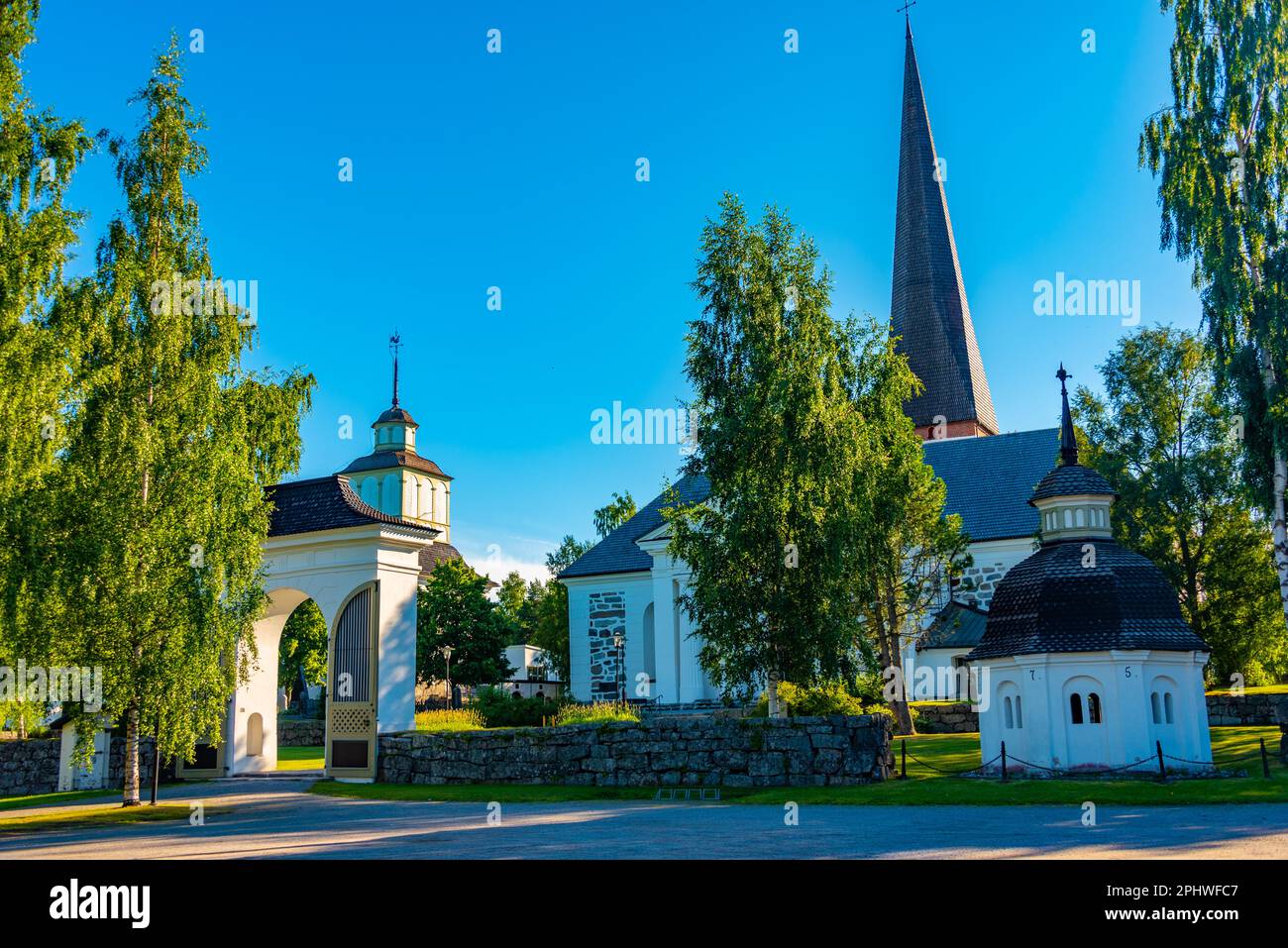
The potential sale of the parish center has become a lightning rod in the campaign. While the original video suggests this is a contentious topic, the primary sources do not provide specific details about the proposed sale, its terms, or the community’s reaction. However, the issue underscores broader questions about the parish’s financial sustainability and its role as a physical hub for Swedish-speaking Finns in Jakobstad.
Both candidates have avoided taking a firm public stance on the sale, but their approaches differ. Englund’s emphasis on community suggests she may prioritize finding a solution that preserves the center’s function, even if it means restructuring its use. Wallis, with his focus on innovation, might advocate for modernizing the space or exploring alternative revenue streams.
2. Same-Sex Blessings: A Divisive Question
Finland’s Evangelical Lutheran Church has been grappling with the issue of same-sex blessings for years, and Jakobstads svenska församling is no exception. The church’s national leadership has not yet approved same-sex marriages, but individual parishes have begun offering blessings in some cases. This has created tension between those who see it as a step toward full inclusion and those who view it as a theological compromise.

Neither candidate has taken a definitive public position on the issue, but their past actions offer clues. Wallis’s regional experience suggests he may be more open to engaging with the topic at a parish level, while Englund’s focus on unity could imply a more cautious approach. Voters will be watching closely to see how each candidate navigates this sensitive issue.
3. The Parish’s Role in a Changing Finland
Jakobstads svenska församling is more than a religious institution; it is a cultural anchor for Swedish-speaking Finns in a predominantly Finnish-speaking region. As Finland’s demographics shift and younger generations increasingly identify as secular, the parish faces the challenge of remaining relevant. Both candidates have framed their campaigns around this reality, but their solutions differ.
Englund’s platform suggests a focus on preserving the parish’s traditional role as a cultural and spiritual center, while Wallis’s emphasis on innovation hints at a more adaptive approach. The election, in many ways, is a referendum on whether Jakobstad’s future lies in nostalgia or progress.
Who Will Win? The Voting Process and What’s Next
The election will take place on Sunday, May 14, 2026, with voting open to active members of Jakobstads svenska församling. The process is overseen by the parish’s leadership, and results are expected to be announced later that day or shortly thereafter. While the original video implies a close race, the primary sources do not provide specific polling data or voter demographics.
Regardless of the outcome, the new kyrkoherde will face immediate challenges, including finalizing the status of Församlingscentret, addressing the same-sex blessings debate, and maintaining the parish’s financial stability. Both candidates have signaled a commitment to transparency, but their differing approaches will likely shape how these issues are handled.
Why This Election Matters Beyond Jakobstad
While the election is local in scope, its implications ripple far beyond Jakobstad. Finland’s Swedish-speaking community—though small, numbering around 300,000—has historically been a bulwark of cultural preservation in a country where Finnish is the dominant language. The Evangelical Lutheran Church plays a central role in this preservation, and the outcome in Jakobstad could influence similar debates in other Swedish-speaking parishes across Finland.
the church’s stance on same-sex blessings is a microcosm of broader societal shifts in Finland, where LGBTQ+ rights have gained increasing acceptance. The Evangelical Lutheran Church of Finland has yet to fully embrace same-sex marriage, but individual parishes are pushing for change. Jakobstad’s decision could set a precedent for how other parishes navigate this issue.
Key Takeaways
- The election pits Catharina Englund (acting pastor, continuity-focused) against Niklas Wallis (regional leader, innovation-focused).
- Issues like the sale of Församlingscentret and the parish’s stance on same-sex blessings are central to the campaign.
- Both candidates emphasize the parish’s role in preserving Swedish-speaking culture in Finland, but differ on how to modernize its approach.
- The election takes place on May 14, 2026, with results expected shortly afterward.
- The outcome could influence broader debates within Finland’s Evangelical Lutheran Church about tradition, inclusivity, and financial sustainability.
What Happens Next?
Assuming the election proceeds as scheduled, the newly elected kyrkoherde will begin their term immediately after the vote. Their first priority will likely be addressing the parish’s financial and operational challenges, including the future of Församlingscentret. They will also need to engage with the broader church on issues like same-sex blessings, potentially setting a tone for how Jakobstads svenska församling navigates these debates.
The next major checkpoint will be the annual general meeting of the Evangelical Lutheran Church of Finland, scheduled for late September 2026. This gathering will provide an opportunity for the new kyrkoherde to present their vision to a wider audience and align with the church’s national priorities. For now, all eyes are on Jakobstad as the community prepares to make its choice.
This election is more than a local contest; it’s a snapshot of Finland’s religious and cultural evolution. As the world watches, the outcome will resonate far beyond the shores of the Baltic Sea.
What do you think? Should Jakobstads svenska församling prioritize tradition or innovation? Share your thoughts in the comments below, and don’t forget to follow World Today Journal for updates on this story and more.
Keep reading