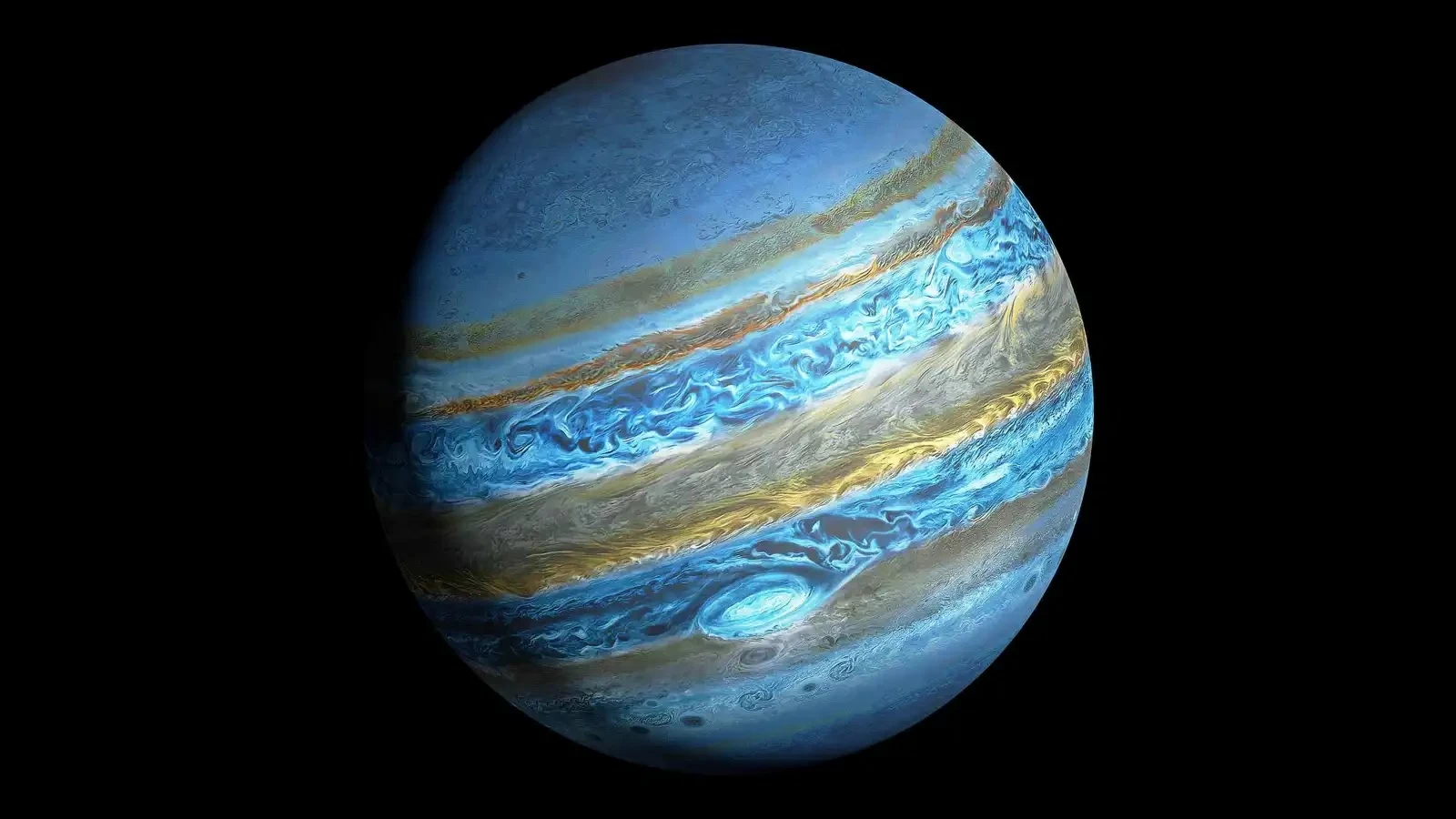
The James Webb Space Telescope (JWST) has once again pushed the boundaries of our understanding of the cosmos, this time by peering into the atmosphere of a distant world that is challenging every traditional model of planetary formation. Astronomers have identified a “super-puff” exoplanet whose chemical composition is so unusual that it has sparked a wave of fascination—and a bit of humor—across the scientific community due to its predicted “strange smell.”
The planet in question, WASP-107b, is a gas giant that defies uncomplicated classification. While We see roughly the size of Jupiter, it possesses a remarkably low density, leading researchers to describe it as “fluffy.” However, it is the recent spectroscopic data captured by the JWST that has truly stunned researchers: the discovery of sulfur dioxide and other heavy elements suggests a world with an atmospheric chemistry unlike anything seen in our own solar system.
For those wondering why a planet would be described as having a “strange smell,” the answer lies in the detection of sulfur-bearing molecules. On Earth, sulfur dioxide and hydrogen sulfide are well-known for their pungent, often unpleasant odors—reminiscent of burnt matches or rotten eggs. While no human will ever physically smell WASP-107b, the chemical signatures detected by the telescope allow scientists to reconstruct the olfactory profile of the planet’s clouds and haze.
This discovery is not merely a curiosity of cosmic aromas; it is a critical piece of the puzzle in understanding how planets are born and how their atmospheres evolve over billions of years. By analyzing the light filtering through the planet’s atmosphere, the JWST has revealed a world that is significantly more “enriched” than its host star, suggesting a violent or complex history of accretion.
The Chemistry of a “Rotten Egg” Atmosphere
The “strange smell” reported in recent astronomical analyses stems from the JWST’s ability to detect sulfur dioxide ($text{SO}_2$) in the atmosphere of WASP-107b. This is a landmark finding because sulfur dioxide is a primary indicator of photochemistry—chemical reactions triggered by the energy of a parent star’s light hitting the planet’s upper atmosphere.
On Earth, photochemistry is what creates the ozone layer. On WASP-107b, the process is different. The intense radiation from its star breaks apart molecules, allowing sulfur and oxygen to recombine into $text{SO}_2$. This process is similar to what happens on Venus, but the context of a “fluffy” gas giant makes the presence of these chemicals far more surprising. The detection of these molecules was made possible through the telescope’s Near-Infrared Spectrograph (NIRSpec), which can isolate the specific wavelengths of light absorbed by different gases.
Beyond sulfur, the JWST has identified water vapor and silicate clouds—essentially clouds made of tiny grains of sand. This combination of “sand rain” and sulfurous gases creates a planetary environment that is fundamentally alien. The interaction between these elements suggests a highly dynamic atmosphere where chemicals are constantly being recycled through vertical mixing, bringing gases from the hot interior up to the cooler exterior.
Challenging the Laws of Planet Formation: The “100 Times Richer” Mystery
One of the most provocative aspects of the WASP-107b findings is the planet’s metallicity. In astronomy, “metals” refer to any element heavier than hydrogen and helium. The JWST data indicates that the atmosphere of WASP-107b is vastly more enriched in these heavy elements than the star it orbits.
Some analysis suggests that the planet’s interior and atmosphere are significantly “richer”—potentially by a factor of 100 in certain heavy element concentrations—compared to the solar-like composition of its host star. This creates a massive theoretical problem for astrophysicists. Standard models of planet formation suggest that a planet’s composition should roughly mirror the chemistry of the protoplanetary disk from which it formed, which in turn mirrors the star.
If WASP-107b is indeed this heavily enriched, it implies that the planet did not simply gather gas from its surroundings. Instead, it likely underwent a series of massive “bombardments” of planetesimals—smaller, rocky bodies and icy comets—that crashed into the gas giant during its early stages. This “heavy feeding” would explain why the planet is so rich in sulfur and other metals despite its low overall density.
The Technology Behind the Discovery
Capturing the chemical signature of a planet hundreds of light-years away requires precision that was impossible before the launch of the JWST. The telescope utilizes a technique called transmission spectroscopy. As WASP-107b passes in front of its star, the starlight filters through the planet’s atmosphere. Different gases absorb different wavelengths of that light, leaving behind a “chemical fingerprint” or spectrum.
The JWST’s massive 6.5-meter primary mirror allows it to collect enough light to detect these faint signals with unprecedented clarity. By using the NIRSpec and MIRI (Mid-Infrared Instrument), scientists can see “through” the haze to identify the specific molecules present. This is a significant leap over the Hubble Space Telescope, which lacked the infrared sensitivity to distinguish sulfur dioxide from other overlapping chemical signatures.
The ability to detect photochemistry in an exoplanet atmosphere for the first time marks a new era in astronomy. We are moving from simply finding planets to performing detailed “atmospheric forensics,” allowing us to understand the weather, chemistry, and history of worlds we will never visit.
Why This Matters for the Search for Life
While WASP-107b is a scorching gas giant and certainly not habitable, the techniques used to study it are the exact same ones that will be applied to smaller, rocky planets in the “Goldilocks zone” of their stars. The detection of sulfur dioxide is a “proof of concept” for the JWST’s ability to find biosignatures—chemical markers that could indicate the presence of life.
If the JWST can identify complex photochemistry and trace amounts of sulfur on a distant gas giant, it possesses the sensitivity to look for methane, oxygen, and carbon dioxide on an Earth-like planet. The “strange smell” of WASP-107b is therefore a victory for the search for life; it proves that we have the tools to analyze the air of another world and determine what is happening there in real-time.
Key Takeaways from the WASP-107b Discovery
- Chemical Fingerprint: The detection of sulfur dioxide ($text{SO}_2$) suggests a pungent, sulfurous atmosphere driven by photochemistry.
- Compositional Anomaly: The planet is significantly more enriched in heavy elements (“metals”) than its host star, challenging current planet-formation theories.
- Physical Nature: Known as a “super-puff,” the planet has a very low density despite its large size, combined with clouds made of silicates (sand).
- Technological Milestone: The discovery validates the JWST’s transmission spectroscopy capabilities, paving the way for the search for biosignatures on rocky planets.
The study of WASP-107b is ongoing, with astronomers continuing to analyze data to determine the exact ratio of elements in its core. The next major checkpoint for this research will be the release of further MIRI instrument data, which is expected to provide a clearer picture of the planet’s thermal profile and deeper atmospheric layers.
Do you think the discovery of “strange” atmospheres brings us closer to finding a second Earth, or does it prove that the universe is far weirder than we imagined? Share your thoughts in the comments below.
Keep reading