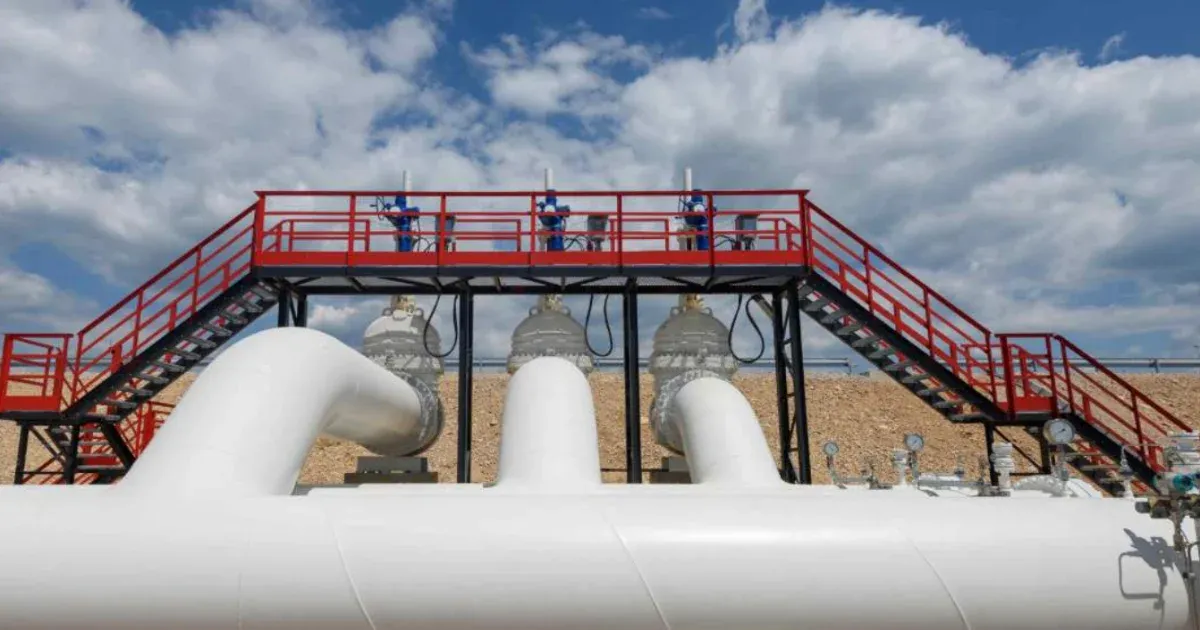
London, United Kingdom – Hungarian energy giant MOL Group and its Slovak subsidiary Slovnaft have escalated a dispute with Croatian pipeline operator JANAF, filing a formal complaint with the European Commission alleging abusive pricing practices that threaten regional energy security. The complaint, lodged on Friday, centers on what MOL and Slovnaft claim are unfairly high transit fees for crude oil transported via the JANAF pipeline, a critical artery for supplying Hungary and Slovakia.
The escalating tensions approach amid broader concerns about energy supply vulnerabilities in Central and Eastern Europe, particularly in light of ongoing geopolitical instability and the European Union’s efforts to reduce reliance on Russian fossil fuels. MOL and Slovnaft argue that JANAF’s pricing policies effectively create a barrier to diversifying oil sources and maintaining stable supplies, potentially forcing them to continue relying on Russian crude despite sanctions and political pressures. The companies contend that the fees are not transparently calculated and are significantly higher than those charged by comparable pipeline operators in the region.
JANAF Defends Pricing, Accuses MOL of Misleading Claims
JANAF has strongly refuted the allegations, stating that its operations fully comply with EU regulations, competition law, and international sanctions requirements. In a press release, the Croatian company asserted that it applies transparent and non-discriminatory principles in setting transit fees for all its partners. JANAF accused MOL of employing “baseless comparisons and selectively presented prices” in an attempt to discredit its practices. The company further alleges that MOL is attempting to convince European institutions that Hungary and Slovakia have no alternative to continuing to import discounted, yet sanctioned, Russian oil, potentially to maintain “extra profits.”
The dispute highlights the complex interplay between energy security, market competition, and geopolitical considerations in Europe. The JANAF pipeline is a crucial component of the infrastructure that delivers crude oil to refineries in Hungary and Slovakia, and any disruption or significant increase in transit costs could have substantial economic consequences for both countries. The complaint to the European Commission signals a significant escalation in the conflict, potentially leading to a formal investigation and possible legal action.
Druzhba Pipeline Interruption and Diversification Efforts
The current dispute builds on previous issues between the parties. According to a statement released by MOL Group on March 13, 2026, crude oil deliveries to Hungary and Slovakia via the Druzhba pipeline were interrupted on January 27, 2026. MOL and Slovnaft have argued that the interruption underscored the need for alternative supply routes and highlighted the importance of fair and transparent transit fees.
In response to the Druzhba pipeline disruption and broader geopolitical concerns, MOL has been actively seeking to diversify its crude oil sources. JANAF claims that MOL recently announced the arrival of nine tankers carrying non-Russian crude oil at the Omišalj terminal in Croatia. Four of these tankers have already arrived, with the remaining vessels scheduled to dock in March and April. This move, according to JANAF, demonstrates MOL’s ability to secure alternative supplies and casts doubt on the company’s claims of being forced to rely on Russian oil.
The Role of the European Commission
The European Commission’s Directorate-General for Competition is now tasked with investigating the allegations made by MOL and Slovnaft. The Commission has the authority to impose fines and order changes to JANAF’s pricing policies if it finds evidence of anti-competitive behavior. The investigation is likely to focus on whether JANAF’s transit fees are justified by its costs and whether they unfairly disadvantage MOL and Slovnaft compared to other oil companies using the pipeline.
The Commission’s decision could have far-reaching implications for the energy market in Central and Eastern Europe. A ruling in favor of MOL and Slovnaft could lead to lower transit fees, increased competition, and greater diversification of oil supplies. Conversely, a ruling in favor of JANAF would likely uphold the current pricing structure and reinforce the company’s position as a key player in the regional energy market. The case also raises broader questions about the regulation of energy infrastructure and the balance between national interests and EU competition policy.
Impact on Regional Energy Security
The dispute between MOL, Slovnaft, and JANAF underscores the fragility of energy supply chains in Europe and the importance of ensuring access to affordable and reliable energy sources. Hungary and Slovakia are particularly vulnerable to disruptions in oil supplies due to their limited domestic production and reliance on transit pipelines. The conflict also highlights the challenges of transitioning away from Russian fossil fuels and the need for coordinated efforts to diversify energy sources and strengthen energy infrastructure.
Experts suggest that the outcome of the European Commission’s investigation could influence investment decisions in the region’s energy sector. If investors perceive that transit pipelines are subject to arbitrary pricing practices or political interference, they may be reluctant to invest in fresh infrastructure projects, potentially hindering efforts to improve energy security.
JANAF’s Position on Transparency and Non-Discrimination
JANAF maintains that its pricing methodology is transparent and non-discriminatory, applying the same principles to all its customers. The company emphasizes that its fees are based on legitimate costs and are designed to ensure the financial viability of the pipeline infrastructure. However, MOL and Slovnaft have countered that the lack of detailed cost breakdowns and the absence of a clear regulatory framework make it demanding to assess the fairness of JANAF’s pricing policies.
The dispute also raises questions about the role of state-owned enterprises in the energy market. JANAF is majority-owned by the Croatian government, and MOL has suggested that political considerations may be influencing the company’s pricing decisions.
Next Steps and Potential Outcomes
The European Commission is expected to launch a formal investigation into the allegations made by MOL and Slovnaft in the coming weeks. The investigation could take several months to complete, and the Commission will likely request information from all parties involved, including MOL, Slovnaft, and JANAF.
The Commission’s decision could range from dismissing the complaint to imposing significant fines and ordering changes to JANAF’s pricing policies. It is also possible that the Commission could reach a settlement with the parties involved, potentially involving commitments from JANAF to increase transparency and lower transit fees. The outcome of the investigation will likely have a significant impact on the energy market in Central and Eastern Europe and could set a precedent for future disputes involving pipeline operators and oil companies. The next update from the European Commission regarding the investigation is anticipated in late April 2026.
Do you think this dispute will impact energy prices for consumers? Share your thoughts in the comments below.
Worth a look