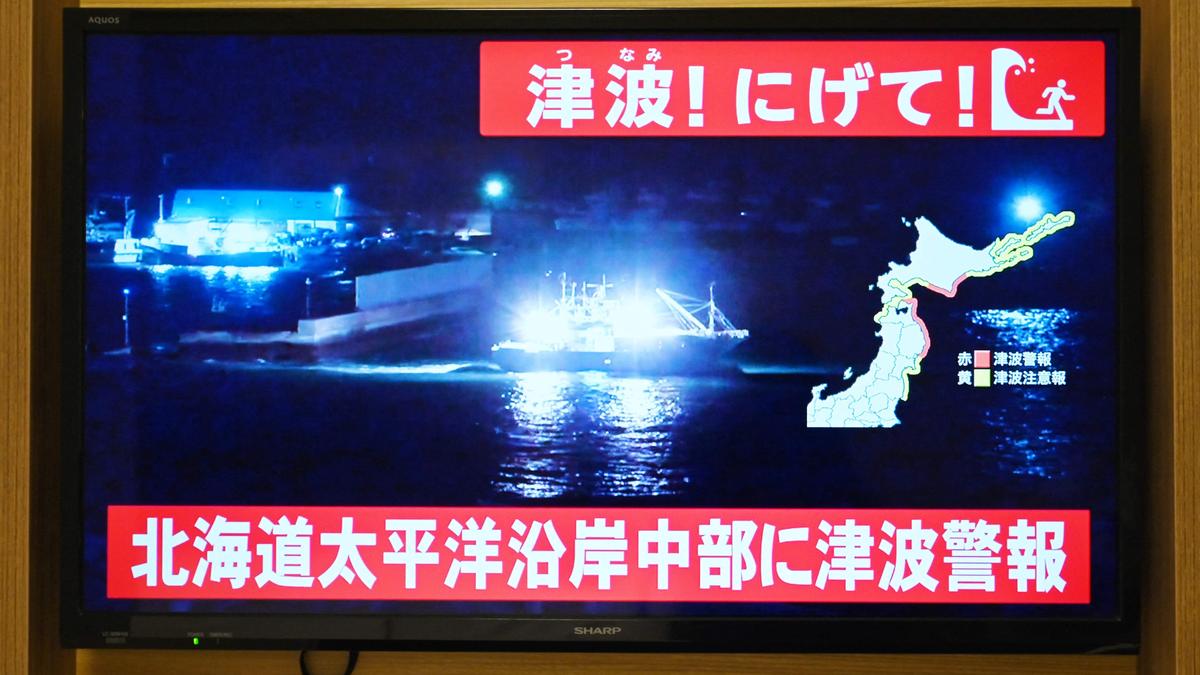
Major Earthquake and Tsunami Warnings Rock Japan’s Northern Coast - December 8, 2025
A significant 7.6 magnitude earthquake struck off the coast of northern Japan on Monday, December 8th, 2025, triggering tsunami warnings and prompting evacuations. While initial fears of a large-scale disaster have subsided with the lifting of the tsunami warning, the event serves as a stark reminder of Japan’s vulnerability to seismic activity. This article provides a comprehensive overview of the event, its impact, and what you need to know.
What Happened?
The earthquake, registering a magnitude of 7.6 according to the United States Geological survey, occurred at 1415 GMT (2:15 PM JST) approximately 53 kilometers (33 miles) off Misawa, in Japan’s Aomori Prefecture. The Japan Meteorological Agency (JMA) instantly issued a tsunami warning, with a wave of 40 centimeters (16 inches) recorded shortly after.
Initial projections warned of potential tsunami waves reaching up to three meters (10 feet) along the Pacific coast.Thankfully, these projections were not realized, and the warning was lifted after several hours. However, the situation underscored the importance of preparedness.
Immediate Impacts & Reports
* Injuries Reported: Local media, specifically public broadcaster NHK, reported injuries in the city of Hachinohe, Aomori Prefecture. Details are still emerging, but the reports indicate the injuries were a direct result of the earthquake’s shaking.
* Infrastructure Damage: live footage circulating showed shattered glass on roads in Hachinohe, indicating structural damage from the quake.
* Evacuations: Residents of Hachinohe proactively sought shelter in the city hall, demonstrating a strong understanding of safety protocols.
* Widespread Shaking: The earthquake was felt as far south as Sapporo, Hokkaido, where residents experienced approximately 30 seconds of strong, horizontal shaking.Smartphone alarms alerted residents throughout the region.
* Nuclear Facility Checks: Crucially, initial assessments of nuclear power plants in the region – Higashidori and onagawa – revealed no immediate abnormalities. Tohoku Electric power confirmed the safety equipment at both facilities was functioning as expected, and ongoing probes are being conducted.
Understanding the Risk: Japan and the ”Ring of fire”
Japan’s location on the Pacific “Ring of Fire” - a highly seismically active zone where four major tectonic plates converge – makes it particularly susceptible to earthquakes and tsunamis. The country experiences roughly 1,500 earthquakes annually, most of which are minor. However, the potential for a major event is ever-present.
You might recall the devastating 2011 earthquake and tsunami, which registered a magnitude of 9.0. This event resulted in over 18,500 fatalities and triggered the Fukushima nuclear disaster. This history underscores the critical need for robust disaster preparedness.
Looking ahead: Increased Risk Assessments
Recent government assessments highlight a growing concern about the potential for a future “megaquake” in the Nankai Trough, located off Japan’s southern coast.
* Increased Probability: In January 2025, a government panel increased the probability of a major Nankai Trough earthquake occurring within the next 30 years to between 75-82%.
* Potential Devastation: March 2025 estimates suggest such an event, coupled with a resulting tsunami, could lead to as many as 298,000 deaths and cause up to $2 trillion in damages.
These projections are driving increased investment in infrastructure improvements, early warning systems, and public education programs.
What You Should Do: Staying Safe During an Earthquake in Japan
If you are in Japan, or traveling to Japan, understanding earthquake safety procedures is vital. Here’s a speedy guide:
- Drop, Cover, and Hold On: During shaking, immediately drop to the ground, take cover under a sturdy table or desk, and hold on until the shaking stops.
- Evacuate if Necessary: If you are near the coast and a tsunami warning is issued, evacuate to higher ground immediately. Follow instructions from local authorities.
- Stay Informed: Monitor NHK World-Japan or other reliable news sources for updates and official guidance.
Worth a look