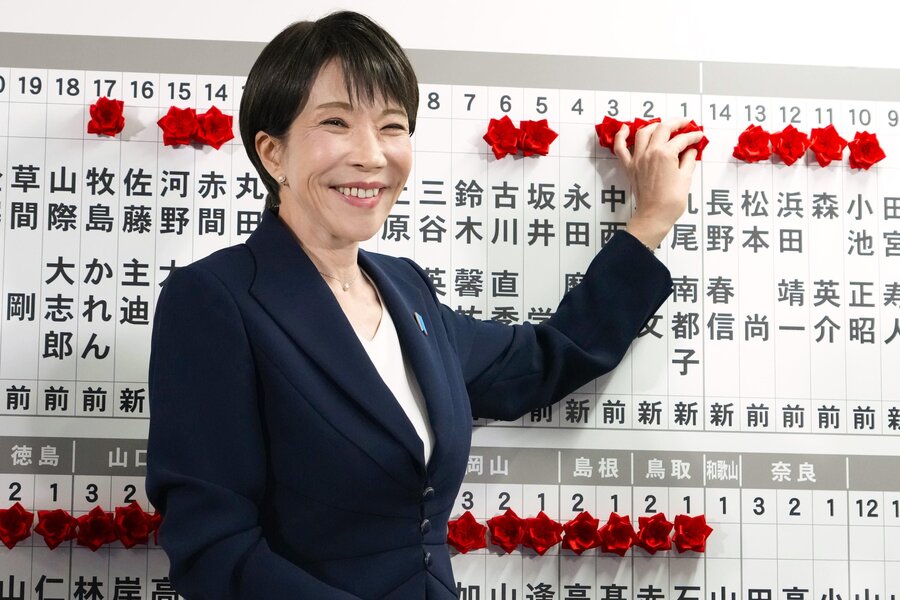
Sanae Takaichi‘s Landslide Victory: A New Era for Japan’s Conservative Shift
Japan’s political landscape underwent a significant transformation on Sunday,February 8th,2026,as prime Minister sanae Takaichi’s Liberal Democratic party (LDP) secured a resounding victory in a key parliamentary election. Teh LDP achieved a two-thirds supermajority in the lower house, a historic win that positions Takaichi to aggressively pursue a right-leaning agenda focused on economic revitalization and strengthened national security. This outcome marks a pivotal moment for Japan, signaling a potential departure from its post-war pacifist stance and a recalibration of its geopolitical strategy.
A Historic Mandate
Preliminary results, as reported by Japanese media outlets like NHK, indicate the LDP secured a record 316 seats in the 465-member lower house of parliament. this surpasses the previous record of 300 seats established in 1986 under Prime Minister Yasuhiro Nakasone, solidifying the LDP’s dominance and providing a robust mandate for Takaichi’s leadership. While the party does not hold a majority in the upper house, the ample gain in the more powerful lower house empowers Takaichi to drive forward her policy objectives.
Following the victory, Prime Minister Takaichi expressed her commitment to strengthening Japan and fostering prosperity. Her initial statements suggest a firm resolve to implement her vision for the nation, while also acknowledging the need for collaboration and compromise.
The Rise of a Popular Leader
Sanae Takaichi, Japan’s frist female leader, assumed office in October 2025. Her popularity stems from a dynamic and relatable style, often described as both playful and assertive, which has resonated particularly with younger voters previously disengaged from the political process. Takaichi’s campaign centered on a promise of proactive government investment in economic security, technology, and strategic industries.
The election was called strategically by Takaichi after only three months in office, capitalizing on her high approval ratings and aiming to overcome recent challenges faced by the LDP, including funding irregularities and religious controversies.This calculated move proved prosperous, demonstrating her political acumen and solidifying her position as a transformative figure in Japanese politics.
Policy Shifts on the Horizon
The LDP’s victory paves the way for significant policy changes across several key areas.Takaichi has consistently advocated for a revision of Japan’s security and defense policies, aiming to bolster the nation’s offensive military capabilities. This includes a potential lifting of the ban on weapons exports and a move away from the country’s long-held pacifist principles.
Furthermore, Takaichi intends to address growing concerns regarding national security by implementing stricter policies related to immigration, anti-espionage measures, and foreign property ownership. These proposals,while appealing to a segment of the population,have also raised concerns about potential infringements on civil rights.
The prime Minister also plans to increase defense spending, partially in response to pressure from the united States. This commitment to strengthening Japan’s military posture reflects a broader strategy to address rising regional tensions, particularly with China, and to reinforce the US-japan alliance.
A Fragmented Opposition and the Rise of Nationalism
The opposition parties were unable to mount a credible challenge to the LDP. A newly formed alliance between the LDP’s former coalition partner, Komeito, and the Constitutional Democratic Party of Japan, failed to gain significant traction, and is projected to see a substantial reduction in its representation.
Interestingly, the election also witnessed a surge in support for far-right populist parties, such as Sanseito, an anti-globalist and nationalist group.This indicates a growing undercurrent of conservative sentiment within the Japanese electorate.
Challenges and Considerations
Despite the overwhelming victory, Takaichi faces significant challenges.She has acknowledged the need to build consensus and gain support from opposition parties to effectively implement her policies. A key immediate task will be to address the delayed budget bill, focusing on economic measures to combat rising costs and stagnant wages.
critics point out that Takaichi largely avoided detailed discussions on crucial issues such as funding for increased military spending and navigating diplomatic tensions with China during the campaign. Professor Masato Kamikubo of Ritsumeikan University suggests the election outcome highlights a trend of prioritizing political survival over substantive policy solutions.
Looking ahead
With no further elections scheduled until 2028, Sanae Takaichi has a considerable window of prospect to enact her enterprising agenda. The landslide victory represents a clear mandate for change, and the coming years will be crucial in determining the future direction of Japan – a nation poised for a potential shift in its economic, security, and geopolitical strategies.
Keywords: Sanae Takaichi, Japan, LDP, Liberal Democratic Party, Japanese Politics, Parliamentary Election, Japan Election, Japan Security Policy, Japan Defense Spending, Japan Economy, Political News, Japan Prime Minister, Conservative Politics, Japan Nationalism.
Worth a look