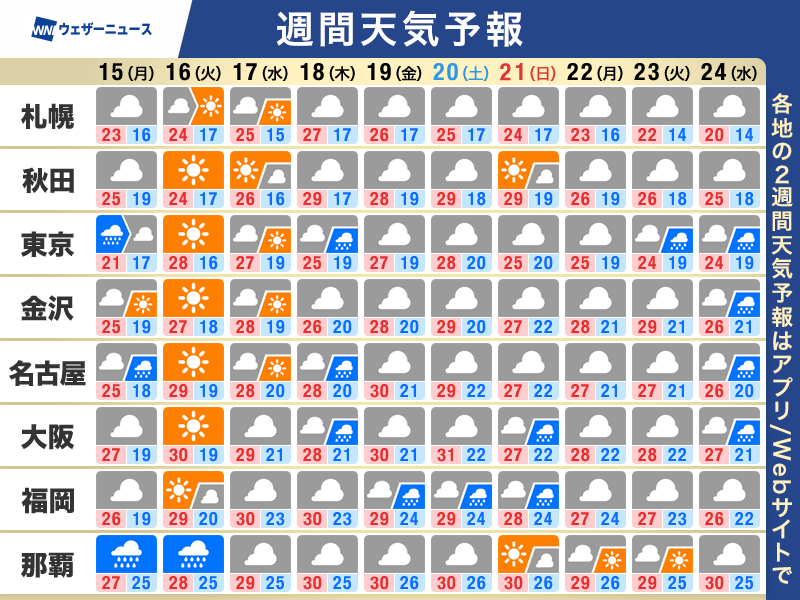
Meteorological agencies across Japan are monitoring a significant shift in atmospheric patterns as the rainy season, known as tsuyu, intensifies across the country. While the northern and eastern regions prepare for increased precipitation and heightened humidity, the Okinawa region is approaching the typical end of its monsoon period, according to data provided by the Japan Meteorological Agency (JMA).
The weather outlook for the coming week indicates that the seasonal rain front will become more active, particularly from the latter half of the week. This shift is expected to bring widespread rainfall to eastern and western Japan, marking a transition into a more persistent, humid rainy-season climate. Residents are advised to monitor official JMA weather warnings for updates on potential heavy rain and localized thunderstorms that often accompany this atmospheric instability.
Shifting Weather Patterns and Regional Impacts
The transition into the latter half of June is characterized by the northward movement of the Pacific high-pressure system, which influences the positioning of the stationary rain front. In northern and eastern Japan, this will manifest as increased cloud cover and frequent showers. Meteorologists emphasize that the combination of high humidity and rising temperatures creates conditions conducive to heatstroke, even on days where rain is not constant.

The Japan Meteorological Agency maintains that the rainy season typically involves a series of active fronts that move across the archipelago. For those in regions currently experiencing “pre-rainy season” clear skies, the stability is expected to be short-lived. By early next week, specifically around Monday, July 15, the Pacific side of the country may face increased wind and rain as the front gains strength. These events underscore the importance of clearing gutters and securing outdoor items, as sudden squalls are common during this transition period.
Okinawa and the Impending End of the Rainy Season
In contrast to the mainland, the Okinawa region is nearing the conclusion of its rainy season. Historically, the end of the rainy season in Okinawa occurs around late June. While weather patterns can fluctuate annually, current observations suggest that the subtropical high is strengthening, which typically pushes the rain front further north, effectively ending the monsoon for the islands.

However, the transition period in Okinawa often brings intense, short-duration downpours before the final onset of stable summer heat. Residents are encouraged to utilize the JMA Rain Nowcast service to track real-time precipitation intensity. The arrival of summer in Okinawa is generally marked by high UV indices and sustained warm temperatures, necessitating standard heat-safety precautions.
Safety Precautions and Preparedness
The current weather cycle serves as a reminder of the volatility inherent in the Japanese rainy season. Local authorities in various prefectures have issued reminders regarding health and infrastructure safety. The Ministry of Health, Labour and Welfare provides comprehensive heatstroke prevention guidelines, which include maintaining adequate hydration and using air conditioning appropriately, even when the outdoor temperature feels moderate due to cloud cover.
For those planning outdoor activities, the primary concern remains the rapid onset of localized severe weather. Recent reports from various regions have highlighted the occurrence of intense, brief storms—sometimes accompanied by hail—which can cause sudden drops in temperature and hazardous travel conditions. Staying informed through official channels is the most effective way to navigate the remainder of the tsuyu period.
The next official update regarding the status of the rainy season and long-range forecasts is scheduled for release by the Japan Meteorological Agency early next week. Readers are encouraged to check their local municipal disaster prevention websites for specific regional advisories. We welcome your observations and experiences with the changing weather in the comments section below.
Related reading