
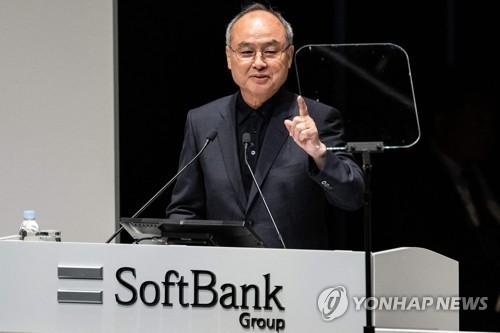
Japan is making a strategic move to reclaim its standing in the global artificial intelligence race. In a significant industrial consolidation, four of the nation’s most influential corporate giants—SoftBank, Sony Group, Honda and NEC—have joined forces to establish a dedicated AI development company aimed at creating a homegrown, large-scale AI infrastructure.
The newly formed entity, named Nihon AI Foundation Model Development, is designed to break the current dominance of American and Chinese firms by developing a sovereign “foundation model.” This initiative represents a shift toward “Physical AI,” where the intelligence is not just confined to a chatbot or a screen, but is deeply integrated into the hardware and robotics that Japan is historically renowned for.
According to reports from the Yomiuri Shimbun on April 12, 2026, the venture seeks to develop an AI with a scale of trillions of parameters. While SoftBank and NEC will spearhead the technical development of the base models, Sony and Honda will focus on the practical application of this technology across automotive systems, robotics, gaming, and semiconductors koreadaily.com.
Strategic Division of Labor and Corporate Synergy
The alliance is structured to leverage the specific strengths of each participating member. SoftBank and NEC bring the computational expertise and infrastructure necessary for the heavy lifting of foundation model training. By focusing on the core architecture, these two firms aim to build a scalable system capable of processing vast amounts of data to reach the “trillion-parameter” milestone.

On the implementation side, Sony and Honda provide the “physical” interface. The goal is to move beyond generative text and images toward an AI that can drive cars, manage complex robotic movements, and enhance immersive gaming experiences. This synergy is intended to create a closed-loop ecosystem where the AI is developed specifically to optimize the hardware it will eventually control.
The leadership of Nihon AI Foundation Model Development is also a strategic choice. The company is being led by a former executive from SoftBank who previously managed the group’s AI development initiatives, ensuring that the latest venture benefits from established internal expertise in scaling AI operations.
The Push for ‘Physical AI’ and National Sovereignty
Industry analysts suggest that while the U.S. And China currently lead in general-purpose LLMs (Large Language Models), Japan maintains a competitive edge in “Physical AI”—the intersection of AI and advanced robotics and precision engineering ebn.co.kr. By focusing on this niche, Japan hopes to leapfrog competitors in the practical application of AI in the real world.
This move is not merely a corporate venture but a matter of national strategic interest. The consortium includes several other prominent Japanese institutions as minority shareholders, including Nippon Steel and major financial entities such as MUFG Bank, Sumitomo Mitsui Banking Corporation, and Mizuho Bank. This broad participation indicates a wider industrial consensus to secure AI sovereignty and reduce dependence on foreign technology.
Government Backing and Financial Scale
The ambition of the project is backed by potential government support. Nihon AI Foundation Model Development plans to apply for a public offering program managed by the Ministry of Economy, Trade and Industry (METI). This program is designed to support domestic AI developers with a total of 1 trillion yen (approximately 9.3 trillion won) over a five-year period starting from the 2026 fiscal year (April 2026 to March 2027) koreadaily.com.
Key Takeaways of the Japan AI Alliance
- Core Members: SoftBank, Sony, Honda, and NEC.
- Primary Goal: Development of a domestic foundation model with trillion-parameter scale.
- Target Application: “Physical AI” for robotics, autonomous vehicles, gaming, and semiconductors.
- Financial Target: Application for a METI-led 1 trillion yen support program over five years.
- Broad Support: Inclusion of Nippon Steel and major banks (MUFG, SMBC, Mizuho) as minority investors.
What Which means for the Global Tech Landscape
For the global audience, this represents a consolidated effort by Japan to move from being a consumer of AI to a primary architect. By tying the AI’s development directly to the automotive and robotics industries, Japan is betting that the future of AI is not just in the cloud, but in the physical world. If successful, this could shift the balance of power in the robotics industry, making Japanese hardware smarter and more autonomous than ever before.
The success of this venture will likely depend on whether the four companies can maintain a cohesive vision and whether the promised government funding is secured to offset the massive costs associated with training trillion-parameter models.
The next critical milestone for the consortium will be the official application and review process for the Ministry of Economy, Trade and Industry’s 1 trillion yen support program for the 2026 fiscal year.
Do you think “Physical AI” is the key to winning the AI race? Share your thoughts in the comments below or share this article with your network.