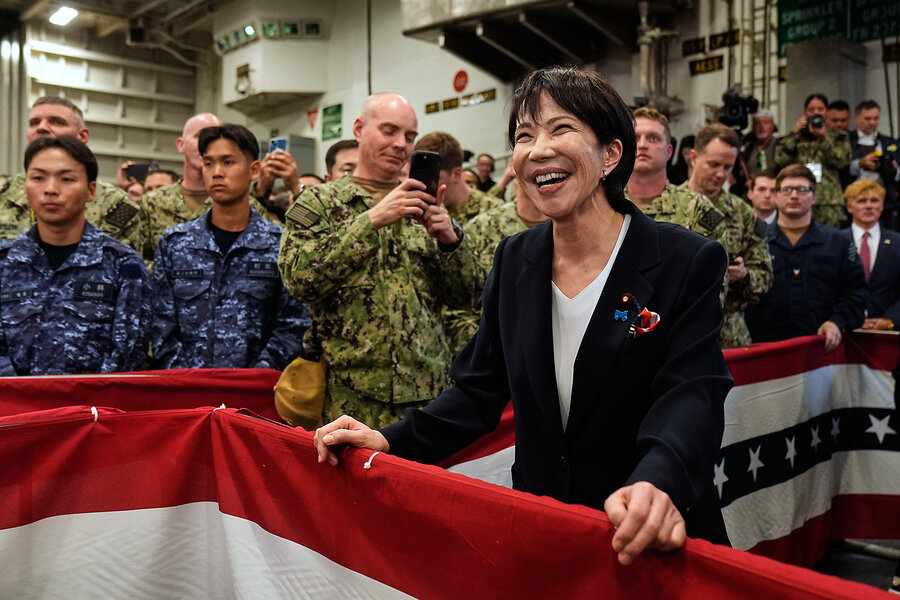
Japan’s Prime Minister Sanae Takaichi is advancing efforts to revise the nation’s postwar pacifist constitution, leveraging her political capital and a newly secured supermajority in parliament to pursue a long-standing goal of her ruling party. The initiative marks a significant shift in Japan’s security policy as regional tensions rise, particularly due to China’s military expansion and North Korea’s persistent missile and nuclear threats.
Takaichi, who became Japan’s first female prime minister in late 2025, has made constitutional reform a central pillar of her administration’s agenda. In a recent address to the National Diet, she emphasized the need to update Article 9 of the constitution, which renounces war as a sovereign right and prohibits Japan from maintaining land, sea, and air forces. The prime minister argued that the current framework, established during the U.S.-led Allied occupation after World War II, no longer adequately addresses contemporary security challenges.
The push for reform gained momentum following the ruling Liberal Democratic Party’s landslide victory in the February 2026 general election, which secured a two-thirds supermajority in the House of Representatives. This threshold is critical under Japan’s constitutional amendment process, which requires approval by two-thirds of both houses of parliament before a national referendum can be held. Political analysts noted that the electoral mandate strengthens Takaichi’s position to advance the reform despite historical resistance from pacifist factions and opposition parties.
Japan’s postwar constitution, enacted in 1947, has remained unchanged since its adoption. Article 9 has been interpreted to allow self-defense capabilities but has constrained the development of offensive military power. Over the years, successive governments have pursued incremental changes through legislation and reinterpretation, such as the 2015 security laws that permitted limited collective self-defense. But, a formal revision to the constitution’s text has remained elusive due to stringent procedural requirements and deep public attachment to the pacifist principles.
Takaichi’s government has already taken steps to bolster Japan’s defense posture independent of constitutional change. Defense spending has increased for consecutive years, reaching record levels in the 2026 budget. The administration has likewise lifted restrictions on lethal weapons exports and expanded joint military exercises with allies including the United States, Australia, and the Philippines. These moves reflect a broader strategic recalibration in response to perceived declines in U.S. Regional engagement, particularly amid global distractions such as the ongoing Iran conflict.
Supporters of constitutional reform argue that explicitly recognizing Japan’s right to maintain full-spectrum defense forces would enhance national security and strengthen alliance interoperability. They contend that the current ambiguity creates operational limitations and sends mixed signals to both allies and potential adversaries. Critics, however, warn that altering Article 9 risks undermining Japan’s postwar identity as a peaceful nation and could provoke regional tensions, particularly with China and South Korea, where historical sensitivities remain acute.
Public opinion on the issue remains divided. Although recent surveys show growing concern over national security, a significant portion of the population continues to support preserving the pacifist clause in some form. Advocacy groups and legal scholars have cautioned that any reform process must be transparent and inclusive, ensuring broad societal consultation before proceeding to a national referendum.
The next step in the process involves drafting a formal amendment proposal in parliament. If approved by the required supermajorities in both the House of Representatives and the House of Councillors, the measure would proceed to a national vote, which must occur within a specified timeframe following parliamentary approval. No date has been set for such a referendum, and officials have emphasized that extensive deliberation will precede any final decision.
As Japan navigates this pivotal moment in its postwar evolution, the constitutional debate underscores the tension between adapting to a changing security environment and preserving foundational national values. The outcome will not only shape Japan’s defense capabilities but also influence its role in the evolving Indo-Pacific order.
For ongoing updates on Japan’s constitutional reform efforts, readers can follow official announcements from the Prime Minister’s Office and the Ministry of Justice, which regularly publish updates on legislative proceedings and public consultations.
We invite our global audience to share perspectives on this developing story. How should nations balance historical commitments with evolving security realities? Join the conversation in the comments below and share this article to help foster informed discussion.