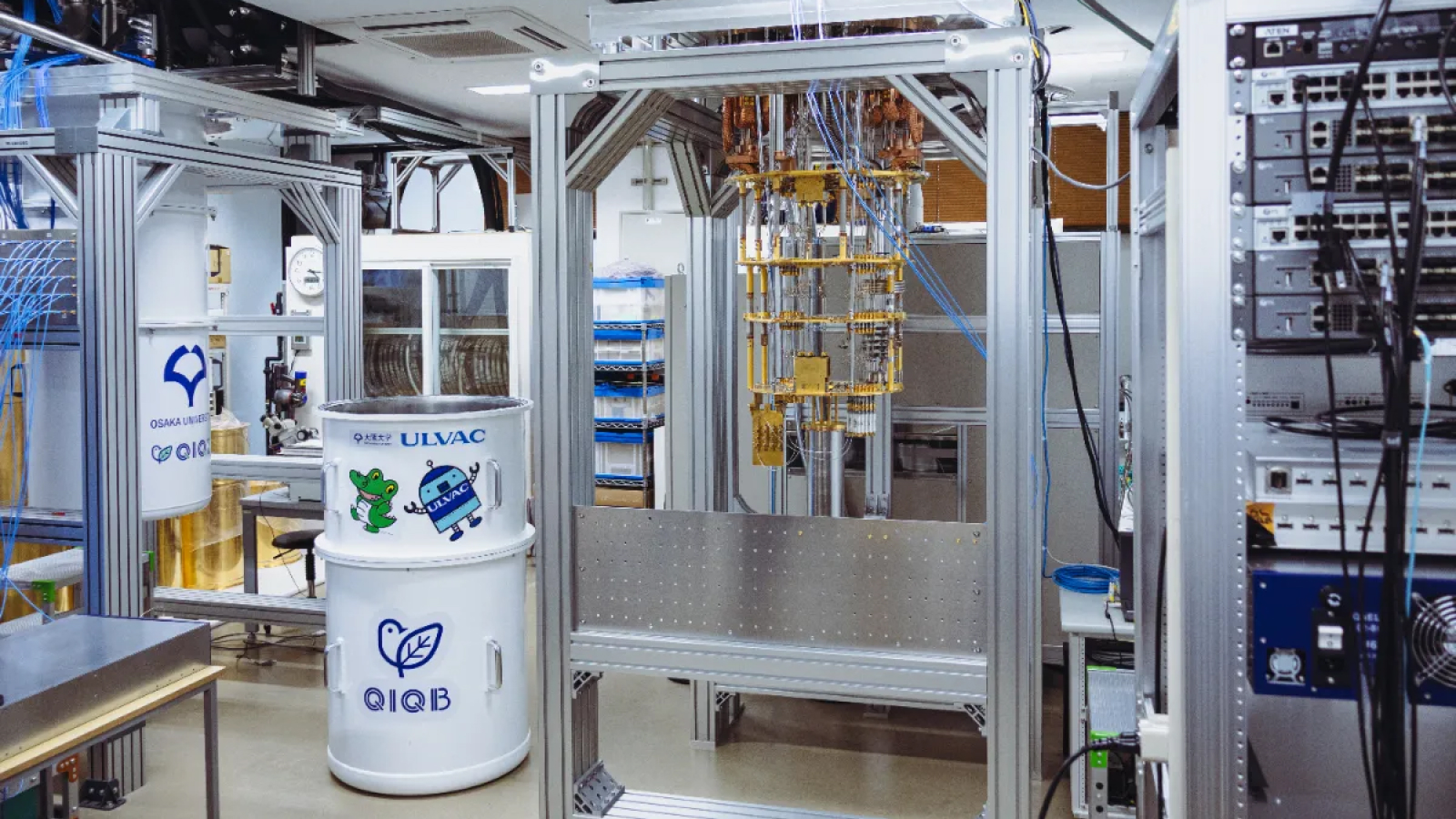
The Dawn of Quantum Computing: A New Era of Problem Solving
Quantum computing represents a monumental leap forward, poised to redefine what’s possible in computation. It promises to surpass the capabilities of even the most powerful supercomputers currently available, opening doors to solutions for challenges previously considered insurmountable. But what exactly is quantum computing, and why is it generating so much excitement?
beyond Bits: Understanding the Quantum Difference
Customary computers process information using bits, representing data as 0s or 1s. Quantum computers, however, leverage the principles of quantum mechanics to utilize qubits. These qubits can represent 0, 1, or a combination of both simultaneously - a state known as superposition.
This basic difference allows quantum computers to perform calculations in parallel,rather than sequentially. Consequently, they can tackle complex problems with unprecedented speed and efficiency. Imagine exploring countless possibilities at once, rather than one after another.
Potential Applications: A Revolution Across Industries
The implications of this technology are far-reaching. You can expect to see quantum computing impacting numerous fields, including:
Drug Discovery: Accelerating the identification and development of new medications.
Logistics & Optimization: Finding the most efficient routes for deliveries and streamlining complex supply chains.
Traffic Management: Optimizing traffic flow in cities to reduce congestion.
Materials Science: Designing and discovering new materials with specific properties.
Financial Modeling: Developing more accurate and sophisticated financial models.
Essentially, any field reliant on complex calculations and simulations stands to benefit.
The Challenge of Error Correction
Despite its immense potential, quantum computing faces significant hurdles. One of the biggest challenges is maintaining the stability of qubits. They are incredibly sensitive to environmental disturbances, leading to errors during calculations.
Currently, much of the research focuses on quantum error correction (QEC). This involves developing techniques to detect and correct these errors, ensuring the reliability of quantum computations. Think of it as building safeguards into the system to protect the delicate quantum state.
Japan’s Quantum Showcase at Expo 2025
Recently, Japan showcased its first quantum computer at Expo 2025 in Osaka. From August 14th to 20th, visitors had the chance to interact with the technology remotely through the cloud.
The exhibit wasn’t just a demonstration of hardware; it also offered interactive experiences. Attendees could explore fascinating quantum phenomena like quantum entanglement* – a bizarre connection between particles where they become linked, irrespective of the distance separating them. This hands-on approach aimed to demystify this complex field and inspire the next generation of quantum scientists.
The Future is Quantum
While still in its early stages,quantum computing is rapidly evolving. As scientists overcome the challenges of error correction and scale up the number of qubits, you can anticipate a transformative impact on technology and society. It’s a new frontier of computing,and the possibilities are truly limitless.
This isn’t just about faster computers; it’s about unlocking solutions to problems we haven’t even begun to fully understand yet. The journey has begun, and the future looks decidedly quantum.
![Marvel Star’s Cringe Comedy: A Bromance Done Right | [Movie Title] Review](https://i0.wp.com/www.giantfreakinrobot.com/wp-content/uploads/2025/08/friendship_0006_Layer-1.jpg?resize=150%2C150&ssl=1 "Marvel Star’s Cringe Comedy: A Bromance Done Right | [Movie Title] Review")