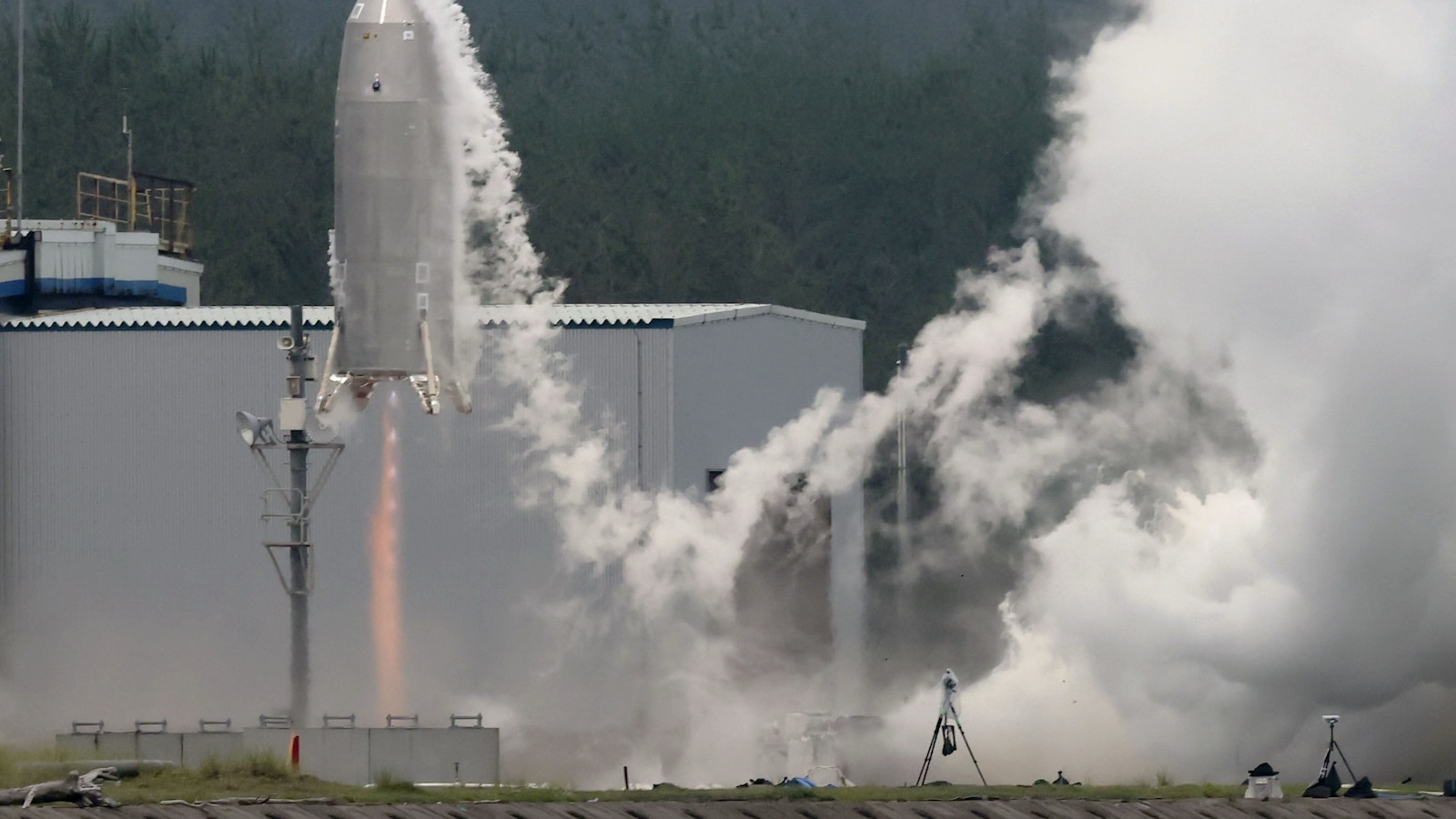
The Japan Aerospace Exploration Agency (JAXA) has successfully conducted the inaugural flight test of its experimental reusable rocket vehicle, marking a significant step in the nation’s efforts to lower the costs of space transportation. The test, which took place at the Noshiro Rocket Testing Center in Akita Prefecture, evaluated the vertical takeoff and landing capabilities of the prototype, a critical technology required for developing future reusable launch systems.
This experimental flight, carried out by JAXA in collaboration with private sector partners, focuses on the “RV-X” project—a demonstrator designed to prove that a rocket can land precisely after completing a suborbital trajectory. By mastering reusable technology, JAXA aims to compete with global aerospace leaders who have already successfully integrated vertical landing systems into their launch operations. According to official agency project documentation, the primary objective of this mission was to verify the vehicle’s autonomous navigation and propulsion control systems during the descent phase.
Engineering the Future of Reusable Launch Vehicles
The transition toward reusable rocket technology represents a shift in how national space agencies approach orbital logistics. Traditionally, most launch vehicles are expendable, meaning they are discarded after a single use. The JAXA prototype utilizes liquid methane and liquid oxygen, a propellant combination favored for its efficiency and potential to reduce engine maintenance between flights. This specific test aimed to validate the low-altitude hovering and landing stability of the vehicle, which is a foundational requirement for more advanced, high-altitude flight tests scheduled for later in the decade.
The development of the RV-X is part of a broader strategy by the Japanese government to bolster its domestic space industry. Under the Basic Plan on Space Policy, Japan has sought to increase the frequency of its domestic launches while simultaneously reducing the financial burden on taxpayers. By developing a reusable system, JAXA expects to shorten the turnaround time between missions, effectively increasing the launch cadence for commercial and governmental satellites. The agency’s current research initiatives emphasize the integration of artificial intelligence for real-time landing adjustments, ensuring the vehicle can compensate for wind and other atmospheric variables during the critical seconds before touchdown.
Strategic Context and Global Aerospace Competition
Japan’s entry into the reusable rocket sector arrives at a time of intense global activity in aerospace engineering. While companies like SpaceX have normalized the recovery of first-stage boosters, JAXA’s focus remains on smaller, more agile systems capable of rapid deployment. The technical challenges associated with this endeavor are substantial, primarily involving the thermal protection of the engine nozzles and the precision of the guidance, navigation, and control (GNC) software during high-velocity descent.

Industry analysts noted that the successful completion of this initial test provides the necessary telemetry data to refine the flight control laws for future iterations. Unlike the large-scale boosters used for deep space missions, the JAXA demonstrator is designed for versatility, potentially serving as a testbed for new satellite delivery technologies. The Japanese Ministry of Education, Culture, Sports, Science and Technology (MEXT) has continued to provide budgetary support for these experimental programs, viewing them as essential to maintaining Japan’s sovereignty and technological edge in the international space race. Further updates regarding the next phase of flight testing are expected to be published through the official MEXT portal as the agency prepares for the next series of engine integration trials.
Technical Milestones and Next Steps
The data gathered from the Noshiro testing site will be analyzed over the coming months to assess the performance of the landing legs and the rapid-response throttle capabilities of the engine. Key metrics for success in this test included the vehicle’s ability to maintain a stable vertical orientation and the accuracy of its landing on a designated pad. These metrics are vital for ensuring that future operational rockets can land within a small, defined footprint, minimizing the need for extensive ground infrastructure.

The next confirmed checkpoint for the project involves a series of ground-based engine firing tests, which will assess the durability of the hardware under extended thermal stress. These tests are scheduled to take place throughout the remainder of the fiscal year. As JAXA moves toward its goal of a fully functional reusable launch system, the agency remains committed to transparency regarding its experimental outcomes, sharing findings with both academic partners and commercial aerospace contractors. Readers interested in following the progress of the RV-X program can monitor the JAXA press release archive for upcoming mission announcements and technical summaries.
We invite our readers to participate in the conversation regarding the future of space exploration. Feel free to share your thoughts on the impact of reusable launch technology on the global satellite market in the comments section below.