
The JBL PartyBox Stage 320, often categorized by consumers as the successor to the mid-tier power segment, serves as a significant offering for users seeking high-output audio without the premium price tag of the flagship PartyBox 710 or 1100 series. According to official specifications from JBL’s product documentation, the device integrates dual 6.5-inch woofers and dual 25mm dome tweeters, delivering a total output of 240W RMS. As of mid-2024, the speaker is positioned in the global market as a portable, battery-powered alternative for users prioritizing volume and connectivity over the sheer weight of the larger, stationary models.
The market for high-output portable audio has shifted toward battery-operated units that do not sacrifice the depth of sound found in traditional wired systems. With the PartyBox Stage 320, JBL has targeted a specific demographic: those who require a mobile sound system capable of powering outdoor gatherings while maintaining a manageable form factor. The device features a telescopic handle and wheels, addressing a primary consumer pain point regarding the portability of larger party speakers.
Technical Specifications and Audio Performance
The core of the PartyBox Stage 320’s performance lies in its dual-driver configuration. Unlike smaller portable Bluetooth speakers, this unit utilizes JBL’s proprietary Sound Boost technology, which uses an AI-driven algorithm to analyze the audio signal in real-time. This process, as described in Harman International’s official press release, optimizes the acoustic output to minimize distortion at high volume levels. The frequency response range is rated at 40Hz to 20kHz, providing a balanced sound profile that emphasizes bass-heavy tracks common in social environments.
Battery longevity remains a critical metric for portable audio equipment. The Stage 320 is equipped with a swappable battery pack, a feature that differentiates it from previous generations that required the entire unit to be plugged in for charging. According to the manufacturer’s technical specifications, the device provides up to 18 hours of playtime under optimal conditions. Real-world performance may vary based on volume levels and the use of the integrated LED light show, which synchronizes with the beat of the music.
Connectivity and Ecosystem Integration
Modern party speakers are increasingly reliant on software ecosystems to maintain relevance. The Stage 320 supports Bluetooth 5.4, the latest standard at the time of its release, which allows for lower latency and more stable connections over longer distances. Furthermore, JBL’s Auracast technology allows users to link multiple compatible speakers wirelessly to create a wider soundstage, a feature that has become standard across the Bluetooth Special Interest Group’s recent standards updates.
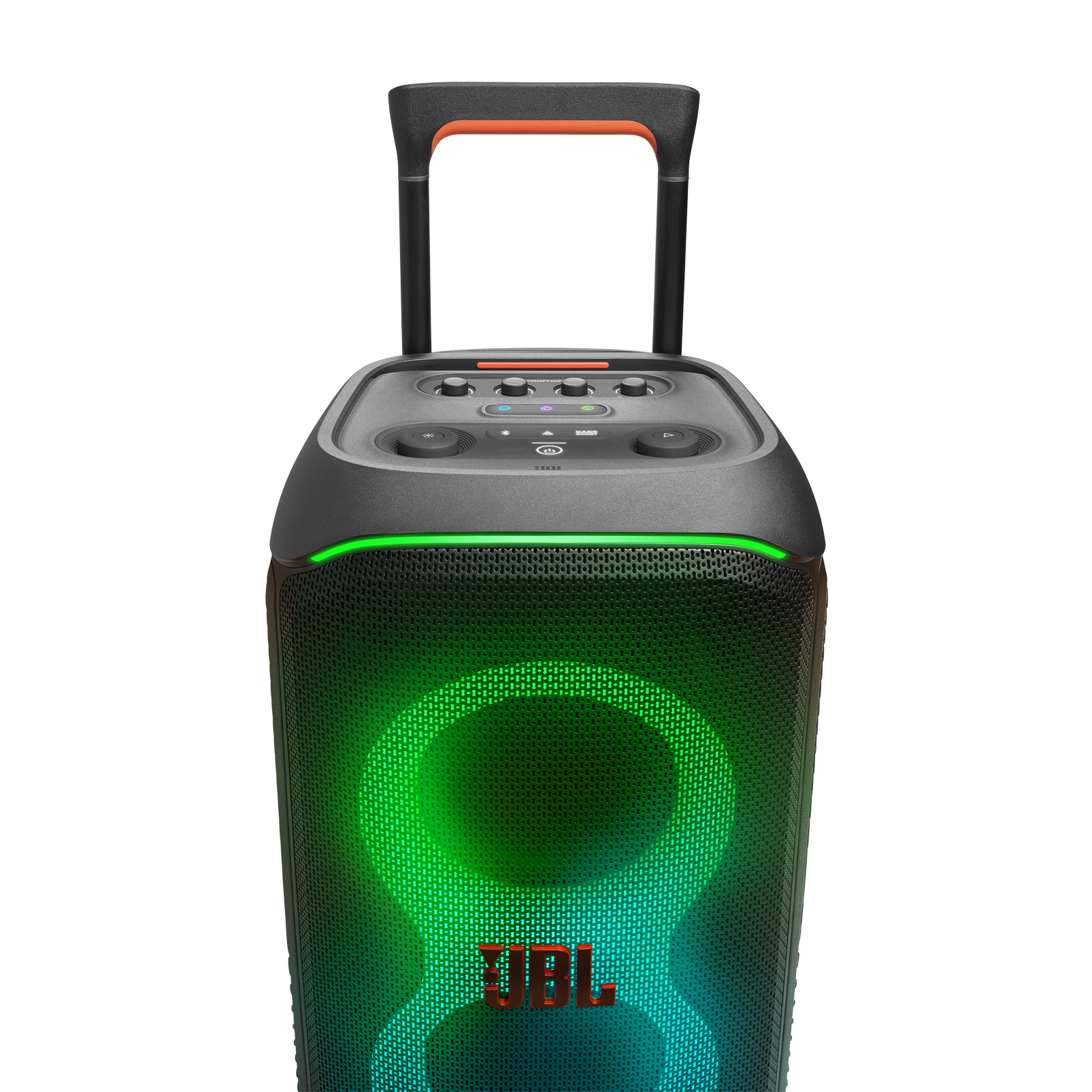
Beyond wireless connectivity, the speaker includes physical inputs for microphones and guitars. This dual-input functionality transforms the speaker from a playback device into a small-scale public address system. The interface allows for individual gain control on these inputs, providing users with basic mixing capabilities directly from the control panel located on the top of the unit.
Comparative Market Positioning
When assessing the value proposition of the Stage 320, it is helpful to compare it against the broader JBL PartyBox portfolio. The following table highlights the primary differences in power and portability for the current lineup:
| Model | Power Output (RMS) | Portability |
|---|---|---|
| PartyBox Stage 320 | 240W | Wheels/Telescopic Handle |
| PartyBox 710 | 800W | Wheels (No Battery) |
| PartyBox Encore | 100W | Integrated Handle |
As indicated by the data, the Stage 320 occupies the middle ground. While the 710 offers significantly higher raw power, it lacks an internal battery, requiring a constant AC power source. The Encore is highly portable but offers less than half the RMS output of the Stage 320. This segmentation allows consumers to choose between raw power, extreme portability, or a balance of both.
Impact of Regulatory Standards on Audio Design
The design of the Stage 320 is also influenced by global environmental regulations regarding electronic waste and repairability. The inclusion of a user-replaceable battery is not merely a convenience feature; it aligns with growing legislative trends in both the European Union and parts of the United States, which mandate easier access to batteries in portable electronics to extend product lifespans. According to the European Commission’s guidance on the Circular Economy Action Plan, manufacturers are increasingly required to design products that allow for modular repairs.

This design choice significantly impacts the total cost of ownership. By allowing the user to replace a degraded battery rather than disposing of the entire unit, JBL has addressed a common criticism of earlier, sealed-battery party speakers. This longevity factor is a key consideration for consumers evaluating the long-term value of a mid-range audio investment.
What Happens Next
JBL has indicated that future firmware updates for the PartyBox series will continue to focus on Auracast compatibility and expanded app features, allowing for deeper customization of EQ settings and light show patterns. Users are encouraged to check the JBL PartyBox app periodically for firmware notifications, as these updates often include critical bug fixes for Bluetooth connectivity. The next major industry trade show where new audio hardware is expected to be showcased is CES 2025, where further iterations of the PartyBox line may be announced.
Have you had experience with the PartyBox series, or are you considering the Stage 320 for your next event? Share your thoughts and experiences in the comments section below.