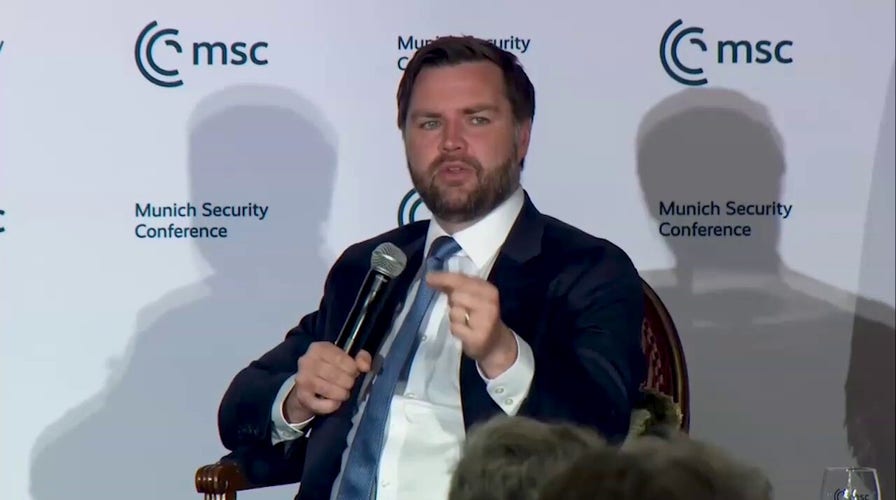
The diplomatic effort to resolve the bloody six-week war between the United States and Iran has collapsed, leaving the two nations on the brink of further escalation. Following a high-stakes diplomatic mission to Pakistan, Vice President JD Vance confirmed that negotiations failed to produce a peace agreement, prompting President Donald Trump to announce a sweeping military blockade of Iranian ports.
The failure of these talks marks a critical turning point in a conflict that has already devastated the region. Vice President Vance, who had previously expressed opposition to the war, led what were described as the highest-level talks between Washington and Tehran in nearly 50 years according to the New York Times. Despite the seniority of the delegation, the mission ended without a deal, leaving the Strait of Hormuz—a vital artery for global energy—at the center of a new military confrontation.
The collapse of the negotiations has shifted the U.S. Strategy from diplomacy to economic and military strangulation. President Trump has signaled a willingness to resume airstrikes and has ordered the U.S. Military to secure the region through force, claiming that the only reason the Iranian leadership remains in power is to provide an opportunity for negotiation.
The Mission to Pakistan: 21 Hours of Failed Diplomacy
The diplomatic push began on Friday, April 10, 2026, when Vice President JD Vance departed from Joint Base Andrews, Maryland, aboard Air Force Two for Pakistan as reported by the Associated Press. Before his departure, Vance struck a cautious but firm tone, stating his belief that negotiations could be “positive” while simultaneously warning Tehran not to “play” the United States. He noted that if Iran attempted to manipulate the process, the American negotiating team would not be “that receptive.”

Once in Pakistan, Vance and Iranian officials engaged in a grueling 21-hour session on Saturday per reports from The Independent. The Iranian delegation was led by Mohammad Naqer Ghalibaf, the speaker of Iran’s parliament. These talks were hailed as “develop or break” efforts to finish the six-week conflict and reopen the Strait of Hormuz to commercial traffic.
the discussions reached an impasse. Vice President Vance later admitted that the two sides had failed to reach an agreement, explicitly blaming Tehran for being unwilling to accept the terms presented by the United States. The breakdown of these talks has effectively exhausted the current diplomatic channel, leaving the U.S. Administration to pivot toward more aggressive measures.
Escalation: The Blockade of the Strait of Hormuz
In the immediate aftermath of the failed talks, President Donald Trump announced a drastic escalation in U.S. Military posture. The U.S. Central Command has announced that it will blockade all Iranian ports beginning Monday, April 13, 2026, at 10:00 am EDT (5:30 pm in Iran) as detailed by The Independent.
The President has threatened to blockade “any and all ships trying to enter, or depart, the Strait of Hormuz,” suggesting that other countries may be involved in the operation. Beyond the naval blockade, Trump indicated he is considering resuming airstrikes within Iran, specifically targeting the country’s energy infrastructure. The President asserted that the U.S. Military is “LOCKED AND LOADED” and claimed he possesses the capability to “take out Iran in one day.”
This shift toward a total blockade is designed to exert maximum economic pressure on Tehran, though it carries significant risks for global oil prices and maritime security. By cutting off Iran’s ability to export energy and import goods, the U.S. Aims to force a surrender or a more favorable negotiating position, though the move has been met with fierce resistance from Iranian leadership.
Tehran’s Response and the Risk of Total War
Iran has responded to the U.S. Threats with a mixture of military warnings and economic taunts. The Islamic Revolutionary Guard Corps (IRGC) has warned that any blockade of military vessels approaching the Strait of Hormuz will be viewed as a direct violation of the existing ceasefire according to The Independent. This suggests that the blockade could trigger a return to active combat operations.
On the political front, Mohammad Naqer Ghalibaf, who led the Iranian negotiating team in Pakistan, took a provocative stance toward President Trump. Ghalibaf taunted the U.S. President over the potential for rising global energy costs resulting from the instability in the Strait, telling Trump to “enjoy the current pump figures.”
The situation remains volatile as the world watches the 10:00 am EDT deadline on Monday. The failure of Vice President Vance’s mission—the highest-level diplomatic attempt in nearly half a century—leaves the region in a precarious state where a single naval encounter could ignite a broader conflict.
Key Developments in the US-Iran Conflict
| Date/Time | Event | Outcome/Status |
|---|---|---|
| Friday, April 10, 2026 | VP JD Vance departs for Pakistan | Initiation of high-level peace talks |
| Saturday, April 11, 2026 | 21-hour negotiation session | No agreement reached; talks collapse |
| Monday, April 13, 2026 (10am EDT) | US Central Command Blockade | Scheduled blockade of all Iranian ports |
The next critical checkpoint is the implementation of the U.S. Central Command blockade scheduled for Monday morning. Global markets and diplomatic observers are now monitoring whether Iran will respond with military force or if the pressure of the blockade will lead to a renewed, albeit more desperate, attempt at negotiation.
We invite our readers to share their perspectives on the escalating situation in the Middle East in the comments below. Please share this report to keep others informed on these developing global events.
Worth a look