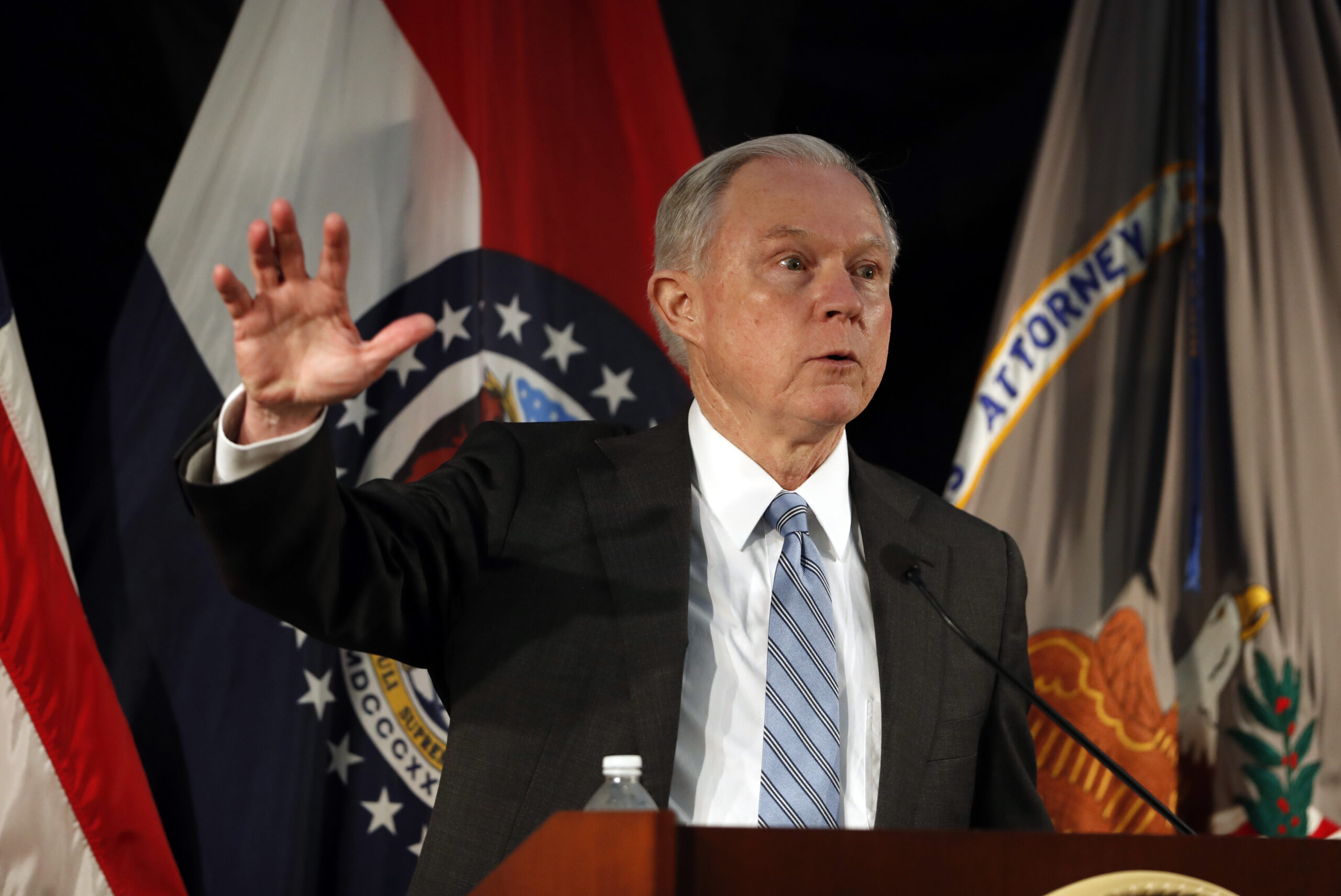
The legal and political standing of former Attorney General Jeff Sessions faced significant scrutiny following the 2017 unsealing of a federal plea agreement involving George Papadopoulos, a former foreign policy adviser to the 2016 Donald Trump presidential campaign. Court documents confirmed that during a March 31, 2016, national security meeting in Washington, D.C., attended by then-candidate Trump and Jeff Sessions, Papadopoulos explicitly proposed arranging a meeting between the candidate and Russian President Vladimir Putin. This revelation raised questions regarding the accuracy of Sessions’ subsequent sworn testimony before the Senate Intelligence Committee, where he denied knowledge of campaign communications with Russian officials.
According to the Statement of the Offense filed by the Department of Justice, George Papadopoulos attended the March 31, 2016, meeting at the Trump Hotel in Washington. During this session, which included Donald Trump and Jeff Sessions, the plea documents state that Papadopoulos “introduced himself” and suggested he possessed connections capable of facilitating a meeting between the candidate and President Putin. The meeting was documented at the time by Donald Trump, who posted an image of the attendees on social media.
Best meeting of the day with my foreign policy team! pic.twitter.com/aANxirUJJD
— Donald J. Trump (@realDonaldTrump) April 1, 2016
Discrepancies in Sworn Testimony
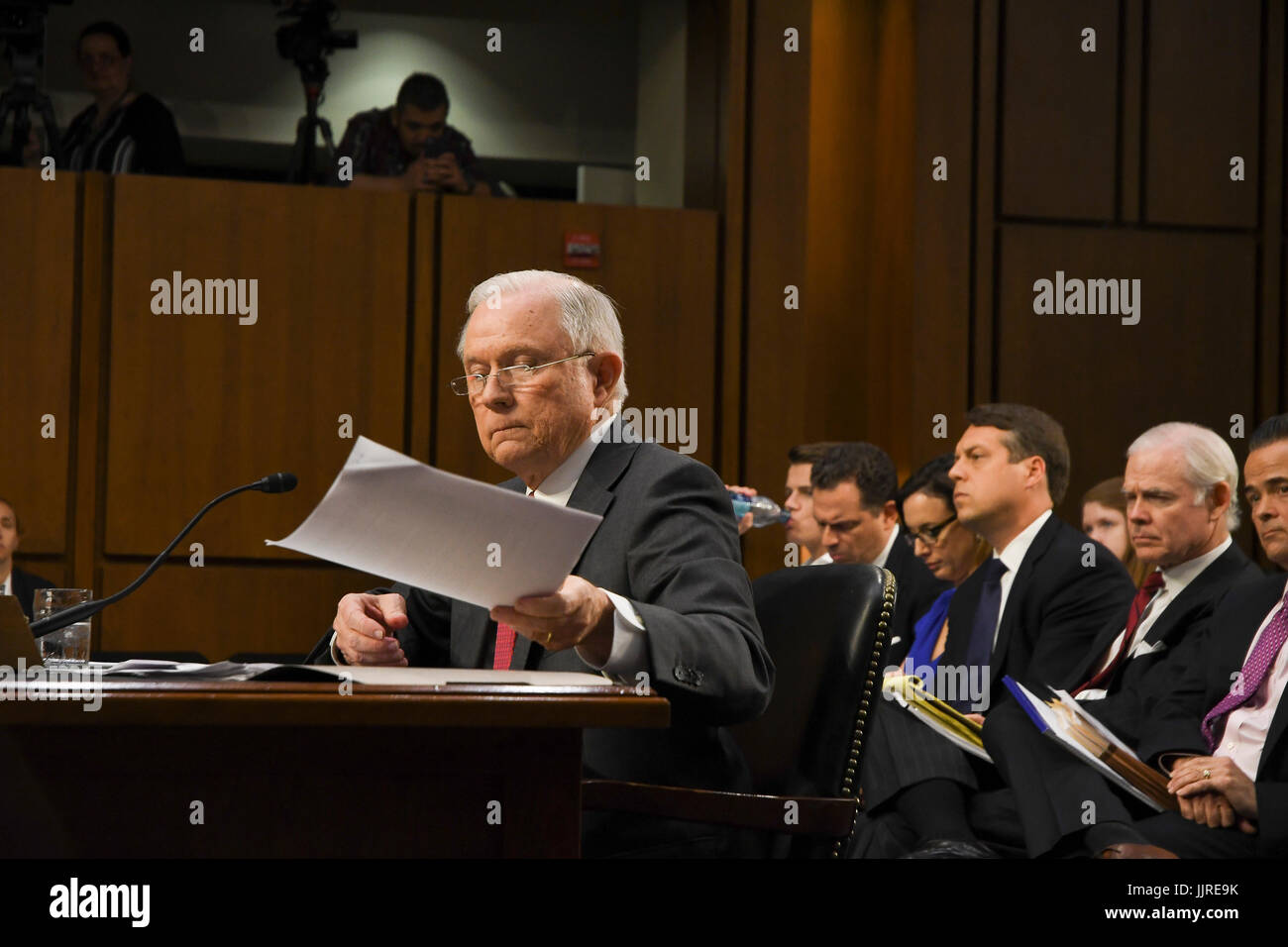
The central point of contention involves testimony Jeff Sessions provided to the Senate Intelligence Committee on June 13, 2017. During his appearance before the committee, Sessions stated under oath, “I have never met with or had any conversation with any Russians or any foreign officials concerning any type of interference with any campaign or election in the United States.” He further testified, “I have no knowledge of any such conversations by anyone connected to the Trump campaign,” according to the official transcript of the hearing.
If Sessions was present during the March 31 meeting when Papadopoulos allegedly proposed a Russia-related meeting, his claim of having “no knowledge” of such conversations became the subject of intense investigation. Legal analysts have noted that perjury, as defined under 18 U.S. Code § 1621, requires a witness to willfully provide false testimony regarding a material matter. Whether Sessions’ testimony met this threshold became a matter of intense public debate following the release of the Special Counsel’s documents.
The Role of the Foreign Policy Advisory Team
George Papadopoulos served as a volunteer foreign policy adviser to the Trump campaign, a team that was chaired by Jeff Sessions. The Report on the Investigation into Russian Interference in the 2016 Presidential Election, later released by Special Counsel Robert Mueller, detailed the extent of Papadopoulos’s interactions. The report confirmed that Papadopoulos had numerous contacts with individuals who claimed to have ties to the Russian government, including an individual referred to as “the Professor,” who allegedly provided information regarding stolen emails.
The interaction at the March 31, 2016, meeting was not the only instance where Papadopoulos’s activities intersected with campaign leadership. The Justice Department documents indicate that Papadopoulos repeatedly sought to arrange high-level meetings throughout the campaign. While Sessions maintained that he did not recall the specifics of the March 31 discussion, the unsealed documents provided a factual record of the event that contradicted his public assertions of total lack of knowledge regarding campaign contacts with foreign nationals.
Contextualizing the Legal Risk
The potential for a perjury case against a high-ranking official like an Attorney General is governed by the standard of whether the witness knowingly lied about a material fact. In the context of the 2017 Senate hearings, the materiality of the testimony was high, as the committee was tasked with investigating Russian interference in the 2016 election. However, proving “willful” intent is a high bar for federal prosecutors.
Experts in constitutional law have observed that political figures often cite a lack of recollection when faced with conflicting evidence from meetings that occurred months or years prior. Unlike the specific, documented interaction of March 31, the subjective state of mind of an official at the time of testimony remains difficult to prosecute. The Department of Justice, under the direction of the Special Counsel, ultimately focused its findings on the broader scope of Russian interference, rather than pursuing perjury charges against Sessions for his testimony before the Senate Intelligence Committee.
Ongoing Documentation and Official Records
The full extent of the communications between the Trump campaign and Russian-affiliated individuals remains a matter of public record. For those seeking the primary documents, the Special Counsel’s office archives provide access to the redacted reports and plea agreements that have been released to the public. These records serve as the definitive source for understanding the timeline of events that occurred during the 2016 campaign.
Public interest in the matter has persisted as researchers and historians continue to review the evidence. As of the latest updates from federal records, no further criminal charges were filed against Sessions regarding his testimony. Readers are encouraged to monitor official Department of Justice filings and congressional reports for any future declassifications or updates regarding the 2016 election investigations.
Keep reading