The Dark Side of Paradise: A Surfing Community’s Silence and the Cost of Influence in Costa Rica
The idyllic surf town of pavones, Costa rica, famed for its world-class left-hand break, recently became the backdrop for a disturbing incident that exposed a troubling dynamic within the local surfing community. Beyond the postcard-perfect waves lies a story of intimidation, manipulation, and a disheartening silence fueled by fear and the allure of influence. This isn’t just a tale of a personal dispute; it’s a cautionary narrative about the obligation of communities too uphold integrity and protect their members, particularly when power imbalances are at play.
This account, pieced together from an exclusive interview with the individual at the center of the controversy – whom we’ll refer to as RP to protect his privacy – and corroborated by publicly available court documents, reveals a pattern of behavior that went unchecked for too long. It’s a story that demands examination, not just for the surfing world, but for any community grappling with issues of power, accountability, and the insidious impact of unchecked ego.
The Manipulator: A Pattern of Control
RP describes the individual at the heart of the conflict as a “clever guy” with a “sly way with words.” This wasn’t simply a charismatic personality; it was a calculated strategy. He expertly cultivated relationships with those he perceived as influential, showering them with attention and validation, effectively making them feel critically important. This tactic, RP explains, created a network of implicit endorsement, fostering a perception of invincibility.
“He had a way of making people, especially people who he thinks have influence and power, feel high and mighty,” RP shared. “In turn,they basically endorse him,making him feel unstoppable. People can pick up on this energy so they turn a blind eye to how he treats others.”
This dynamic created a climate where questionable behavior was tolerated, even excused. RP alleges a history of aggressive “drop-ins” (cutting someone off on a wave) and general harassment, followed by a predictable tactic: immediately framing any resulting conflict as a racial issue. In a country with a complex history of racial dynamics, this strategy proved remarkably effective in silencing dissent.
“In this country you don’t take up that fight…” RP stated, highlighting the chilling effect of this manipulation.
The Breaking Point: A Threat That Demanded Action
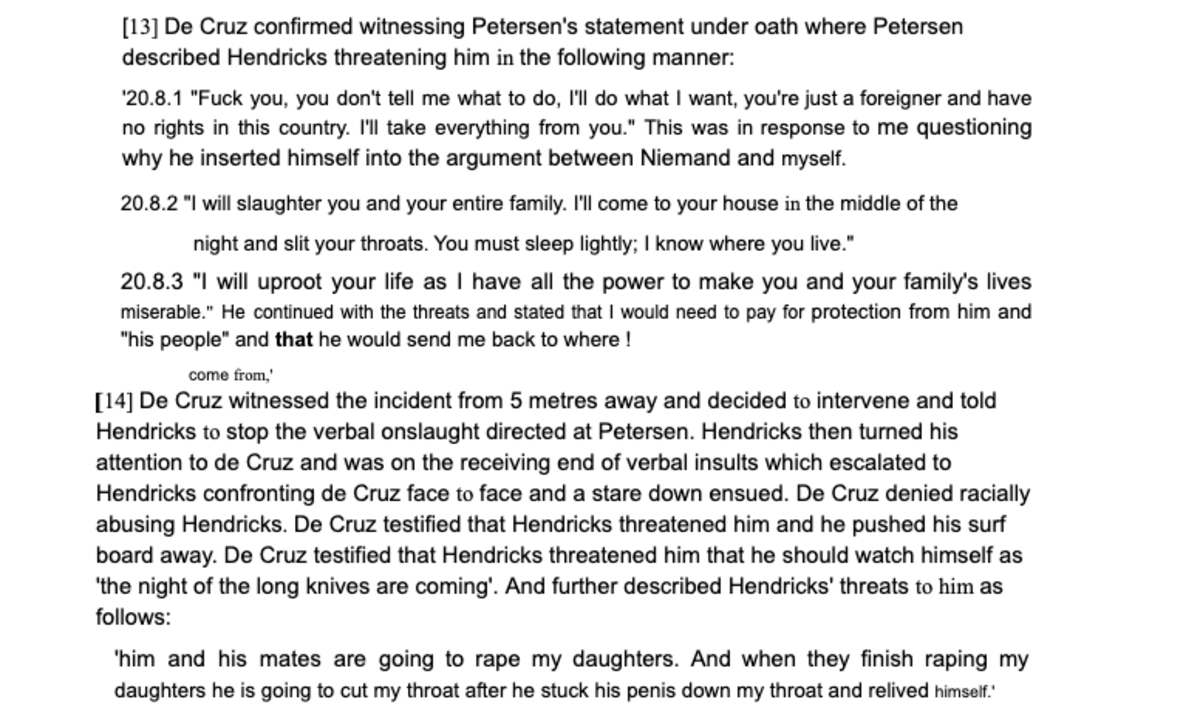
the situation escalated dramatically during a minor disagreement between RP’s friend and the individual in question. Instead of mediating, the individual allegedly launched a verbal assault on RP, culminating in a deeply disturbing threat.
“While saying some extremely protest things, he overstepped when said he knows where I stay and I must sleep with an eye open for he can come and slaughter my family and slit our throats,” RP recounts. “At that point I knew I’d have to go to the court to get a protection order for myself and my family.”
This wasn’t a spontaneous outburst; it was a calculated escalation, a clear attempt to intimidate and control. The court ultimately issued a protection order, a fact that contradicts the narrative initially presented by the individual to the authorities. This discrepancy is crucial, highlighting the intentional attempt to distort the truth.
The Silence of the Locals: A Betrayal of Trust
Perhaps the most disheartening aspect of this story is the lack of support RP received from within the local surfing community. Despite knowing the individual’s history and understanding the true nature of the incident, only a handful of people openly stood by RP.
“Everyone knew what he was doing and what had happened, even his friends,” RP explained. “Nonetheless, there were only 3-4 people in total who stood up to him openly. Every other one still laughed with him as they were scared of the consequences.”
Even more shocking, some long-respected figures within the surfing community actively sided with the aggressor, even encouraging his behavior. This betrayal of trust cut deeply for RP, who had looked up to these individuals for years.
“I still don’t no why, but I do know I lost all respect for those guys now,” he said.
This silence speaks volumes about the power dynamics at play and the fear of retribution. It underscores a critical point: a community’s strength lies not just in its shared passion for surfing, but in its willingness to defend its members and uphold ethical standards.
the Wider Implications: Media, Accountability, and the Abuse of Racial Dynamics
The fallout extended beyond the immediate conflict. Initial media coverage, including reports from provincial newspapers, the Surfing Sports association (SSA), and the World Surf League (WSL), largely perpetuated the distorted narrative