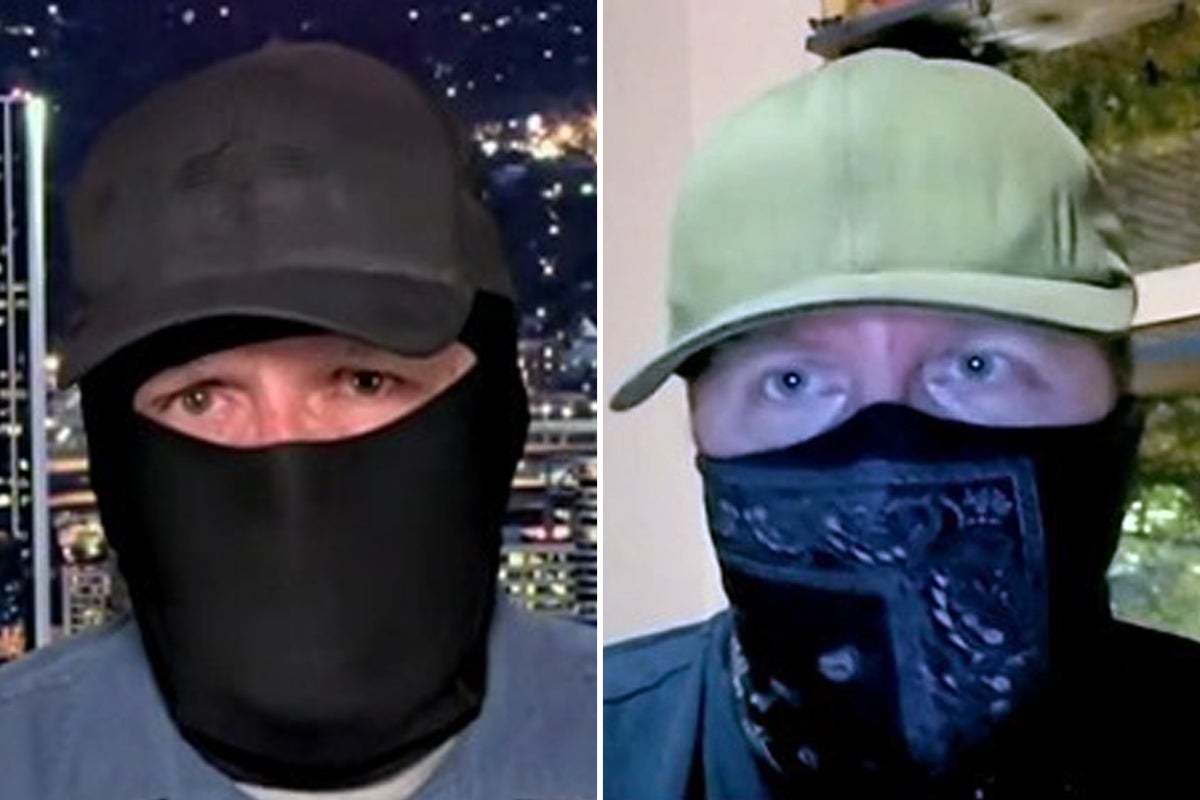
Fox News Guest identity Sparks Online Frenzy: Fact, Fiction, and the Power of Viral Suspicion
A recent segment on Fox News featuring a masked individual claiming to be a former Antifa operative has ignited a firestorm of speculation online, raising questions about identity, authenticity, and the spread of misinformation. the situation highlights how quickly unverified claims can gain traction in the digital age,fueled by partisan divides and a thirst for sensational narratives.
The Initial Claims and Rising Doubts
Initially, the guest appeared on Jesse Watters’ program to discuss alleged Antifa activities. However, almost instantly, viewers began noticing striking similarities between this individual and a guest who previously appeared on the network claiming affiliation with the Mexican mafia.
Several social media users quickly juxtaposed clips of both interviews,pointing out shared physical characteristics and speech patterns. Decoding Fox News’s Sara Jeske initially shared these comparisons, but crucially emphasized she wasn’t definitively claiming the two were the same person. She simply presented the evidence and acknowledged the widespread suspicion.
* jeske clarified she never stated the guests were definitively the same individual.
* Her intention was to highlight the visual similarities observed by many viewers.
Despite this careful framing, accusations of “pushing a lie” were leveled against Jeske. This illustrates the highly charged atmosphere surrounding such claims and the eagerness to discredit any questioning of narratives.
Cautionary Voices and Rapid Embrace of Conspiracy
While some journalists urged caution, investigative reporter Jacqueline Sweet advised against immediately accepting the two men were one and the same. However, a number of prominent progressive voices quickly embraced the idea of a intentional hoax.
Sam Seder, host of the Majority Report, offered a notably pointed critique, suggesting the scenario was absurd. He questioned why someone connected to the Mexican Mafia or Antifa would choose Fox News as a platform to share information. This sentiment tapped into existing distrust of the network and its reporting.
The Internet Detectives and Wild Theories
The online response quickly escalated into a full-blown investigation,with users meticulously analyzing every detail of the two appearances. This included a “Zapruder film-type analysis” of facial features,eye shape,and speaking styles.
Consequently, a range of conspiracy theories began to circulate regarding the “real” identity of the masked guest. These theories, while largely unsubstantiated, demonstrate the power of online communities to generate and disseminate choice narratives.
* Some speculated the individual was Robert J. O’Neill, a former navy SEAL known for his role in the killing of Osama Bin Laden, citing similar eyes and his past contributions to Fox News.
* Others suggested actors Michael Rapaport or professional wrestler Jon Moxley were behind the mask, offering no concrete evidence.
Why This Matters: The Broader Implications
this incident serves as a potent reminder of the challenges facing media consumers today. You need to be critical of information you encounter online, especially when it aligns with pre-existing biases. It’s crucial to:
* Verify sources: Don’t rely on single accounts or unverified claims.
* Consider motivations: Understand the potential biases of those sharing information.
* Look for evidence: demand concrete proof before accepting remarkable claims.
* Practice media literacy: Develop the skills to critically evaluate information and identify misinformation.
Ultimately, the Fox News guest identity debate underscores the importance of responsible journalism, critical thinking, and a healthy skepticism in navigating the complex information landscape of the 21st century. It’s a situation where the line between fact and fiction becomes increasingly blurred, and your ability to discern the truth is more vital than ever.
Keep reading