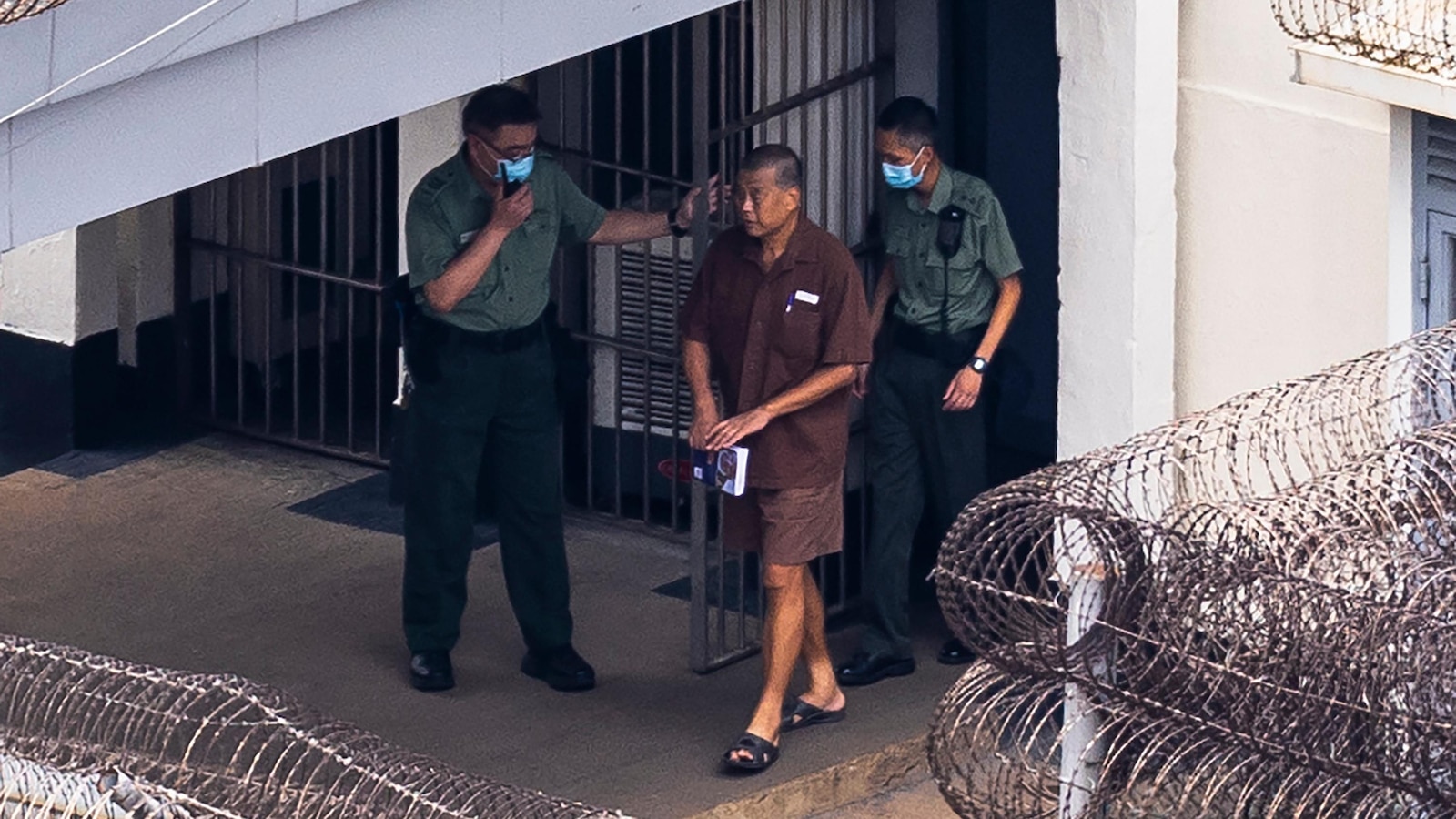
Hong Kong media mogul Jimmy Lai, a staunch pro-democracy advocate and founder of the now-defunct Apple Daily newspaper, will not appeal his 20-year prison sentence handed down last month under the city’s national security law. The decision, announced Friday by his legal team, effectively ends a years-long legal battle that has drawn international scrutiny and raised concerns about the erosion of press freedom and civil liberties in Hong Kong. Lai, 78, was convicted in December of conspiracy to collude with foreign forces and conspiring to publish seditious articles, charges widely criticized as politically motivated.
The case against Lai has turn into a focal point in the debate over Beijing’s increasing control over Hong Kong, a former British colony that was promised a high degree of autonomy under the “one country, two systems” framework following its handover in 1997. Lai’s Apple Daily, known for its critical coverage of both the Hong Kong and Beijing governments, was forced to shut down in June 2021 after a series of arrests and asset freezes targeting the newspaper and its staff. The closure of Apple Daily, and Lai’s subsequent prosecution, are seen by many as a stark illustration of the shrinking space for dissent in the city.
Lai’s legal team confirmed the decision not to appeal in a text message to The Associated Press. “We can confirm we have clear and definitive instructions not to lodge an appeal against conviction or sentence,” they stated, offering no further explanation for the decision. This move comes after a surprising victory for Lai last week, when a Hong Kong court overturned his convictions and sentence in a separate fraud case. However, the government has indicated This proves considering an appeal of that ruling, potentially prolonging the legal uncertainty surrounding Lai’s overall prison term.
National Security Law and its Impact on Hong Kong
The national security law, imposed on Hong Kong by Beijing in June 2020 in response to the 2019 pro-democracy protests, criminalizes secession, subversion, terrorism, and collusion with foreign forces. Critics argue that the law is vaguely worded and has been used to suppress dissent and stifle freedom of expression. Since its implementation, over 300 people have been arrested under the law, including prominent pro-democracy activists, journalists, and politicians. The law has fundamentally altered the political landscape of Hong Kong, leading to a chilling effect on free speech and independent media.
The Hong Kong government, however, maintains that the law is necessary to restore stability and protect national security. Officials have consistently defended Lai’s prosecution, arguing that his actions went beyond legitimate journalism and constituted a threat to the city’s security. They claim the case is not about suppressing free press, but rather about addressing acts that harmed China and Hong Kong. This stance has been met with widespread skepticism from international observers and human rights organizations.
Jimmy Lai’s Background and Apple Daily
Jimmy Lai, born in Guangdong province, China, in 1948, emigrated to Hong Kong with his family as a child. He built a successful business empire, starting with a clothing brand and eventually founding Next Digital, the media company that published Apple Daily. Apple Daily quickly became one of Hong Kong’s most popular newspapers, known for its tabloid style and its outspoken criticism of the Chinese government. Lai himself was a vocal advocate for democracy and frequently used his newspaper to challenge Beijing’s policies.
Lai’s outspoken views and his support for the pro-democracy movement made him a target of the Chinese government. He faced numerous legal challenges and threats over the years, but remained defiant in his commitment to press freedom. The arrest of Lai and the subsequent shutdown of Apple Daily sent shockwaves through Hong Kong’s media community and raised fears about the future of independent journalism in the city. The closure of the newspaper resulted in the loss of hundreds of jobs and further eroded public trust in the media landscape.
International Reactions and Calls for Release
Lai’s case has drawn widespread international condemnation, with governments and human rights organizations calling for his release and expressing concerns about the erosion of freedoms in Hong Kong. The United Kingdom’s Foreign Secretary, Yvette Cooper, stated that Lai was sentenced for exercising his right to freedom of expression and urged the Hong Kong authorities to release him on humanitarian grounds. Similar calls have arrive from the United States, Canada, and the European Union.
The children of Jimmy Lai have also been actively campaigning for their father’s release. Following his sentencing, they suggested that a potential visit to Beijing by former U.S. President Donald Trump could be crucial in securing his freedom. The White House has confirmed that Trump will travel to China from March 31 to April 2 to meet with Chinese leader Xi Jinping, even though there has been no official confirmation from Beijing regarding the visit. The Lai family hopes that Trump will raise the issue of their father’s imprisonment during his meeting with Xi Jinping.
Fraud Conviction Overturned, Potential for Reduced Sentence
Whereas Lai has decided not to appeal his national security conviction, a recent development offered a glimmer of hope. Last week, a Hong Kong court overturned his convictions and sentence in a separate fraud case related to the lease of Apple Daily’s headquarters. The court ruled that the original trial had been unfair and that Lai had been denied a fair hearing. This ruling could potentially reduce his overall prison time, although the Hong Kong government has indicated it is considering appealing the decision. According to a report by Reuters, the Department of Justice will “study the judgment thoroughly and consider whether to appeal.”
The fraud case stemmed from allegations that Lai had violated the terms of the lease agreement for Apple Daily’s office space. Lai had pleaded not guilty, arguing that the charges were politically motivated. The overturning of his conviction in this case was seen as a rare victory for the pro-democracy movement in Hong Kong and a sign that the judiciary may still be willing to uphold the rule of law. However, the government’s potential appeal of the ruling underscores the ongoing political pressures facing the Hong Kong legal system.
The Future of Press Freedom in Hong Kong
Jimmy Lai’s case is widely seen as a bellwether for the future of press freedom and civil liberties in Hong Kong. The closure of Apple Daily and the prosecution of Lai have created a climate of fear among journalists and activists, leading to self-censorship and a decline in independent reporting. The national security law has effectively curtailed the space for dissent and made it increasingly difficult for journalists to hold the government accountable. The Committee to Protect Journalists has documented a significant increase in restrictions on press freedom in Hong Kong since the implementation of the law.
The international community continues to monitor the situation in Hong Kong closely, and many governments have expressed concerns about the erosion of freedoms. However, Beijing has consistently defended its policies, arguing that it is exercising its sovereign right to maintain stability and protect national security. The future of Hong Kong remains uncertain, and the fate of Jimmy Lai serves as a stark reminder of the challenges facing those who advocate for democracy and freedom of expression in the city.
As Lai forgoes an appeal of his national security conviction, the focus now shifts to the Hong Kong government’s potential appeal of the overturned fraud conviction. A decision on that appeal is expected in the coming weeks and will further shape the length of Lai’s imprisonment. The international community will continue to watch the case closely, and calls for Lai’s release are likely to persist. The situation underscores the ongoing tension between Beijing’s desire for control and the aspirations of many Hong Kong residents for greater autonomy, and freedom.
What are your thoughts on the implications of this case for press freedom in Hong Kong? Share your comments below, and please share this article with your networks to raise awareness about this critical issue.
Related reading