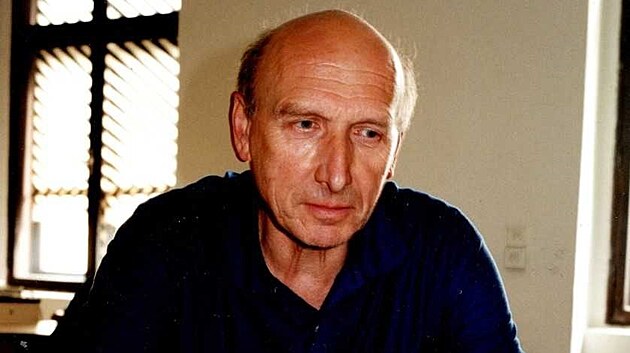
The world of Czech music journalism is mourning the loss of a giant. Jiří Černý, a towering figure in the field for decades, would have celebrated his 90th birthday today, February 25th, 2026. Though he passed away on August 17, 2023, his impact on how Czechs listen to and understand music remains profound. Černý wasn’t merely a critic; he was a cultural architect, shaping tastes and fostering a deeper appreciation for a wide range of genres, from classical to the burgeoning big beat scene of the 1960s.
Černý’s career spanned a remarkable period of social and political change in Czechoslovakia and the Czech Republic. He navigated censorship, embraced new technologies, and consistently championed artistic integrity. His influence extended beyond the printed page and the airwaves, impacting the very fabric of the nation’s musical landscape. He was, as many Czechs readily attest, a name synonymous with insightful, often provocative, and always meticulously researched music commentary.
Born in 1936, Černý’s initial journalistic pursuits actually began in the world of sports whereas studying journalism at the Faculty of Philosophy at Charles University. However, his passion for music, particularly opera, quickly took center stage. He began writing for Mladý svět (Young World) magazine and, following a period of political constraints, contributed to Melodie, focusing on the emerging sounds of modern popular music. This was a pivotal moment, as Černý became one of the first voices to seriously engage with the burgeoning rock and roll and beat music scenes that were sweeping across the West and beginning to resonate with a younger generation in Czechoslovakia. Czech Radio Vltava highlights this early dedication to covering new musical movements.
The Voice of a Generation: Radio and the Hit Parade
Černý’s impact wasn’t confined to print. He became a pioneering figure in Czech radio, co-creating and hosting the groundbreaking hit parade Dvanáct na houpačce (Twelve on the Swing) – later evolving into Třináct a Čtrnáct na houpačce (Thirteen and Fourteen on the Swing) – alongside his then-wife, Miroslava. This program, according to sources, became a crucial window into the world of popular music for many Czech listeners, significantly influencing their musical tastes. The show’s success wasn’t accidental; Černý’s insightful commentary and genuine enthusiasm made it a must-listen for a generation eager to connect with the latest sounds. He also prepared a twenty-minute program, Desky načerno (Records off the Record), three times a week, further solidifying his presence on the airwaves.
Beyond his on-air work, Černý’s contributions to the music industry extended to liner notes. He penned sleeve notes for numerous albums released by Panton and Supraphon, providing context and analysis for both domestic and international recordings. Notably, he prepared the commentary for Karel Kryl’s iconic album, Bratříčku, zavírej vrátka (Brother, Close the Gate), a powerful collection of protest songs that became a symbol of resistance against the communist regime. This demonstrates Černý’s willingness to engage with politically charged music and support artists who challenged the status quo.
A Legacy Beyond Criticism: Shaping the Cultural Conversation
Jiří Černý’s influence wasn’t simply about identifying good music; it was about fostering a critical and informed listening public. He encouraged audiences to move beyond superficial enjoyment and to engage with music on a deeper intellectual and emotional level. Lidovky.cz notes his ability to elevate music criticism to an art form, approaching each piece with a unique perspective and a distinctive voice.
His work extended to book publishing, though details on specific titles require further research. However, the breadth of his activities – from radio broadcasting and journalism to liner notes and potentially books – underscores the sheer scale of his contribution to Czech culture. He wasn’t just a commentator; he was a facilitator, a connector, and a champion of musical expression in all its forms.
The Enduring Impact of “Velký Mokasín”
Černý was affectionately known as “Velký Mokasín” (Big Mocassin) – a nickname whose origin remains somewhat obscure but speaks to his larger-than-life personality and enduring presence in the Czech cultural landscape. Europesays.com references this nickname in a recent article commemorating his birthdate. This moniker highlights the respect and affection he garnered from both fellow musicians and the public.
His legacy continues to inspire music journalists and critics today. He set a standard for insightful, independent, and intellectually rigorous music commentary. His ability to connect with audiences, to explain complex musical ideas in an accessible way, and to champion artistic innovation remains a benchmark for those who follow in his footsteps. The fact that his 90th birthday is being widely commemorated, even after his passing, is a testament to the lasting power of his work.
The Czech Republic has lost a true cultural icon, but Jiří Černý’s voice – preserved in his writings, recordings, and the memories of those who were touched by his work – will continue to resonate for generations to approach. His dedication to music, his unwavering commitment to artistic integrity, and his ability to connect with audiences on a profound level have left an indelible mark on the nation’s cultural identity.
As the Czech Republic reflects on Černý’s life and legacy, it’s a moment to consider the vital role of music journalism in shaping cultural understanding and fostering a deeper appreciation for the arts. His work serves as a reminder that music is not merely entertainment; it’s a powerful force that can inspire, challenge, and unite us all.
Further information regarding Jiří Černý’s life and work can be found on the websites of Český rozhlas Vltava and Lidovky.cz, as well as through various Czech cultural institutions. The ongoing remembrance of his contributions underscores his enduring significance in the history of Czech music and journalism.
Key Takeaways:
- Jiří Černý was a highly influential Czech music critic, journalist, and radio personality.
- He played a pivotal role in introducing Western popular music to Czech audiences during the 1960s.
- His radio program, Dvanáct na houpačce, significantly shaped the musical tastes of a generation.
- Černý was known for his insightful commentary, his commitment to artistic integrity, and his distinctive voice.
- His legacy continues to inspire music journalists and critics in the Czech Republic today.
What are your favorite memories of Jiří Černý’s work? Share your thoughts and reflections in the comments below. Please share this article with anyone who appreciates the power of music and the importance of insightful cultural criticism.