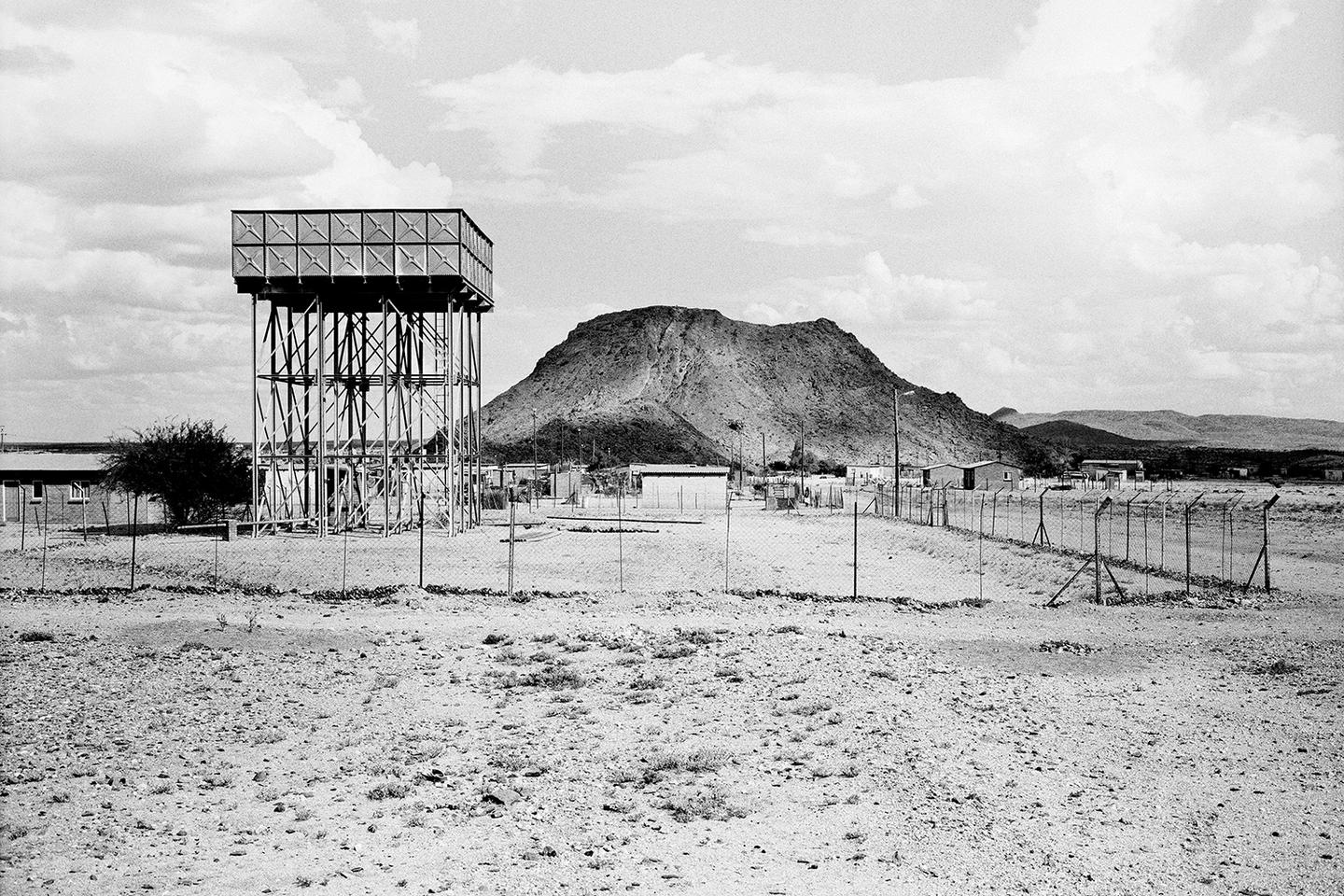
The landscapes of South Africa bear witness to a complex history, etched with the scars of conflict and the consequences of resource exploitation. Even as many document the visible struggles within urban centers, photographer Jo Ractliffe has spent decades turning her lens towards the more remote, often overlooked corners of the country. Her work, characterized by a quiet intensity, doesn’t offer easy answers or explicit political statements. Instead, Ractliffe’s photographs invite viewers to contemplate the lingering presence of the past and the subtle narratives embedded within the South African terrain. This approach to visual storytelling, focusing on the silences and absences, has established her as a singular voice in African photography.
Born in Cape Town in 1960, Ractliffe’s artistic journey began in 1982. She deliberately eschewed the immediate demands of photojournalism, finding herself ill-suited to its fast-paced nature. “It was evident that I didn’t have the temperament for that, me who was rather shy with a camera,” she explained, as reported by Le Monde in February 2026. “From my first photographs, in 1982, I understood that photographing was above all a private quest.” This introspective approach led her away from documenting social unrest in cities like Johannesburg, and towards a more contemplative exploration of the land itself. She wasn’t seeking to deliver explicit political messages, but rather to discover “another language, a certain poetics” within the South African landscape.
Exploring the Ghosts of Riemvasmaak
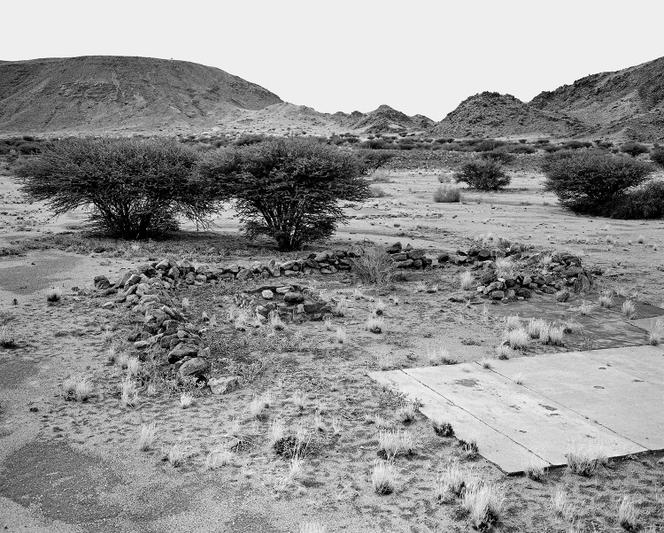
A compelling example of Ractliffe’s work is her series focusing on Riemvasmaak, a remote settlement in the Northern Cape province of South Africa. Photographed in 2012, the series captures the remnants of a temporary military base, as seen in her image “Floor Slab, Temporary Military Base, Riemvasmaak.” The photograph, currently held in the Tate collection, depicts a stark, concrete slab – a physical manifestation of a past presence. Riemvasmaak itself has a layered history, originally settled by the Nama people, then forcibly removed during the apartheid era due to its proximity to the border with Namibia. The area later became a staging ground for South African Defence Force operations during the Border War (1966-1989), a conflict that significantly impacted the region. Ractliffe’s photograph doesn’t depict the violence directly, but rather the lingering traces of military occupation – a silent testament to a turbulent past.
A Poetics of Absence
Ractliffe’s work consistently avoids direct confrontation with suffering or overt political messaging. Instead, she focuses on the spaces *left behind* – the abandoned structures, the altered landscapes, the subtle signs of human intervention. This approach allows her to explore the complexities of South Africa’s history without resorting to simplistic narratives. Her photographs are not about what happened, but about what remains, and what those remnants reveal about the past. This is a deliberate artistic choice, a search for a “poetics” that transcends the limitations of traditional documentary or photojournalistic approaches. The Stevenson gallery, representing Ractliffe in Cape Town, Johannesburg, and Amsterdam, highlights this focus on the evocative power of landscape and the subtle narratives it holds.
The Border War and its Legacy
The Border War, fought between South Africa and neighboring countries, particularly Angola and Namibia, from 1966 to 1989, left a lasting impact on the landscape and communities of Northern Cape. Riemvasmaak, due to its strategic location, was deeply affected by the conflict. The forced removals of the Nama people in the 1970s, justified under apartheid laws, were directly linked to the military’s need for a buffer zone. The subsequent establishment of military bases and the presence of soldiers further disrupted the lives of those who remained in the area. Ractliffe’s photographs, while not explicitly depicting these events, serve as a visual reminder of this often-overlooked chapter in South African history. The concrete slab in “Floor Slab, Temporary Military Base, Riemvasmaak” becomes a symbol of this contested past, a silent marker of displacement and conflict.
A Retrospective at the Jeu de Paume
In early 2026, Ractliffe’s work was the subject of a major retrospective at the Musée du Jeu de Paume in Paris. The exhibition, which opened shortly before the publication of the Le Monde article, offered a comprehensive overview of her career, showcasing her distinctive approach to landscape and her exploration of South Africa’s complex history. The exhibition provided an opportunity for a wider audience to engage with her work and to consider the power of photography to evoke memory and to challenge conventional narratives. The Jeu de Paume exhibition, according to art critics, underscored Ractliffe’s position as a significant figure in contemporary photography, recognized for her unique vision and her commitment to a nuanced and contemplative approach to visual storytelling.
Jo Ractliffe’s work is a testament to the enduring power of place and the importance of remembering the past. Her photographs are not simply images. they are invitations to contemplate the silences, to listen to the whispers of history, and to understand the complexities of a nation grappling with its legacy. As her work continues to be exhibited and discussed internationally, it serves as a powerful reminder that the landscapes we inhabit are always imbued with meaning, shaped by the events that have unfolded upon them.
A major exhibition of Ractliffe’s work is scheduled to continue its international tour with a showing at the Haus der Kunst in Munich, Germany, beginning in November 2026. We encourage readers to share their thoughts on Ractliffe’s work and the themes it explores in the comments below.