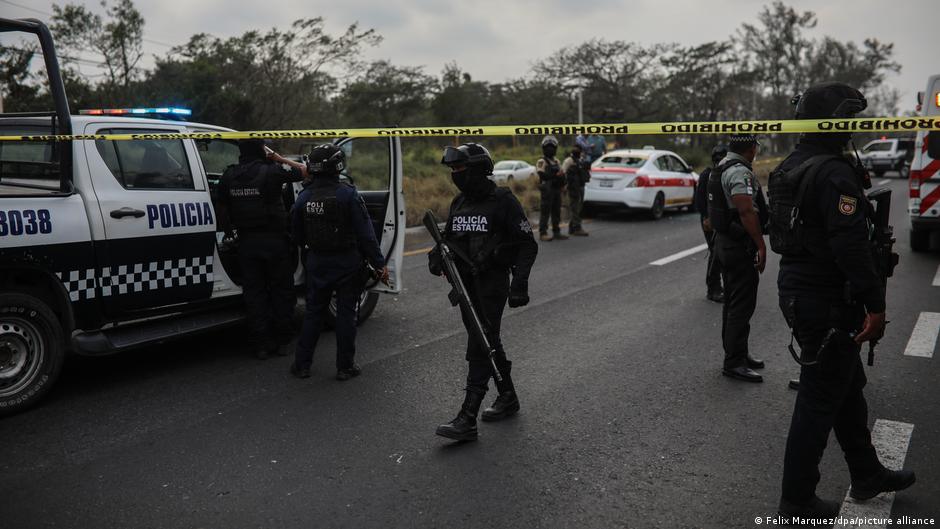
Veracruz state authorities confirmed that human remains discovered at a rural property are those of journalist Roxana Guzmán, who had been reported kidnapped. The announcement from the Fiscalía General del Estado (FGE) concludes a search operation for the reporter, whose disappearance sparked widespread concern regarding the safety of media workers in the region.
The identification process, conducted by state forensic experts, utilized genetic testing to verify the identity of the remains found at the site. According to the Fiscalía General del Estado de Veracruz, the investigation into the circumstances surrounding her abduction and subsequent death is ongoing, with specialized units assigned to track those responsible for the crime.
Context of the Investigation
Roxana Guzmán’s disappearance and the subsequent discovery of her remains have brought renewed attention to the risks faced by journalists in Veracruz. The state has historically been a hazardous region for press professionals in Mexico. Data from the Article 19 organization, which tracks violence against the press, tracks attacks against media workers.
The investigation is currently focused on the sequence of events leading to the kidnapping. While official details remain limited due to the active nature of the criminal case, local reports suggest that authorities are examining links between the incident and organized criminal groups operating in the area. The FGE has stated that all lines of inquiry remain open as they gather evidence from the scene of the discovery.
Advocacy for Press Safety
Following the confirmation of Guzmán’s death, several non-governmental organizations and press freedom groups have issued public calls for justice. These groups are demanding that the state and federal governments provide a transparent accounting of the investigation and ensure that the perpetrators are brought to trial. The Reporters Without Borders (RSF) organization has previously documented the systemic challenges in achieving legal accountability for crimes against journalists in Mexico, emphasizing the need for federal intervention in local cases where state-level protection mechanisms may have failed.

The case has also prompted local journalists to organize demonstrations, calling for greater security measures for those covering crime and political corruption. These advocates argue that the environment of impunity encourages further violence, as few investigations into the deaths of journalists in the region result in successful prosecutions or convictions.
Legal and Institutional Response
Under the current legal framework, the investigation into the death of a journalist often involves coordination between state authorities and federal bodies like the Fiscalía Especial para la Atención de Delitos cometidos contra la Libertad de Expresión (FEADLE). This federal agency is tasked with investigating crimes that may be linked to the victims’ professional work. The transition of such cases to federal jurisdiction is a recurring point of contention, as local press unions often express skepticism regarding the efficacy of state-level investigations.
The FGE of Veracruz has committed to providing periodic updates to the family of the deceased and to the public as the judicial process advances. The next significant development expected in the case involves the presentation of formal charges against suspects identified during the evidentiary phase of the investigation. As of this report, no specific dates for initial court hearings have been released by the judiciary.
Readers with information or those seeking to support press freedom advocacy are encouraged to follow official releases from the Comisión Nacional de los Derechos Humanos for updates on federal protection protocols.