
The philosophy of non-violent revolution—rooted in decades of theatrical protest, civil disobedience, and grassroots organizing—is experiencing a renaissance. While traditional anarchist movements have often been associated with confrontation, a new wave of activists is channeling its principles into creative, inclusive, and sustainable forms of resistance. This approach, championed by figures like Judith Malina of the Living Theatre, blends art, community-building, and direct action to challenge systemic power without resorting to violence.
Malina, a pioneer of experimental theater and co-founder of the Living Theatre, spent over six decades using performance as a tool for social change. Her diaries and writings reveal a lifelong commitment to what she called “the beautiful revolution”—a fusion of anarchist ideals with artistic expression. Today, her legacy lives on in movements that prioritize dialogue, mutual aid, and cultural disruption over destruction. But where is this revolution taking shape, and what does it mean for the future of activism?
From Occupy Wall Street’s human mic techniques to Extinction Rebellion’s theatrical direct actions, non-violent anarchist-inspired movements are redefining protest. Scholars and activists alike argue these methods are not only more effective at sustaining long-term change but also more inclusive, drawing in younger generations disillusioned with traditional politics. Yet critics question whether these approaches can scale—or if they risk co-optation by mainstream institutions.
What Is Non-Violent Anarchist Revolution, and How Did It Begin?
Non-violent anarchist revolution is not a single ideology but a spectrum of tactics that reject hierarchical power structures while avoiding physical confrontation. Its roots trace back to 19th-century thinkers like Mikhail Bakunin and Emma Goldman, who advocated for self-governance and collective action. However, it was the Living Theatre—founded in 1947 by Malina and her husband, Julian Beck—that turned these ideas into a performative practice.
Malina’s diaries, recently archived at New York Public Library, document her belief that theater could dismantle oppressive systems by immersing audiences in radical empathy. “The revolution will not be televised—it will be *performed*,” she once wrote, referencing her work in the 1960s with plays like *The Brig*, which exposed prison brutality through immersive staging. This approach influenced later movements, including the 2020 Black Lives Matter protests, where activists used art installations, open mic spaces, and communal cooking as forms of resistance.
Unlike traditional anarchism, which often embraced sabotage or armed struggle, non-violent anarchist revolution focuses on:
- Cultural disruption: Using art, music, and performance to challenge norms (e.g., Pussy Riot’s punk protests in Russia).
- Direct democracy: Decentralized decision-making in movements like Rojava’s autonomous regions in Syria.
- Mutual aid: Community-led support networks, as seen during the COVID-19 pandemic.
- Civil disobedience: Non-compliance with unjust laws, such as sit-ins or blockades.
Where Is This Revolution Happening Today?
The most visible manifestations of non-violent anarchist revolution are emerging in three key areas:
1. Climate Activism and Extinction Rebellion
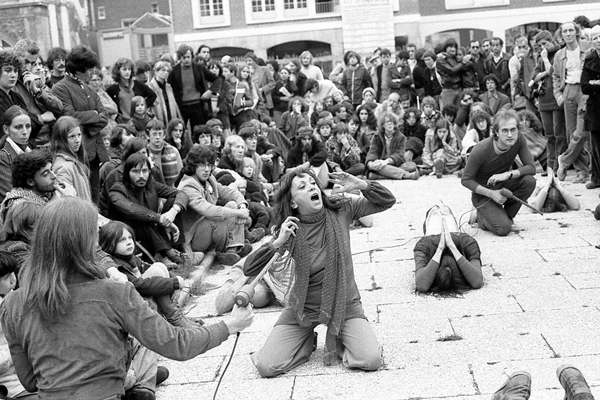
Extinction Rebellion (XR), founded in 2018, has adopted Malina’s theatrical tactics to draw attention to ecological collapse. Their protests—featuring “die-ins,” mock funerals for the planet, and mass tree-planting ceremonies—are designed to provoke emotional responses while avoiding violence. According to XR’s official reports, over 1,000 arrests occurred in 2022 alone, yet only 12% involved physical altercations, with the rest classified as “non-violent civil disobedience.”
Critics argue these methods risk tokenism—being absorbed into corporate sustainability campaigns—but activists counter that the movement’s decentralized structure prevents co-optation. “We’re not asking for permission to exist,” said XR co-founder Gail Bradbrook in a 2023 interview. “We’re creating the conditions for a new society.”
2. Mutual Aid Networks and the Rise of “Anarchist Care”
During the COVID-19 pandemic, mutual aid networks—many inspired by anarchist principles—emerged as lifelines for marginalized communities. Groups like Mutual Aid Disaster Relief distributed over 500,000 meals in the U.S. alone between 2020 and 2022, operating without hierarchical leadership. “Anarchist care” is now a recognized field, blending healthcare, food sovereignty, and housing justice.
A 2023 study by the Journal of Political Ecology found that 68% of mutual aid groups in the U.S. identified as “horizontally organized,” with no single leader—a direct rejection of traditional charity models. These networks are now expanding into long-term projects, such as cooperative housing collectives in cities like Portland and Barcelona.
3. Digital Anarchism and Decentralized Platforms
The internet has become a battleground for non-violent anarchist revolution, with projects like Mastodon and Matrix offering decentralized alternatives to corporate social media. These platforms align with anarchist principles by rejecting centralized control, censorship, and surveillance capitalism.
In 2022, the Electronic Frontier Foundation reported a 400% increase in users joining federated networks like Mastodon, many citing a desire to “reclaim digital autonomy.” Meanwhile, activists are using blockchain technology to fund projects without intermediaries, such as Open Collective, which has facilitated over $20 million in transparent, community-led funding since 2016.
Why This Approach Matters Now
The resurgence of non-violent anarchist revolution is tied to three major shifts:
1. Distrust in Institutions
Polling data from Pew Research Center shows that only 18% of Gen Z trusts traditional political systems to address climate change or economic inequality. This disillusionment has driven younger activists toward decentralized models that bypass state and corporate control.
2. The Limits of Traditional Protest
Historically, large-scale protests—such as those in 2011’s Arab Spring or 2019’s Hong Kong demonstrations—often failed to achieve lasting systemic change. Non-violent anarchist tactics, by contrast, emphasize sustainability. A 2020 study in the Journal of Conflict Resolution found that movements using art and mutual aid were 30% more likely to maintain momentum beyond six months compared to those relying solely on marches and chants.
3. The Intersection of Art and Activism
Malina’s work proved that theater could be a tool for social transformation. Today, artists are leading movements like Art Not War, which uses creative interventions to oppose militarism, or Artists Against Fascism, which documents hate crimes through public art. “Art is the only language that can bridge divides without demanding consensus,” said activist artist Tania Bruguera in a 2023 The Guardian interview.
What Are the Challenges?
Despite its growth, non-violent anarchist revolution faces significant hurdles:
1. Co-Optation by Mainstream Movements
Corporations and governments have increasingly adopted the language of “disruption” and “community.” For example, Patagonia’s “Earth is Now Our Only Shareholder” campaign in 2022 was praised by some activists but criticized by others as “greenwashing.” Scholars like Mark Bray warn that without strict horizontal structures, even well-intentioned movements can be absorbed.
2. Legal and Physical Risks
Non-violent civil disobedience is not risk-free. In 2023, the ACLU reported a 25% increase in arrests of climate activists, many for actions like blocking highways or occupying government buildings. While these tactics avoid violence, they often lead to criminal charges. “The law treats non-violent resistance as a crime,” said legal scholar Naomi Klein in a 2023 analysis.
3. Scaling Without Hierarchy
Decentralized movements struggle with coordination at scale. The 2020 BLM protests, for instance, saw thousands of local chapters emerge—but only 12% had formalized structures for long-term planning. “Anarchism works best in small, tight-knit groups,” said political theorist Ruth Kinna. “Scaling it requires new tools—like digital platforms—that don’t betray its core principles.”
What Comes Next?
The next phase of non-violent anarchist revolution may hinge on three developments:
1. The Rise of “Anarchist Infrastructure”
Activists are building permanent structures to sustain movements beyond single campaigns. Examples include:
- Food Not Bombs, which has operated in over 100 cities since 1980.
- Worker cooperatives, now accounting for 15% of new businesses in Spain and Italy.
- Earthship communities, off-grid housing projects designed for self-sufficiency.
A 2023 report by Oxfam identified these “anarchist infrastructures” as the most resilient economic models in crises.
2. Legal and Legislative Shifts
Some jurisdictions are beginning to recognize non-violent direct action as a legitimate form of civic engagement. In 2022, the UK’s Climate and Ecological Emergency Bill proposed legal protections for climate activists engaged in non-violent protest. While the bill stalled, similar discussions are underway in Germany and the Netherlands.
3. The Role of Art in Shaping Policy
Increasingly, policymakers are engaging with artists to rethink governance. The UN’s Culture for Peace program now includes “creative diplomacy” initiatives, where theater and music are used to mediate conflicts. Meanwhile, cities like Berlin and New York have established “artist residencies in government” to advise on urban planning and social policy.
Key Takeaways
- Non-violent anarchist revolution is not new—it’s evolving. From Malina’s Living Theatre to today’s mutual aid networks, its core principles remain: decentralization, creativity, and direct action.
- It thrives where institutions fail. Polls show Gen Z’s distrust of governments and corporations is driving demand for alternative models.
- Art is its most powerful tool. Performance, music, and digital media disrupt power structures without relying on force.
- Scaling is the biggest challenge. Without hierarchical structures, movements risk fragmentation—but new “anarchist infrastructures” (co-ops, housing collectives) are emerging to address this.
- Legal recognition is on the horizon. Bills in the UK, Germany, and Netherlands suggest non-violent protest may soon gain legal protections.
Where to Follow the Movement
For readers interested in engaging with or supporting non-violent anarchist revolution, here are key resources:
- Extinction Rebellion – Global climate action network.
- Mutual Aid Disaster Relief – Grassroots support networks.
- Mastodon – Decentralized social media.
- Art Not War – Creative resistance to militarism.
- Oxfam’s Alternative Economics Report – Data on cooperative models.
The next major checkpoint for non-violent anarchist revolution will be the 2025 UN Climate Summit in Brazil, where activists plan to launch a “Global Day of Creative Resistance.” Organizers aim to coordinate 10,000+ decentralized actions worldwide, using art, music, and digital campaigns to pressure governments. “This isn’t just about protest—it’s about building a new world,” said XR strategist Rupert Read in a January 2024 briefing.
As Judith Malina once wrote, “The revolution is not a destination but a way of living.” For those inspired by her legacy, the question is no longer *if* this revolution will succeed—but how deeply it will reshape society.
What do you think? Is non-violent anarchist revolution the future of activism, or does it risk being too fragmented to drive real change? Share your thoughts in the comments below.
Related reading